_11zon.webp)
_15_11zon.webp)
_11zon.webp)
_11zon.webp)
_11zon.webp)
Frequently Asked Questions
- Q1: Why does this kit include items like Ganga Jal and Kusha Grass for a folk bonfire festival?
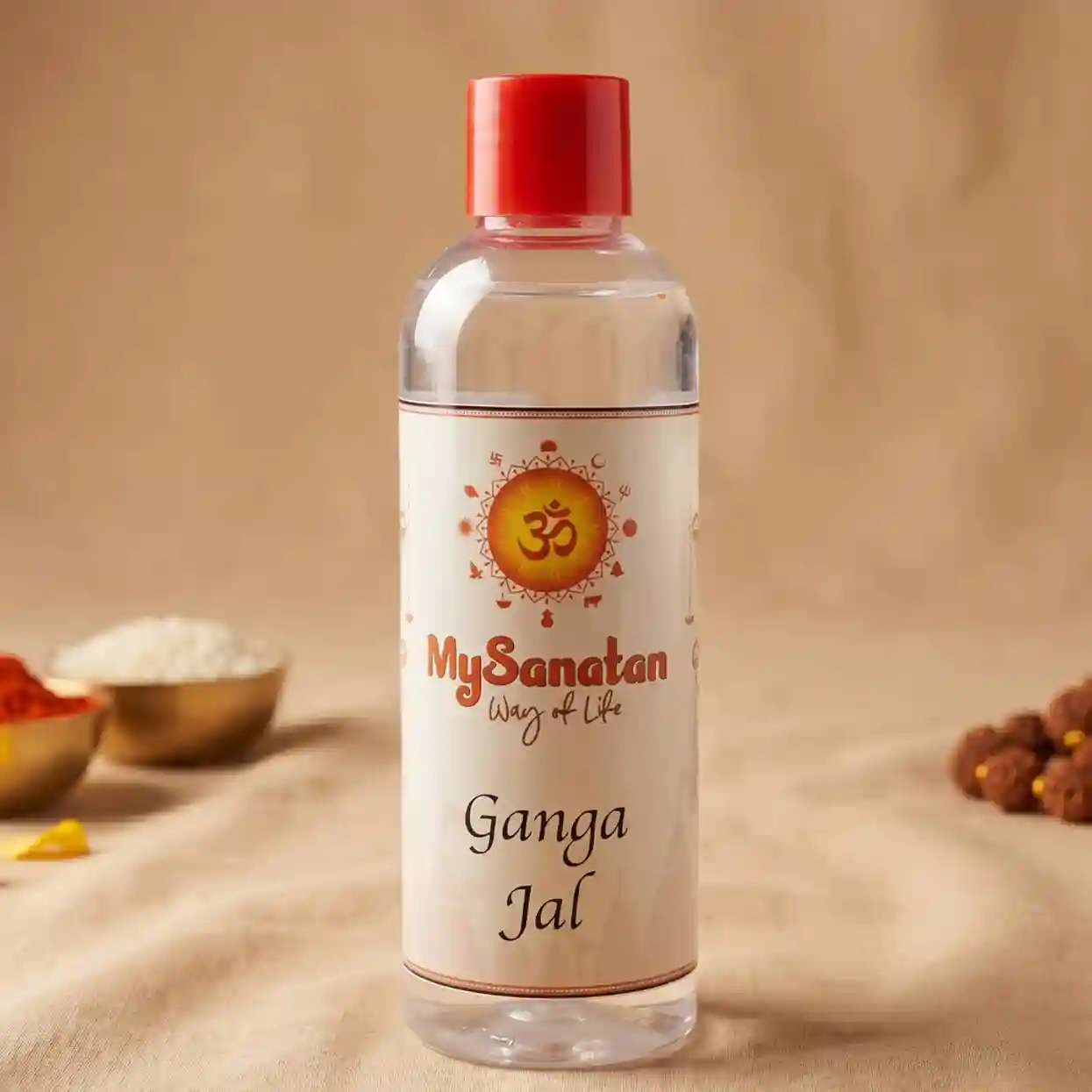
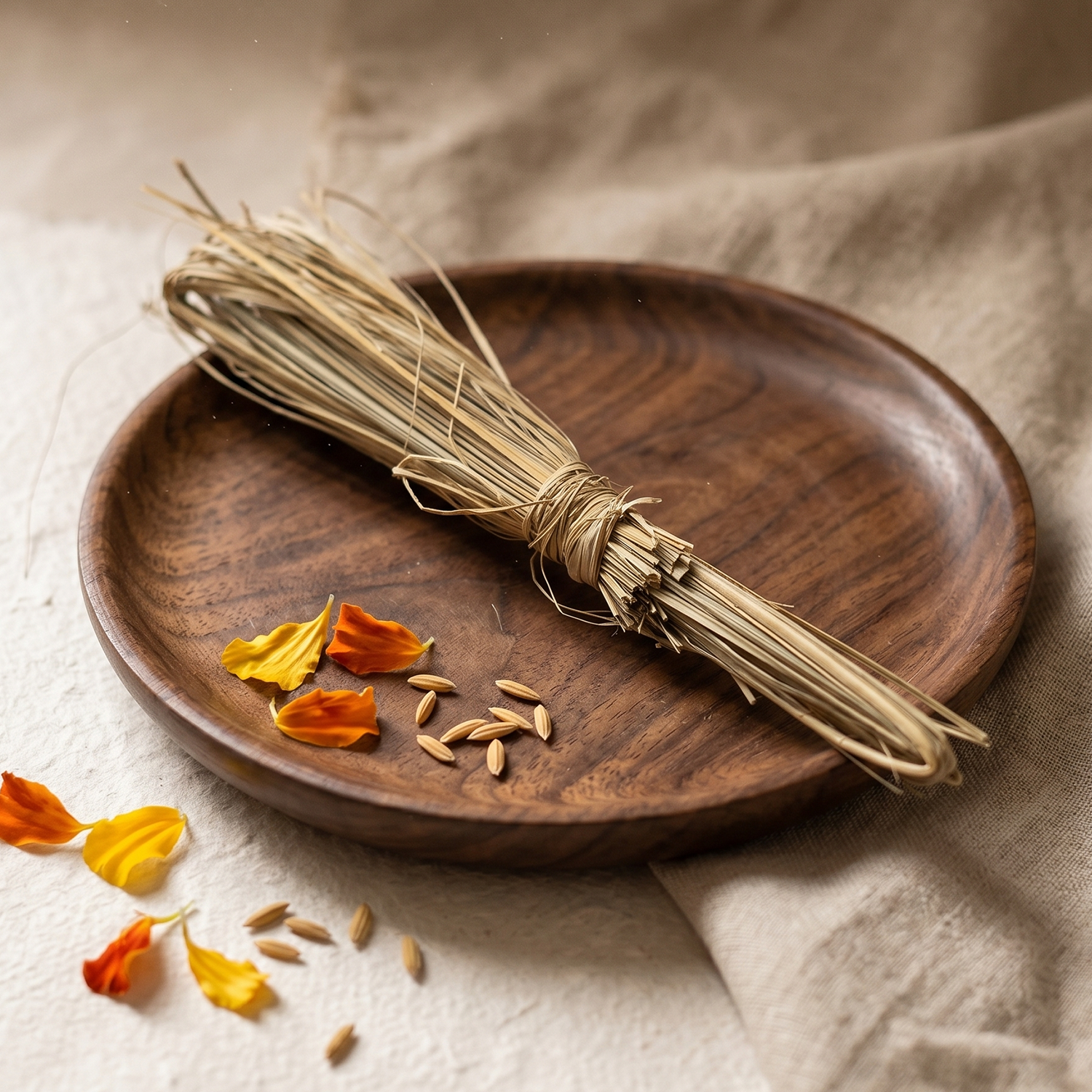
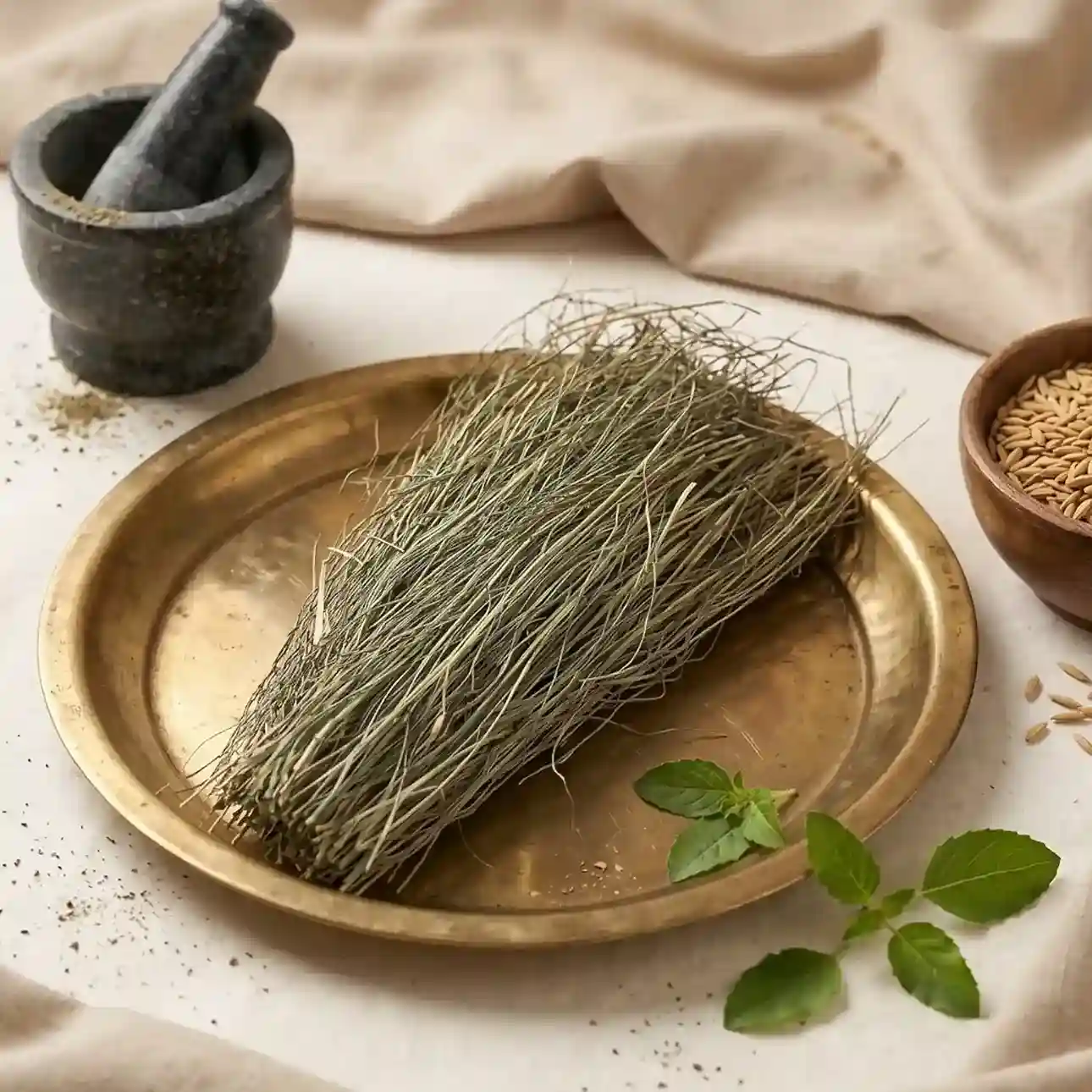
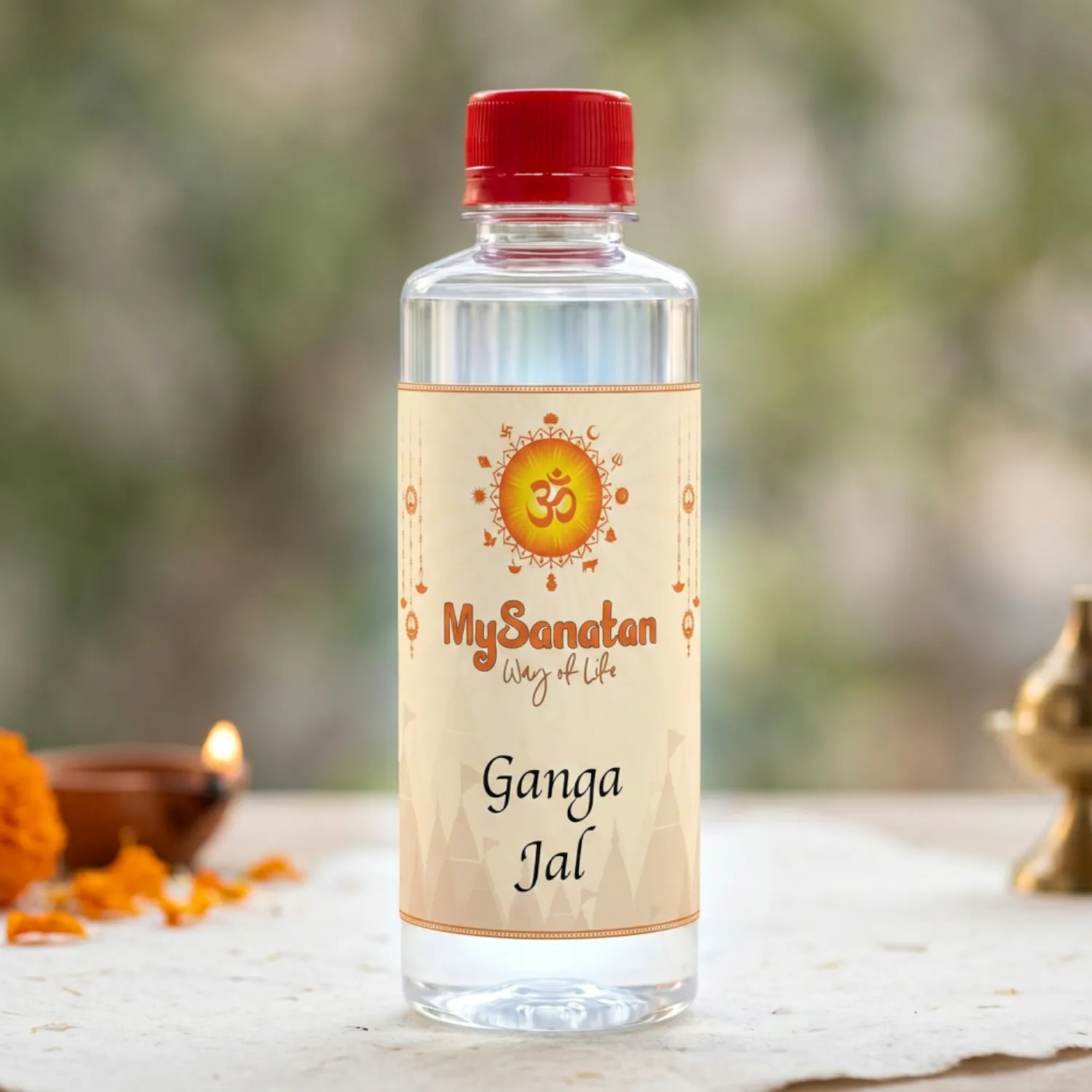
- While Lohri is widely celebrated as a vibrant social harvest festival, it is rooted in deep spiritual gratitude. The Ganga Jal and Kusha Grass are used at the very beginning of the ritual by the priest to formally purify the ground where the bonfire will be built, transforming a regular social fire into a consecrated Puja Place for the Fire God (Agni Dev).
- Q2: What is the difference between "White Sesame Seeds" and "Black Sesame Seeds" in this kit?
- The two types of sesame seeds are used at completely different times by different people:
- Black Sesame Seeds (Kaale Til): These are meant for the priest. They are offered directly into the fire during the initial Vedic mantras to absorb and burn away negative energies from the community.
- White Sesame Seeds (Safed Til): These are meant for the community. They are mixed with the popcorn, peanuts, and rewri to be joyfully thrown into the fire by everyone during the rounds (Parikrama).
- Q3: Are the Peanuts, Popcorn, and Rewri meant to be eaten as Prasad or thrown entirely into the fire?
- They serve a dual purpose! You should divide these harvest offerings into two parts. One portion should be kept aside to be distributed to families to eat as Prasad alongside the Jaggery (Gur). The remaining portion should be handed out in small bowls or handfuls to the guests so they can offer them to the bonfire during the celebrations.
- Q4: Why is "White Homa Cheli" included in a Lohri inventory, and how should it be used?
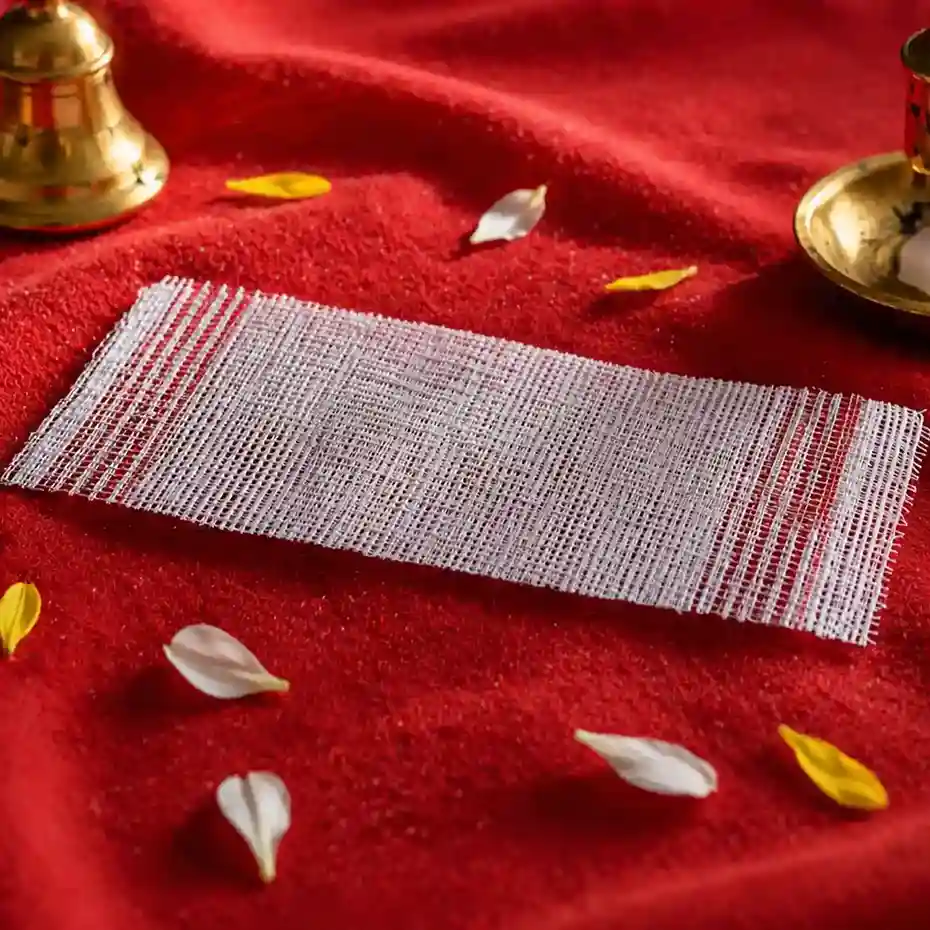
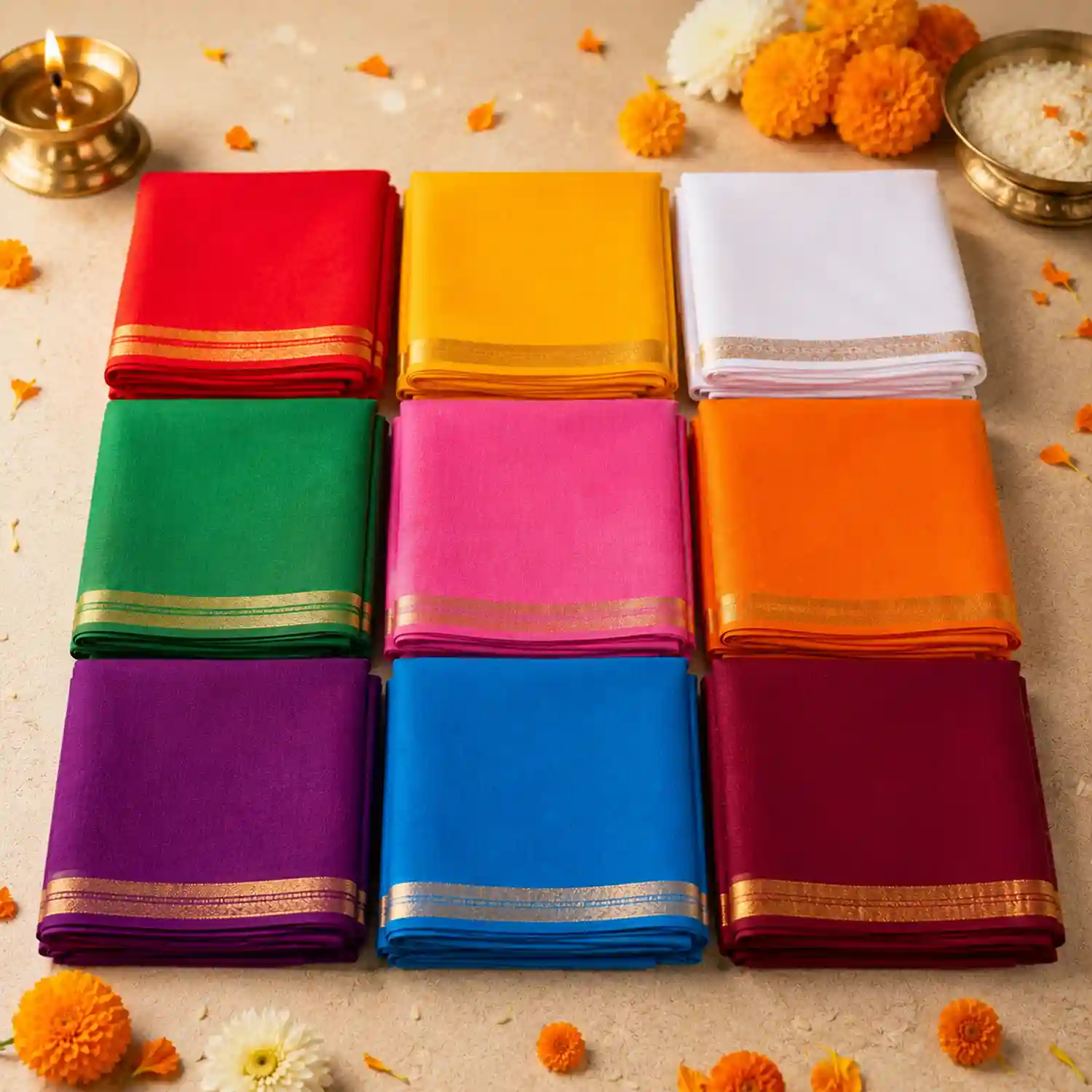
- The White Homa Cheli (sacred white cloth) is used by the priest during Step 1 (Sankalp). Before the main bonfire structure is lit, a small, formal invocation Puja Place is set up nearby to honor Lord Ganesha and the Sun God. The white cloth is used to drape this preliminary Puja Place table or wrap the baseline ritual tools, ensuring strict scriptural purity before the public folk dancing begins.
- Q5: How should the Chhobra (Coconut Husk) and Cow Dung be physically sequenced with the Bel Kath to ensure a proper Agni Sthapana?
- To build a scripturally compliant and structurally sound community fire:
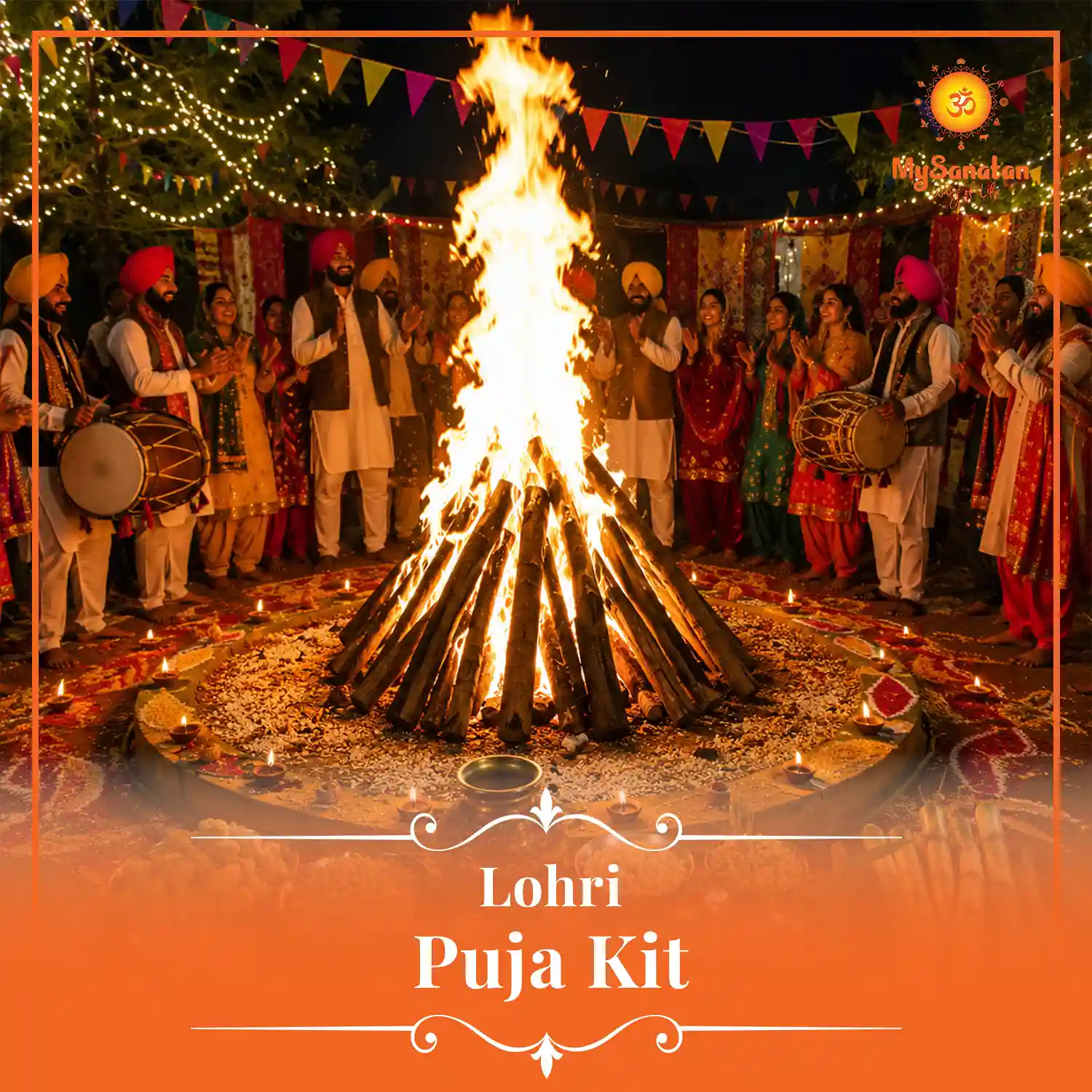
- Arrange the Cow Dung cakes to form a hollow, stable base pyramid on the purified ground.
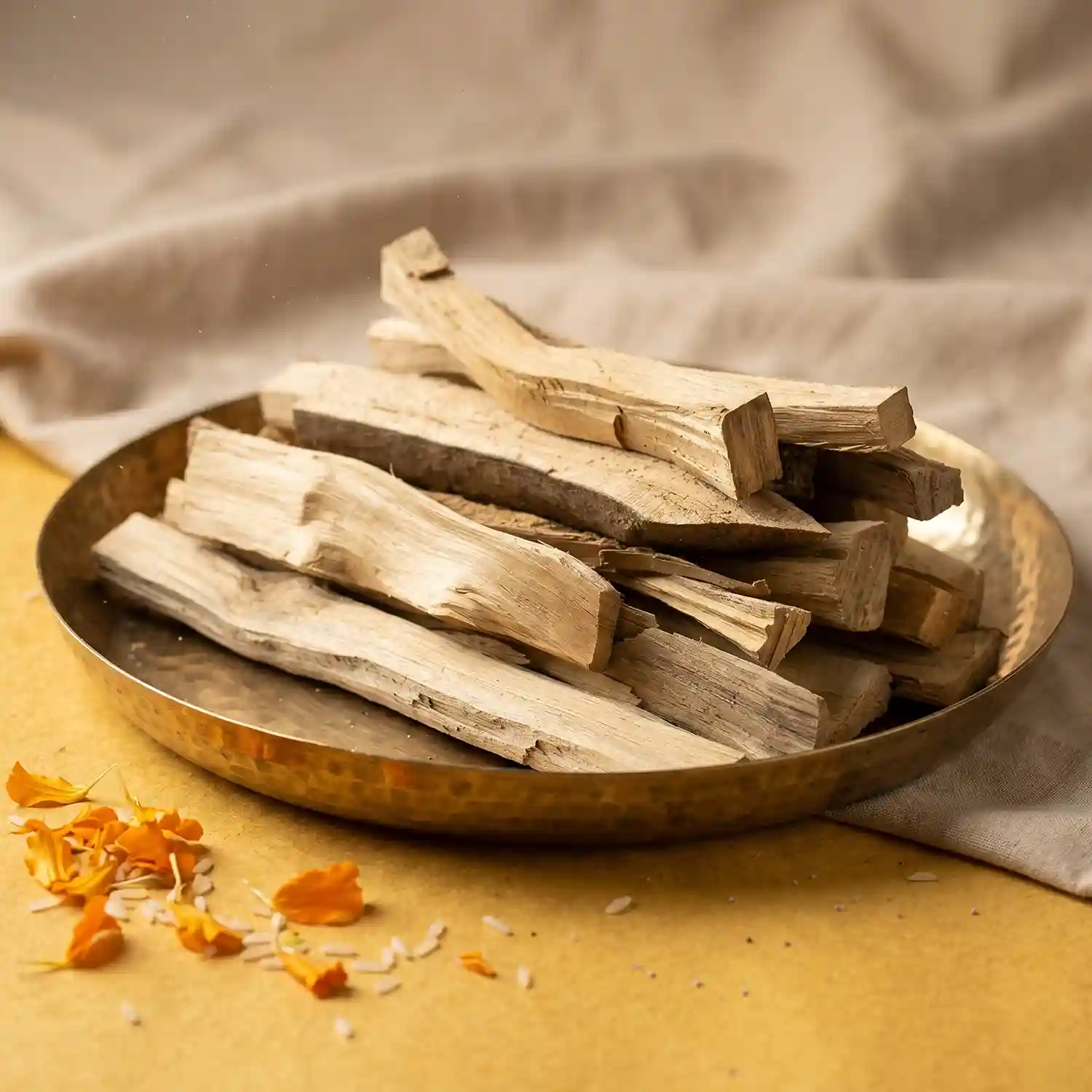
- Lean the heavy Bel Kath (Bael wood) logs vertically against this base to ensure structural longevity.
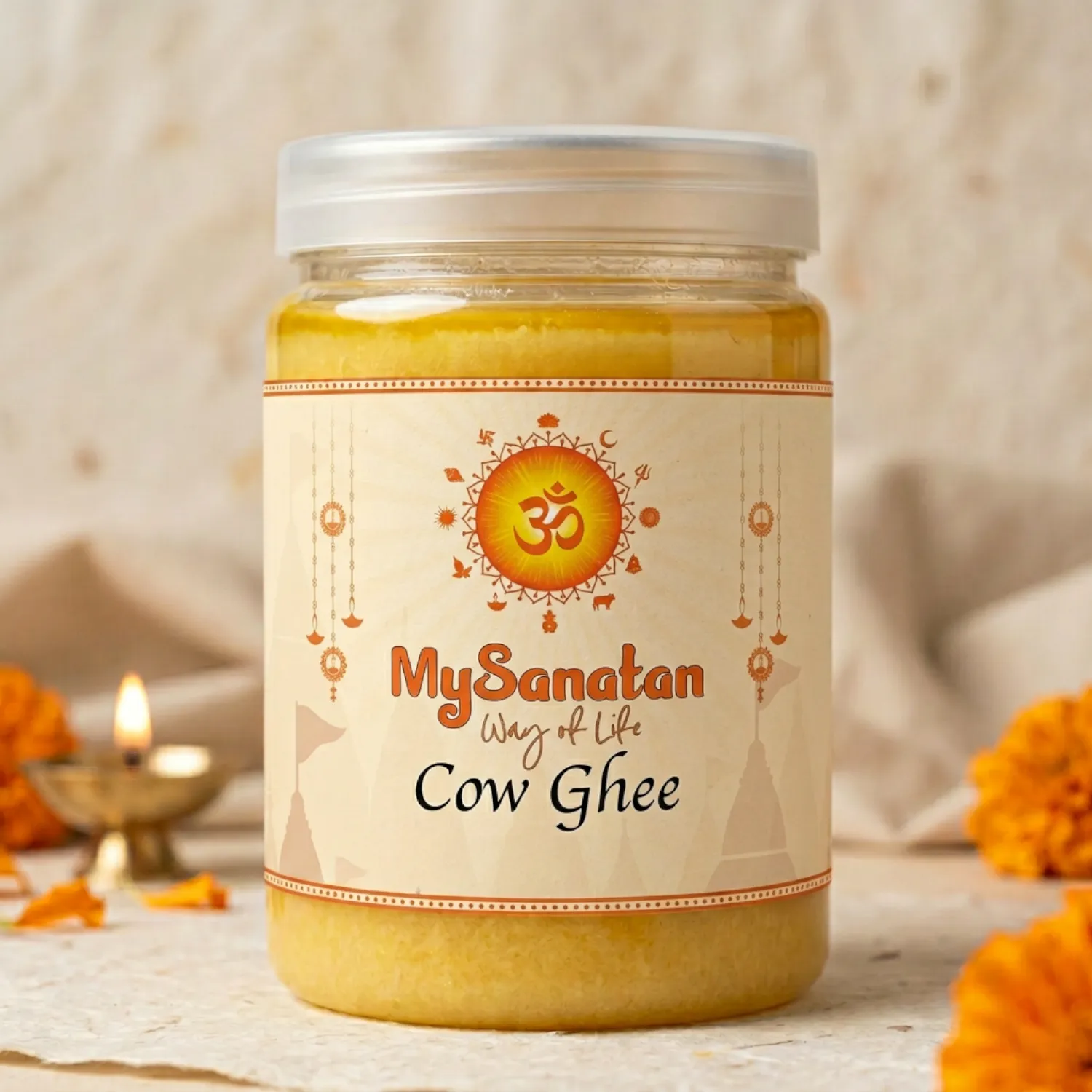
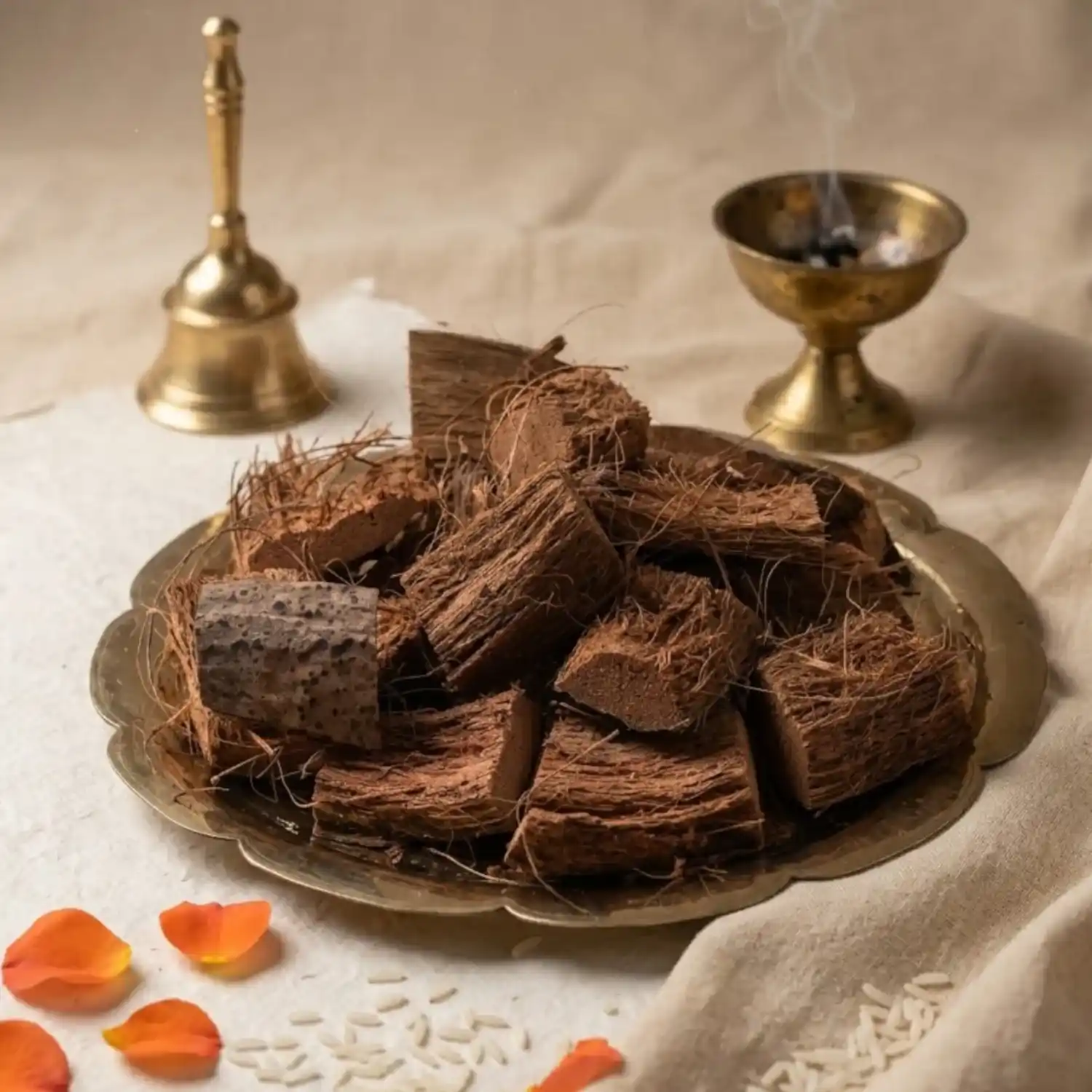
- Place the highly flammable Chhobra (Dry Coconut Husk) right at the hollow center of the pile. When the priest pours the Cow Ghee and ignites the core, the husk catches instantly, seamlessly spreading the sacred fire outward to the wood and dung cakes without the use of chemical fire starters.
- Q6: What is the specific ritual role of Joggo Dumur Pata (Audumbar Samit) in an outdoor community bonfire?
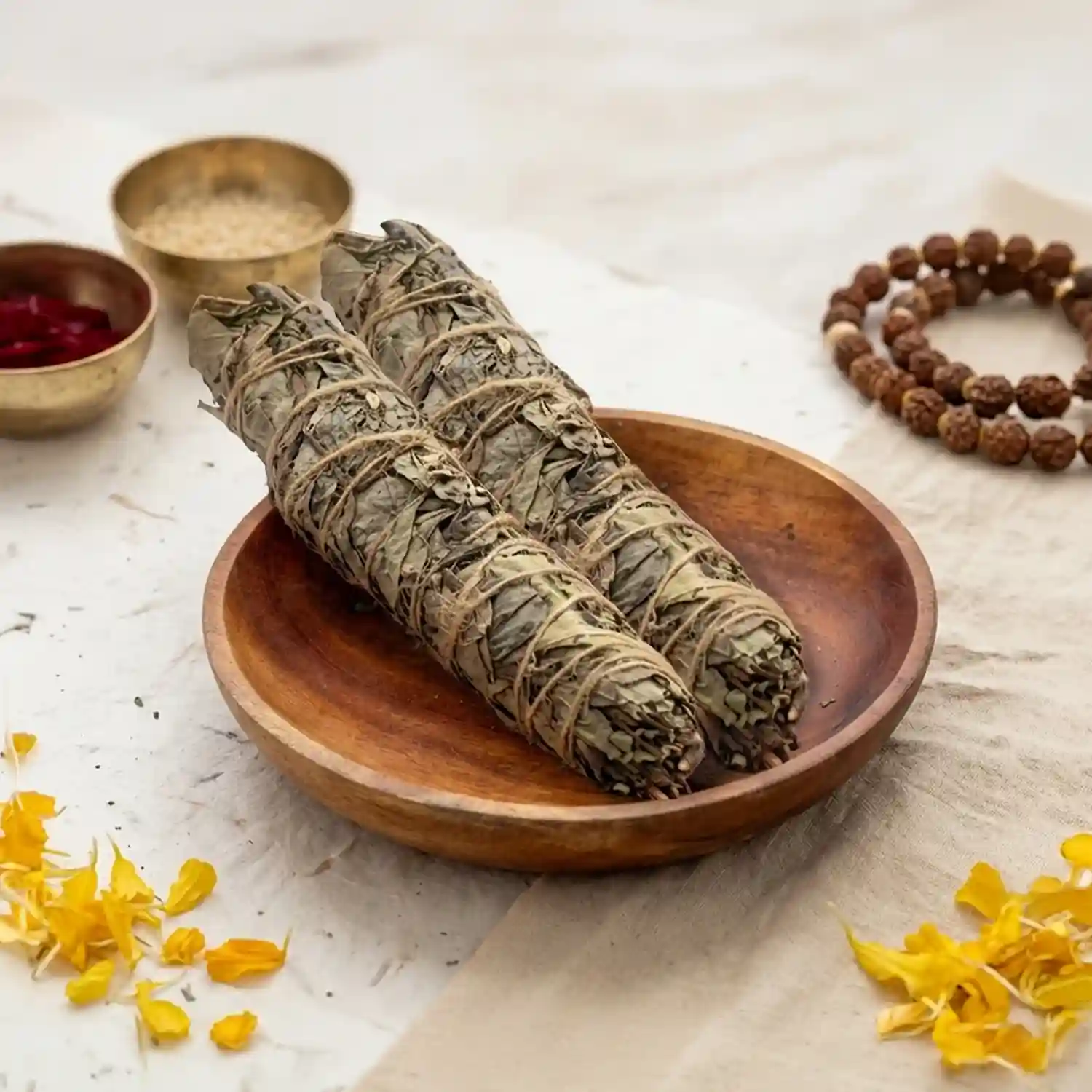
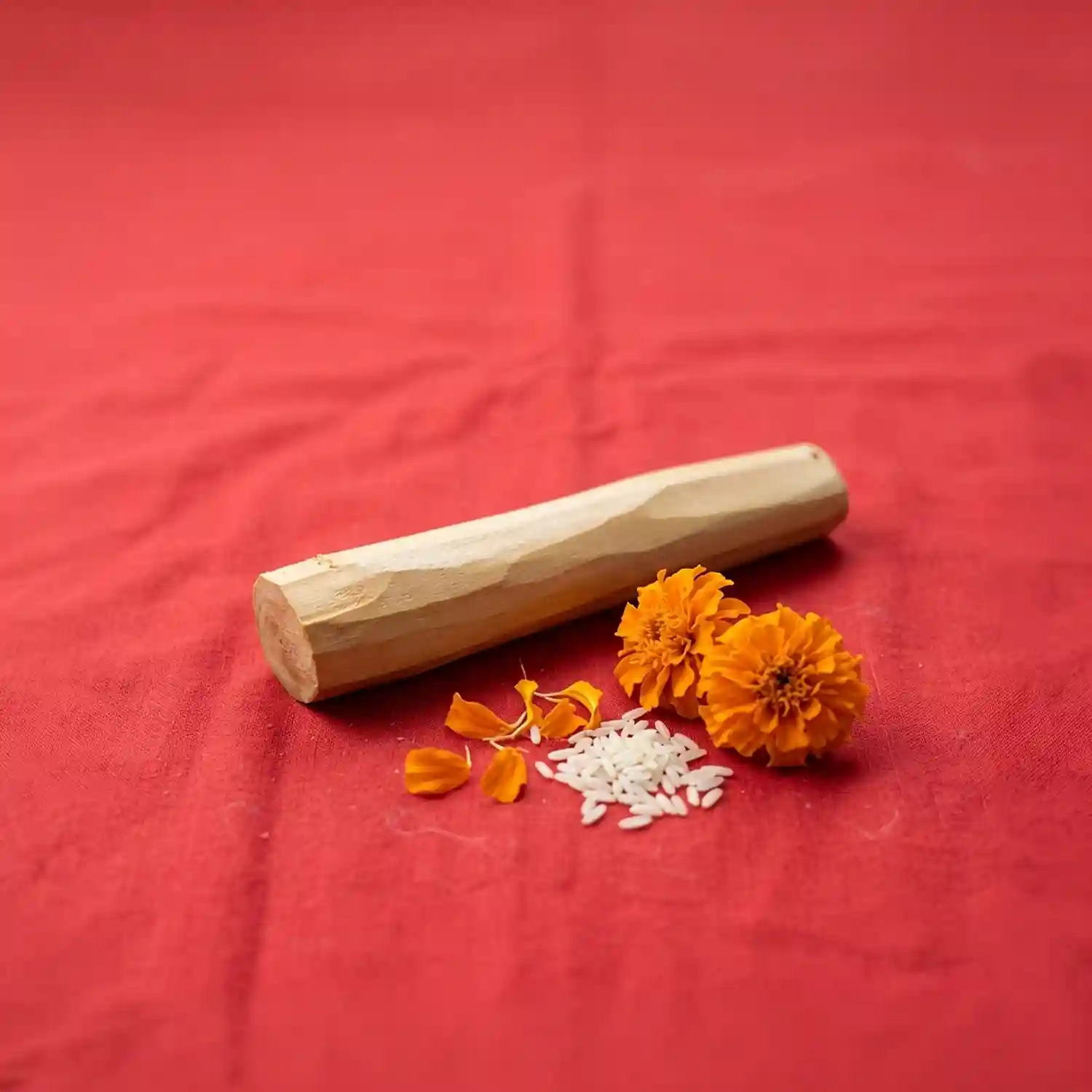
- Before the public throws their harvest offerings into the flames, the fire must be elevated to a divine messenger. The priest utilizes the Joggo Dumur Pata (Sacred Cluster Fig twigs) as the primary Samidha (sacred fuel). Dipping these twigs into the Cow Ghee and offering them during Step 2 (Agni Invocation) formally invites the deity into the fire, anchoring the ritual before the Parikrama begins.
- Q7: Why does the kit include high volumes of Dhuna Powder and Guggal for an outdoor event?
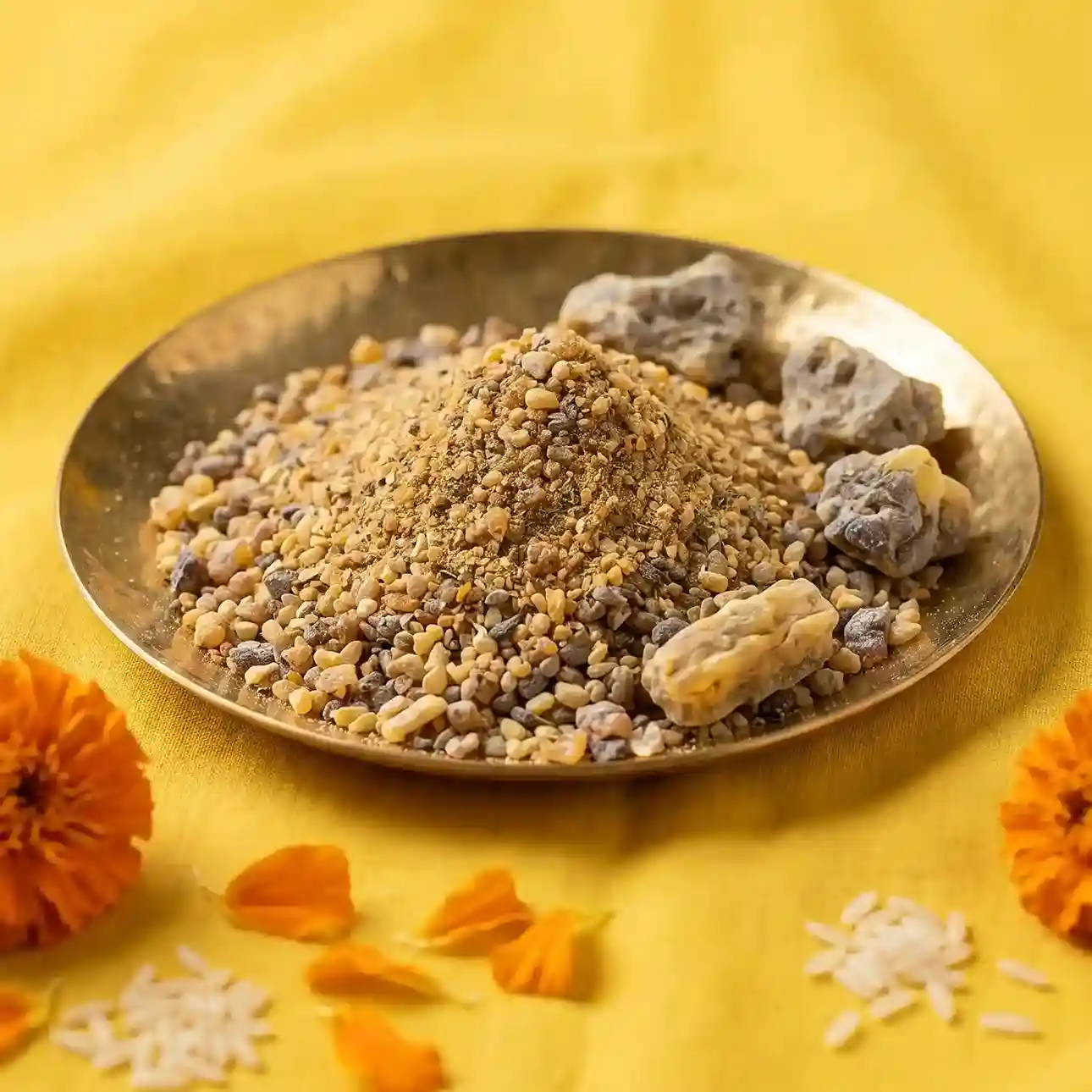
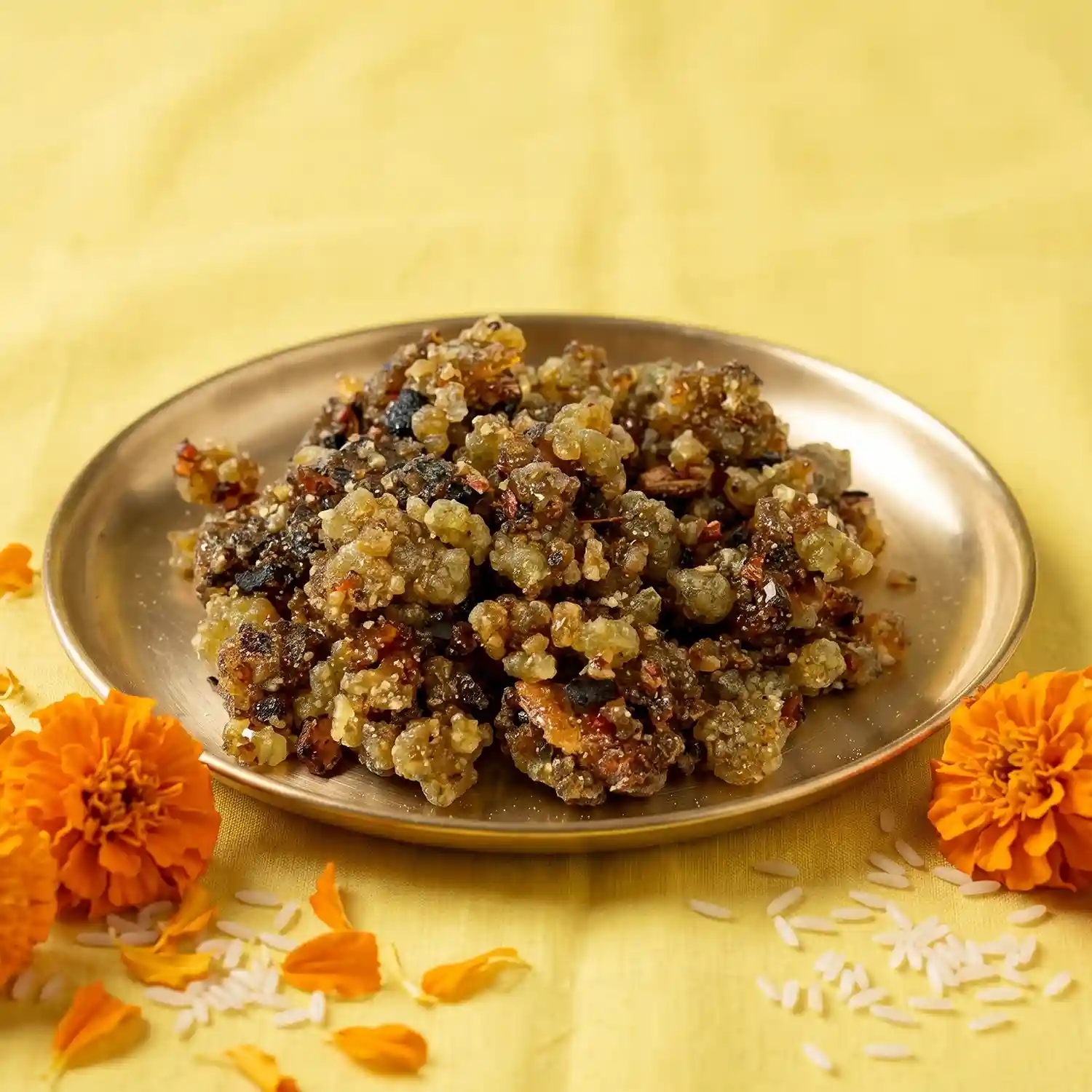
- A large wood-and-dung bonfire naturally creates dense, heavy smoke. Toward the end of the night during Step 5 (Grand Aarti), dropping the 150g of Dhuna Powder and 50g of Guggal directly onto the hot, glowing embers creates a powerful medicinal cloud. This specific Ayurvedic combination cuts through the heavy wood smoke, neutralizes outdoor air impurities, and releases volatile oils that relieve winter respiratory congestion for the gathered crowd.
_11zon.webp)
_4_11zon.webp)


jpg_11zon.webp)
_11zon.webp)
_11zon.webp)
laddu gopal old chalu dress 3_11zon.webp)
_3_11zon.webp)

_11zon.webp)
_11zon.webp)
_11zon.webp)

_11zon.webp)
_11zon (1).webp)
_11zon.webp)
_11zon.webp)