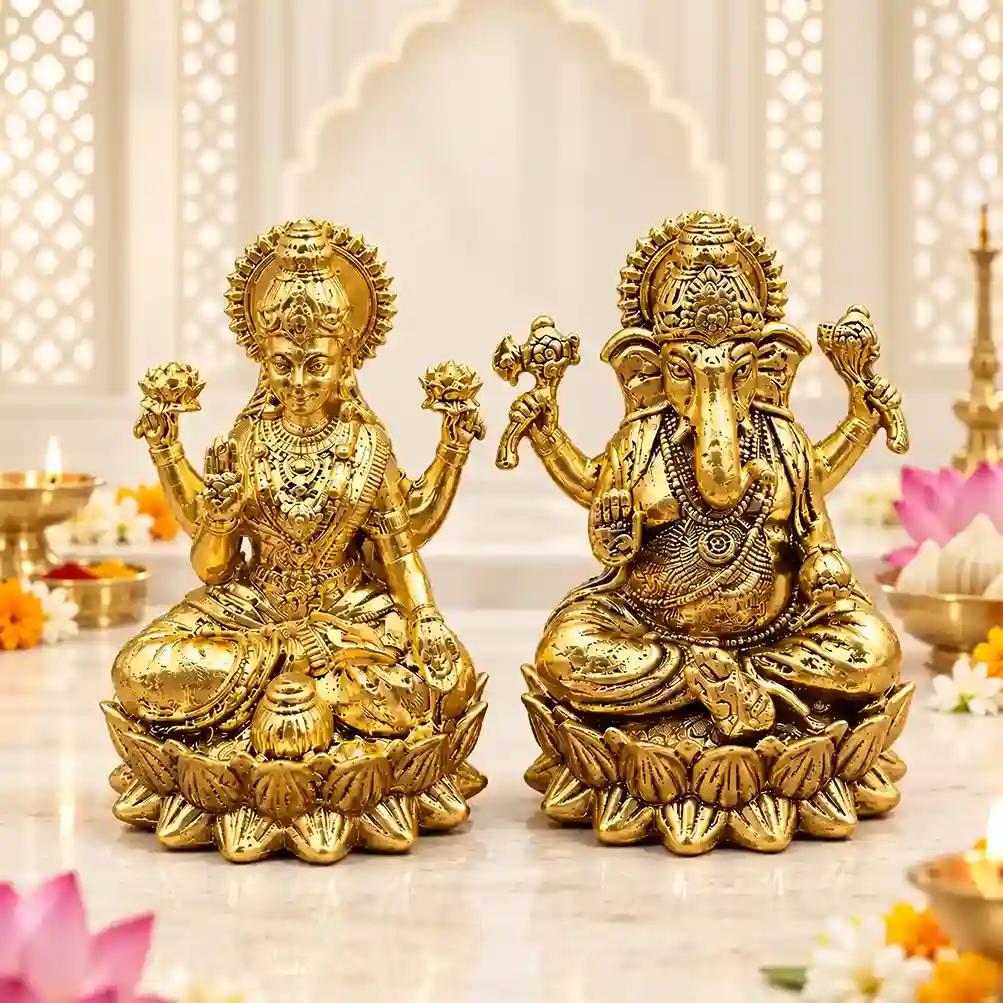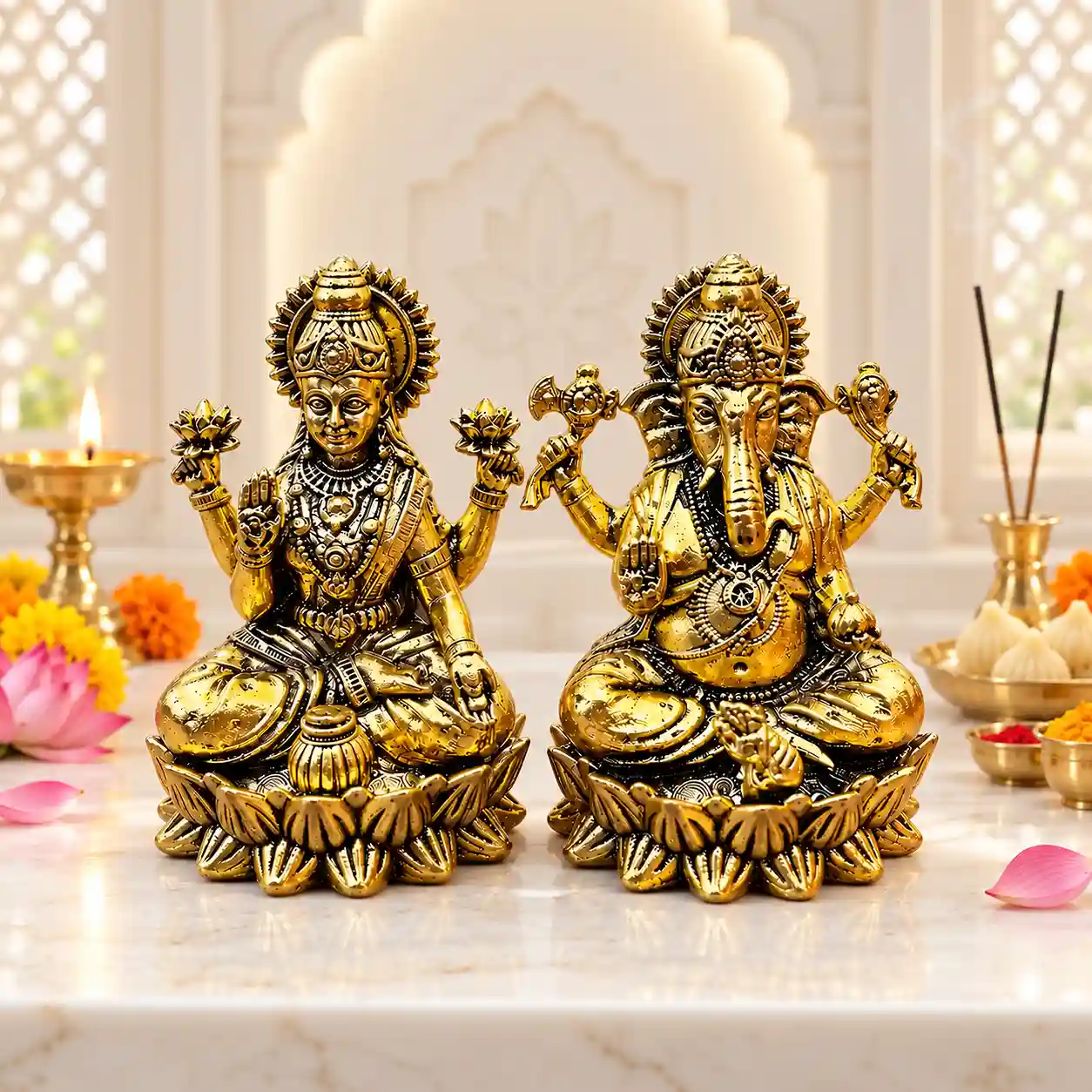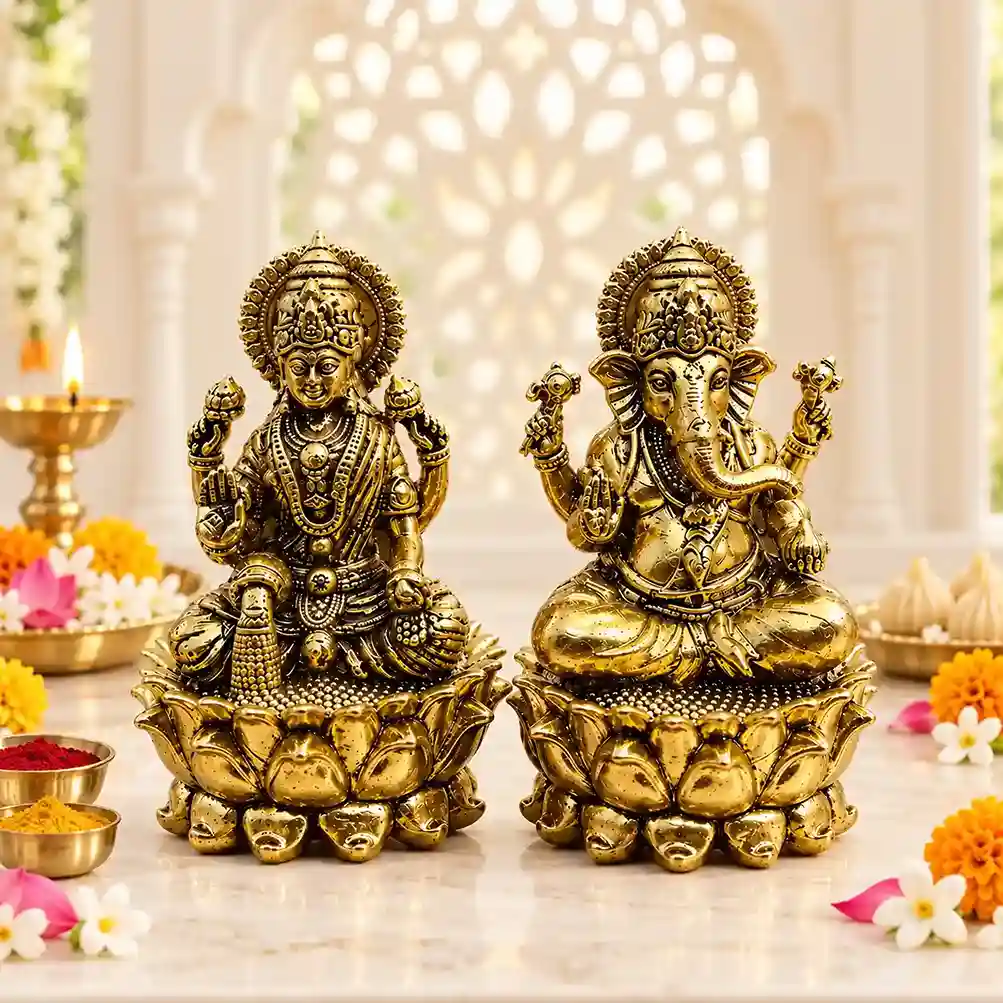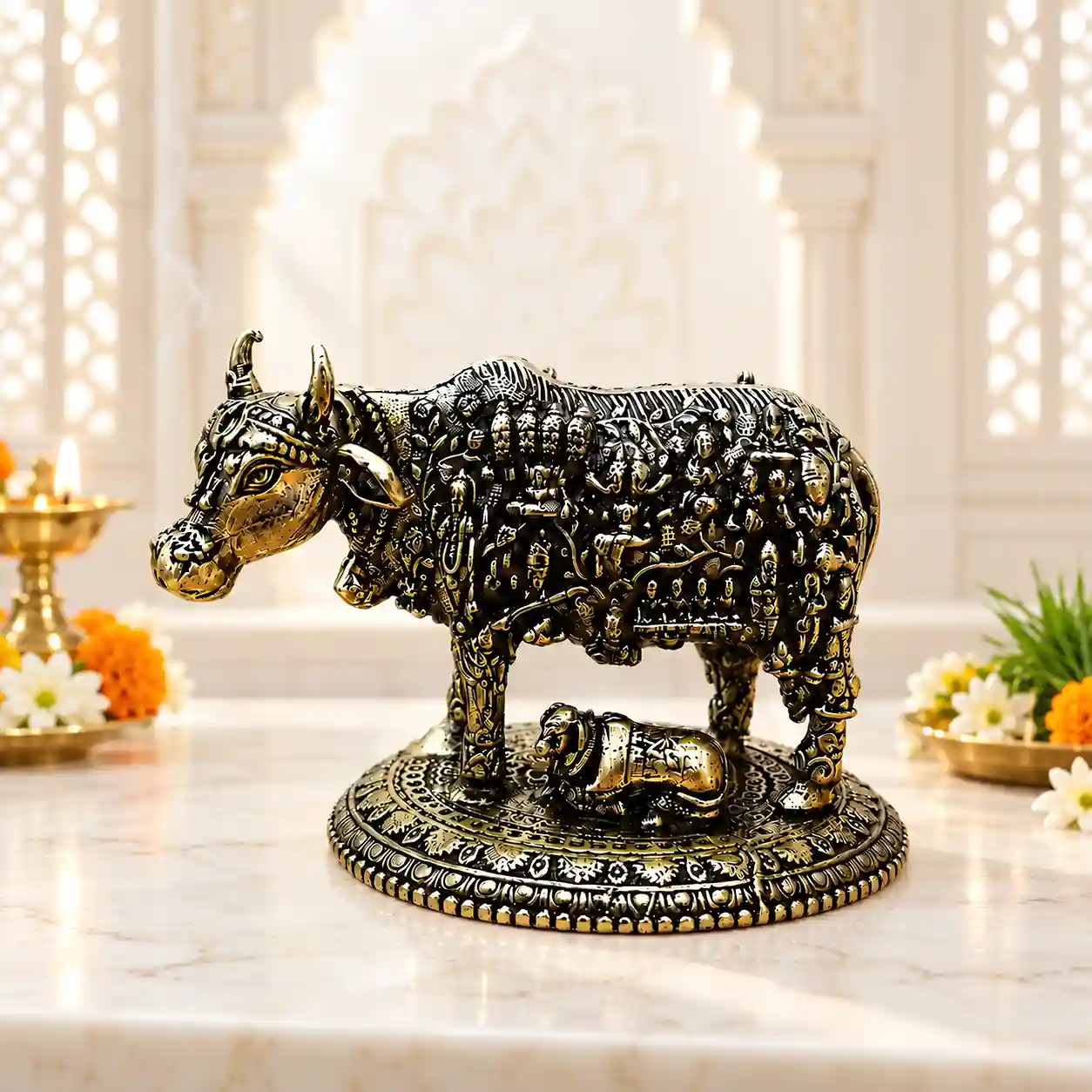
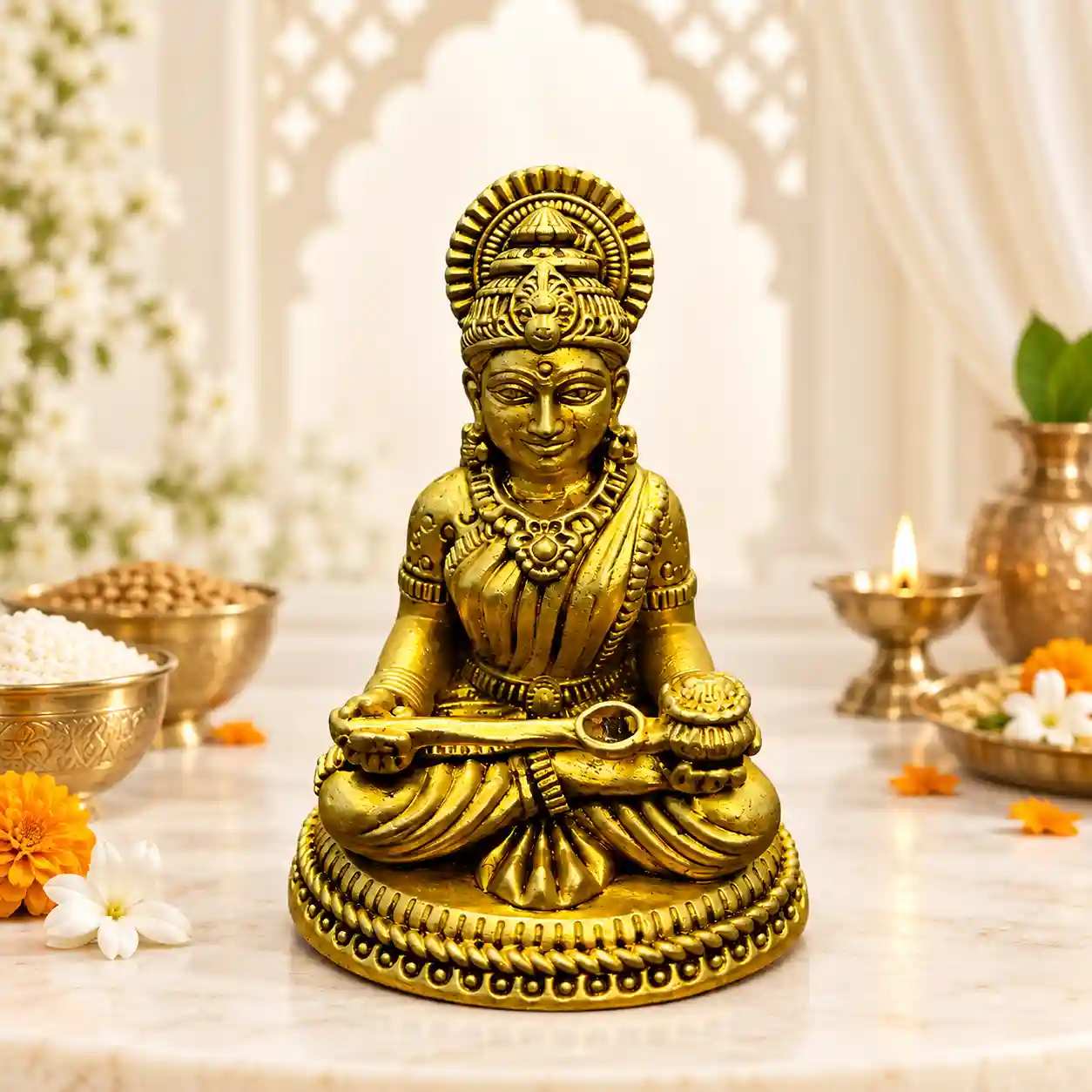
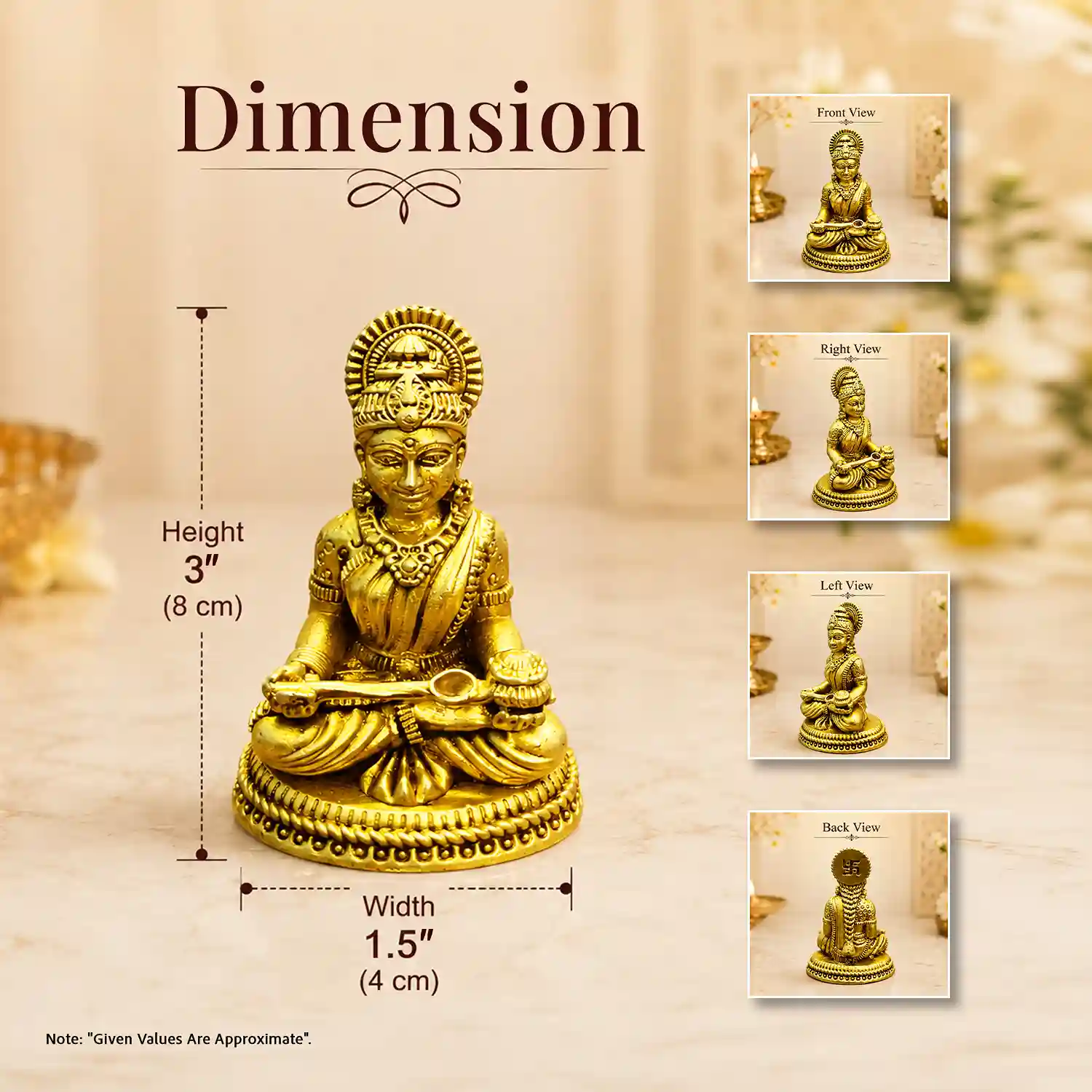
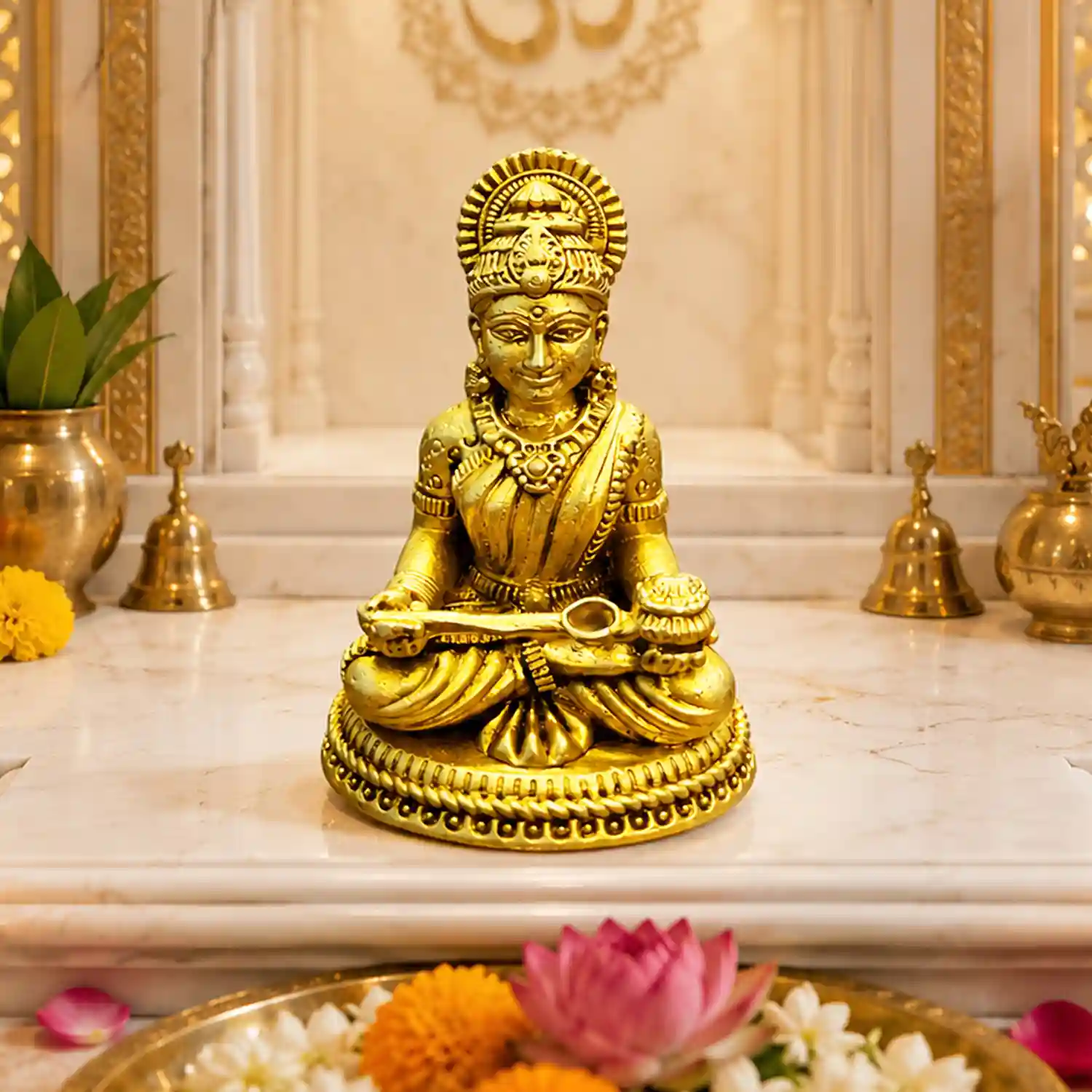
Goddess Annapurna Devi with Ladle Superfine Pure Brass Murti | Symbol of Food & Nourishment| 8 cm
1 Piece
₹599
MRP 1399
Discount: 57% OFF 57% OFF Availablity: Only 3 left
- Maa Annapurna is revered as the Goddess of food and nourishment, embodying the sacred truth that Anna sustains all life. Her worship inspires gratitude for food, generosity towards others and reverence for the Divine Mother's sustaining grace.
- Devi Annapurna Katha: Once Lord Shiva declared that the entire world including food is Maya (illusion) — hearing this, Goddess Parvati became angered and vanished, causing all food to disappear from the three worlds; men, sages, and even the gods were afflicted by terrible hunger and abandoned all their duties, for without nourishment no pursuit of Dharma or salvation was possible. When Shiva himself, suffering from hunger, finally came begging for food with his bowl at the doorstep of Kashi (Varanasi), Parvati appeared in her glorious form as Devi Annapurna — the Goddess of Food and Nourishment — with a golden pot and ladle, and lovingly fed Shiva with her own hands, proving that food is not illusion but the very foundation of life and spiritual progress.
|
|
|---|---|
|
|
|
|
|
|
|
|
|
|
|
|
|
|
- The name Annapurna combines Anna (food) and Purna (fullness or completeness). Maa Annapurna is worshipped as the divine giver of nourishment and abundance.
- Her worship expresses gratitude for Anna and reminds devotees of the sacred responsibility to respect food, avoid unnecessary waste and share nourishment generously with others.
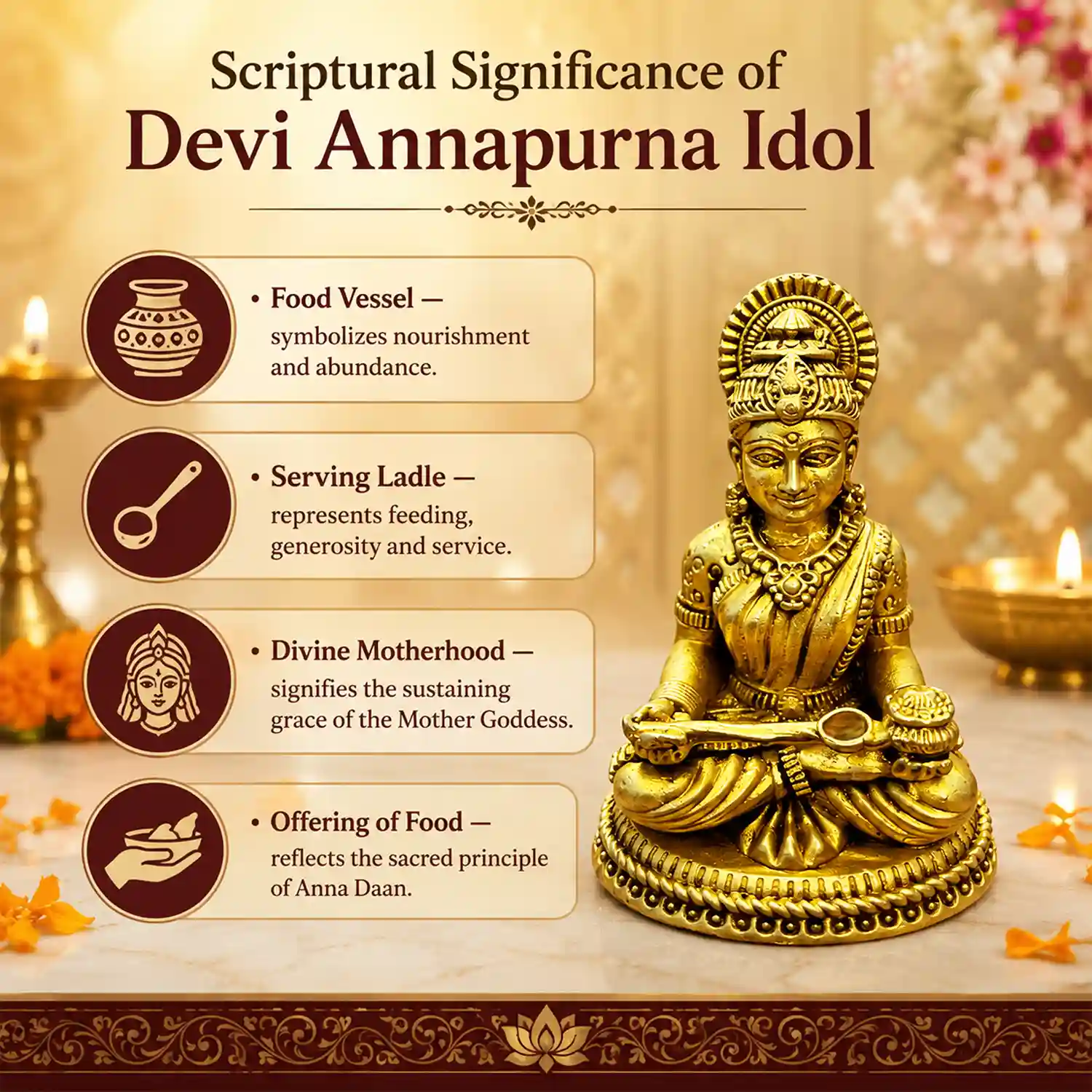
- • Food Vessel — symbolizes nourishment and abundance.
- • Serving Ladle — represents feeding, generosity and service.
- • Divine Motherhood — signifies the sustaining grace of the Mother Goddess.
- • Offering of Food — reflects the sacred principle of Anna Daan.
Together, these elements remind devotees to receive food with gratitude and share it with compassion.
- • Seeking blessings for food and nourishment.
- • Inviting abundance and well-being into the household.
- • Cultivating gratitude and reverence for Anna.
- • Encouraging generosity and Anna Daan.
- • Honouring the nurturing grace of the Divine Mother.
- For generations, Maa Annapurna has reminded devotees that food is sacred and should be received with gratitude, respected and shared generously.
- The idol may be respectfully placed:
- • In a clean home mandir or dedicated puja space.
- • On a clean and elevated platform.
- • In or near a clean kitchen area, according to family tradition.
- Placement customs may vary according to regional and family traditions.
- • Daily Maa Annapurna Puja.
- • Annapurna Jayanti worship.
- • Prayers of gratitude before preparing or serving food.
- • Anna Daan and food-distribution occasions.
- • Housewarming and other auspicious household ceremonies.
- • Clean gently with a soft, dry cloth.
- • Keep the idol in a clean and respectful place.
- • Avoid harsh chemicals or abrasive cleaners.
- • Protect from excessive moisture.
- 1. What does Maa Annapurna represent?
- Maa Annapurna represents food, nourishment, abundance, generosity and the sustaining grace of the Divine Mother.
- 2. Why does Maa Annapurna hold a vessel and ladle?
- The food vessel and serving ladle symbolize nourishment and the sacred act of feeding others, emphasizing generosity and Anna Daan.
- 3. Can Maa Annapurna be worshipped daily?
- Yes. Devotees may worship Maa Annapurna daily with prayers expressing gratitude for food and nourishment.
- 4. Can the Annapurna Idol be kept in the kitchen?
- According to some household traditions, Maa Annapurna may be respectfully placed in a clean and elevated space in or near the kitchen. Alternatively, the idol may be kept in the home mandir.
- Devi Annapurna Idol | Maa Annapurna Idol | Pure Brass Annapurna Idol | Brass Annapurna Devi Murti | Annapurna Mata Brass Idol | Annapoorneshwari Brass Idol | Annapoorna Devi Idol | Goddess Annapurna Brass Statue | Brass Annapurna Murti | Annapurna Mata Idol | Kitchen Goddess Annapurna Idol | Brass Annapurna Ji Idol | Annapurna Devi Vigraha | Annapurna Brass Puja Idol | Anna Purna Devi Idol
- The spiritual significance and worship guidance above are based on Hindu devotional traditions and long-standing practices. Customs may vary according to regions, sampradayas and family traditions. This information is intended for devotional understanding and does not guarantee specific outcomes
_11zon.webp)
_11zon.webp)
_11zon.webp)
_11zon.webp)