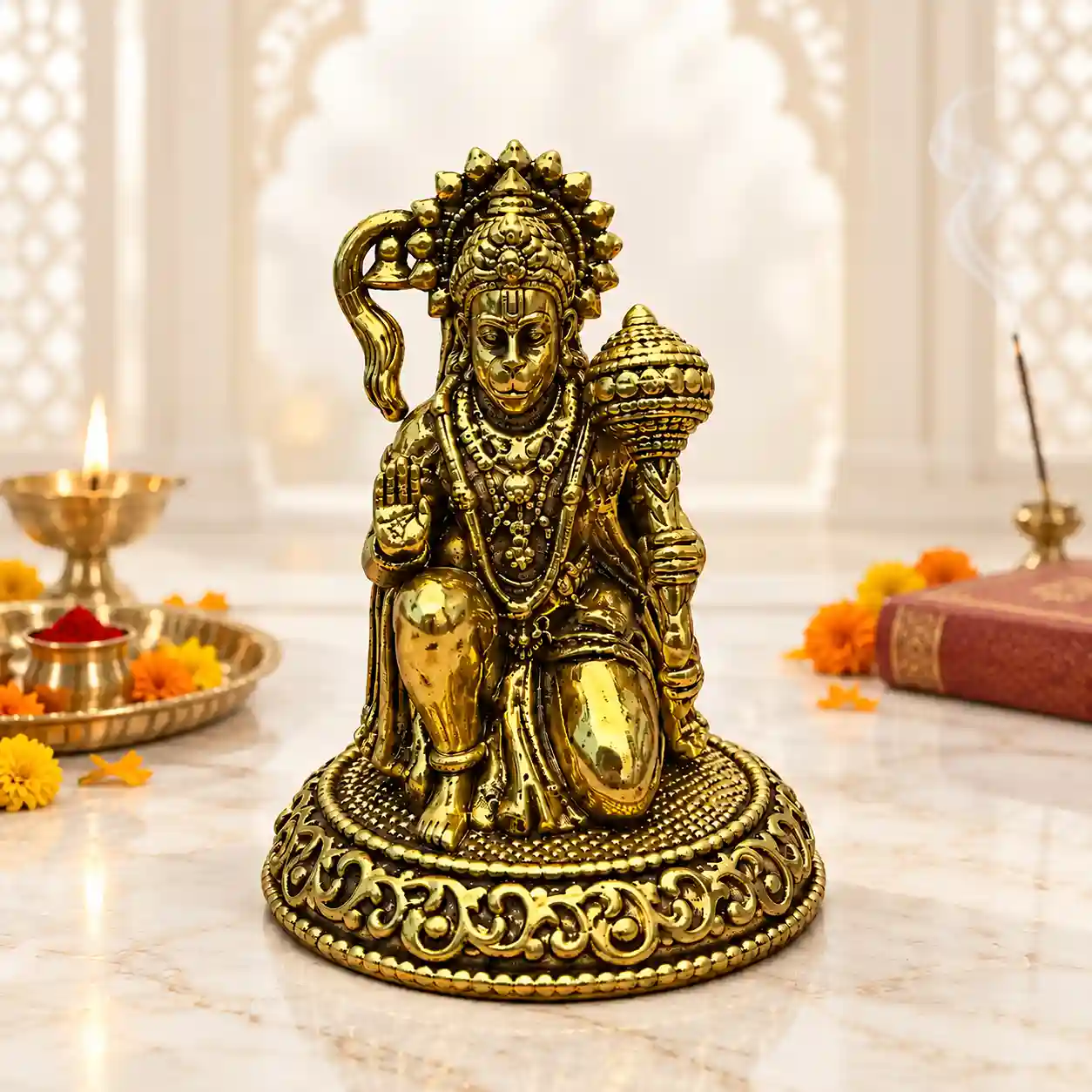
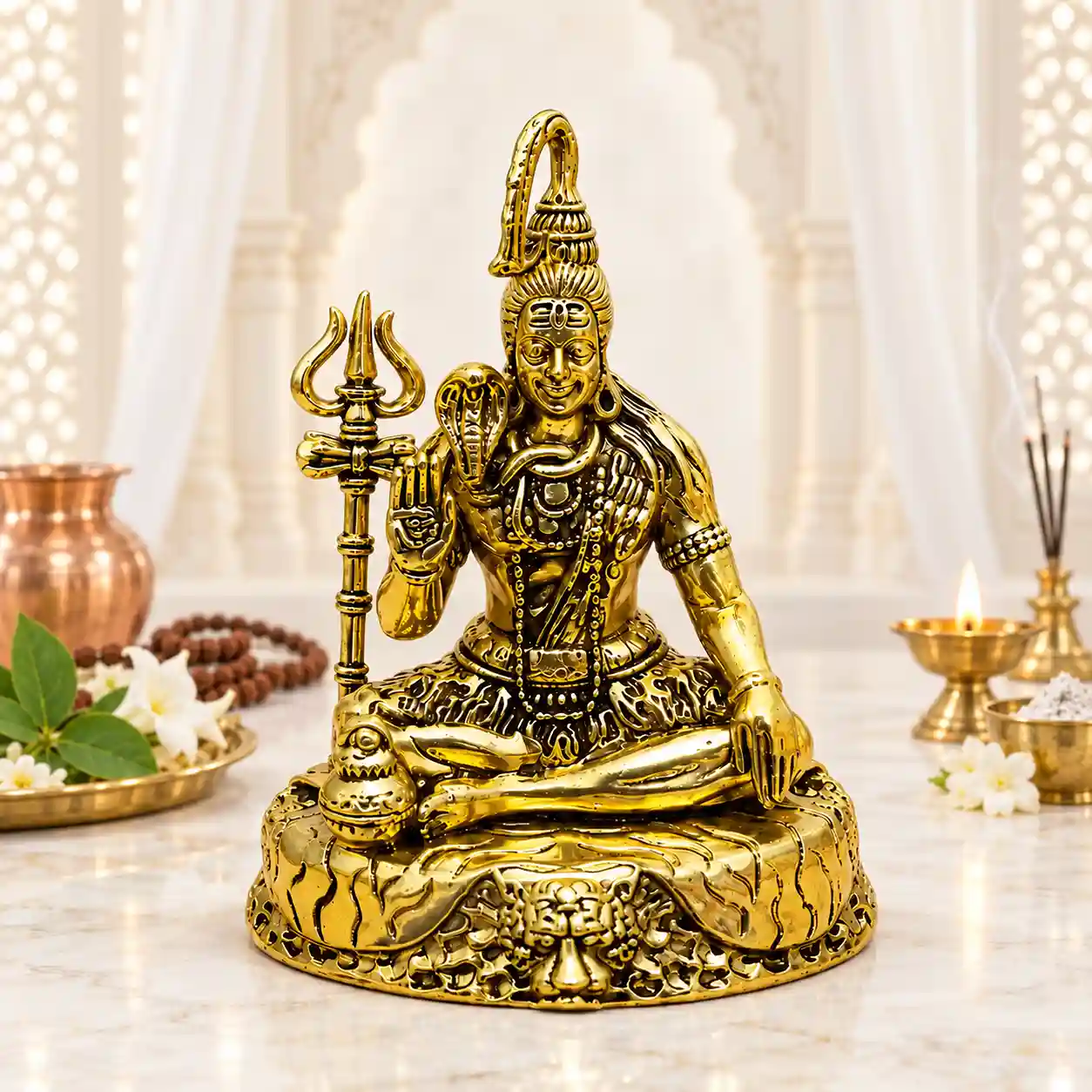
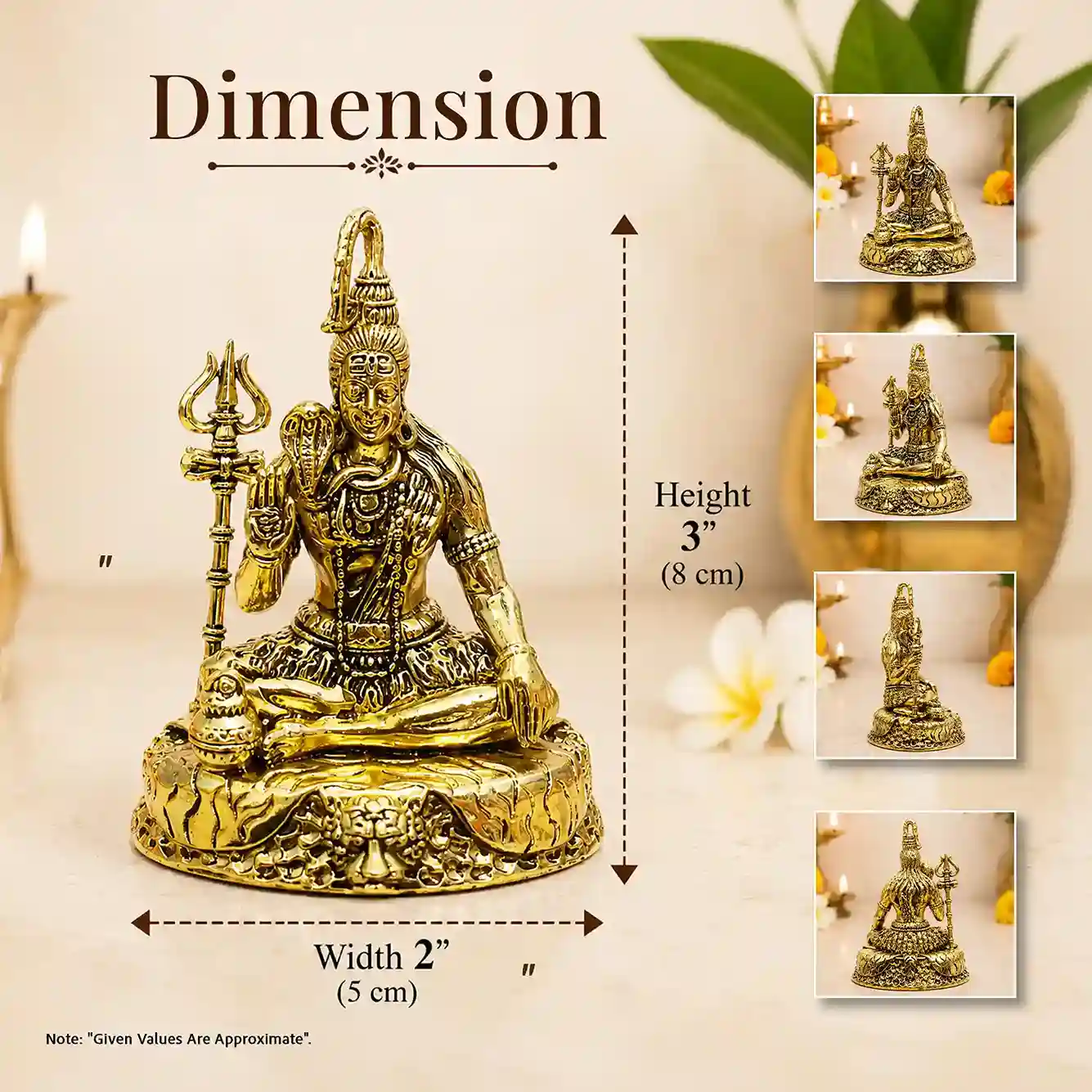
Adiyogi Lord Shiva (Mahadev) Pure Brass Idol with Abhaya Mudra | 8 cm
1 Piece
₹999
MRP 1999
Discount: 50% OFF 50% OFF Availablity: Only 4 left
- Lord Shiva, revered as Mahadev, embodies supreme consciousness, detachment and spiritual transformation. His meditative form represents mastery over the mind and ego, while the sacred Trishul symbolizes divine authority over the fundamental forces of existence.
- Lord Shiva Katha: Lord Shiva, known as Mahadev, is the eternal Supreme Being — the creator, protector, and destroyer of the universe who embodies Satyam (Truth), Shivam (Goodness), and Sundaram (Beauty). When the deadly Halahal poison emerged during Samudra Manthan and threatened to destroy all creation, it was Mahadev who drank it and held it in his throat, becoming Neelkanth — the Chandra (Moon) on his forehead cooled the poison's heat, the sacred Ganga in his Jata purified the worlds, and the serpent Vasuki coiled around his neck as a garland of his fearlessness over death. His Damru produced the first primordial sound "Om" from which all creation emerged, his Trishul governs the three worlds, and his third eye holds the fire that shall dissolve the universe at the end of time. He resides atop Mount Kailash as the supreme Yogi.
|
|
|---|---|
|
|
|
|
|
|
|
|
|
|
|
|
|
|
- Lord Shiva is worshipped as Mahadev — the Great God, representing the dissolution of ignorance, mastery over the mind and spiritual transformation.
- Through Bhakti, meditation and mantra japa, devotees seek Mahadev's grace for inner strength, wisdom, peace and progress on the spiritual path.
- Lord Shiva is deeply revered across the Vedas, Puranas and Shaiva traditions. The Vedic Shri Rudram praises Rudra, while Shaiva traditions worship Shiva as the supreme divine reality.
- His sacred form carries profound symbolism:
- • Third Eye — divine wisdom and the destruction of ignorance.
- • Crescent Moon — mastery over time and the changing mind.
- • Meditative Form — inner stillness, self-mastery and detachment.
- Together, these symbols inspire devotees to rise above ignorance and seek higher spiritual awareness.
The Trishul (Trident) is one of Lord Shiva's most sacred symbols. Its three points are traditionally associated with:
- • Creation, Preservation & Dissolution
- • Past, Present & Future
- • Body, Mind & Spirit
In the hands of Mahadev, the Trishul symbolizes divine mastery over the threefold forces of existence and the transcendence of worldly limitations.
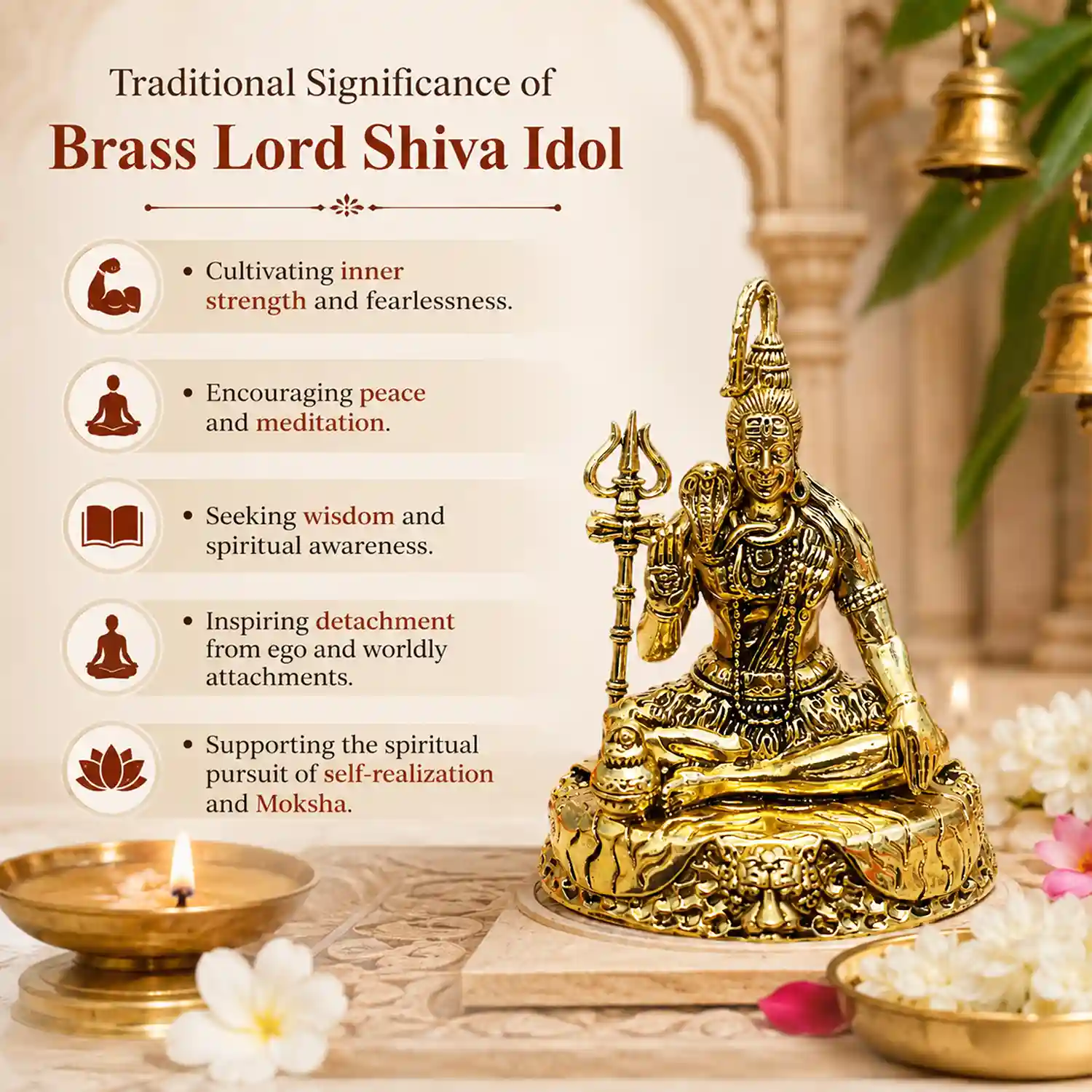
- • Cultivating inner strength and fearlessness.
- • Encouraging peace and meditation.
- • Seeking wisdom and spiritual awareness.
- • Inspiring detachment from ego and worldly attachments.
- • Supporting the spiritual pursuit of self-realization and Moksha.
- • In a clean home mandir or dedicated puja space.
- • On a clean and elevated platform.
- • In a peaceful area maintained respectfully for worship.
- • Placement traditions may vary according to family customs and Shaiva traditions.
- • Daily Shiva Puja and meditation.
- • Monday (Somvar) worship.
- • Maha Shivaratri and Shravan Maas.
- • Om Namah Shivaya mantra japa.
- • Rudrabhishek and other Shiva devotional observances.
- • Wipe gently with a soft, dry cloth.
- • Keep the idol clean and dry.
- • Avoid harsh chemicals or abrasive cleaners.
- • Handle the Trishul and detailed portions carefully.
- 1. What does Lord Shiva's Trishul represent?
- The Trishul traditionally symbolizes sacred triads such as creation, preservation and dissolution, representing Mahadev's transcendence over the forces of existence.
- 2. Can this Lord Shiva Idol be worshipped daily?
- Yes. It may be respectfully placed in a home mandir for daily Shiva Puja, mantra japa, meditation and prayers.
- 3. What can be traditionally offered to Lord Shiva?
- Devotees commonly offer water, Bilva leaves, flowers, fruits and other sattvic offerings according to family and Shaiva traditions.
- 4. Is this idol suitable for Maha Shivaratri worship?
- Yes. Lord Shiva is especially worshipped during Maha Shivaratri, Mondays and the sacred month of Shravan.
- Brass Mahadev Idol | Brass Shiv Ji Murti | Lord Shiva Brass Statue | Brass Bholenath Idol | Brass Shankar Bhagwan Murti | Shiva Trishul Idol | Mahadev Meditation Idol | Brass Adiyogi Murti | Brass Neelkanth Idol | Shiv Shankar Brass Idol | Brass Shiva Puja Murti | Lord Shiva Idol for Home Temple
- The spiritual significance, symbolism and worship guidance above are based on traditional Hindu and Shaiva beliefs and practices. Customs may vary according to region, family tradition and sampradaya. This information is intended for devotional understanding and does not guarantee specific outcomes.
_11zon.webp)
_11zon.webp)
_11zon.webp)
_11zon.webp)