



_9_11zon.webp)
_11zon.webp)
_15_11zon.webp)







_11zon.webp)


Frequently Asked Questions
- Q1: Why is a remedial Vastu Shanti considered more complex than a standard house blessing?
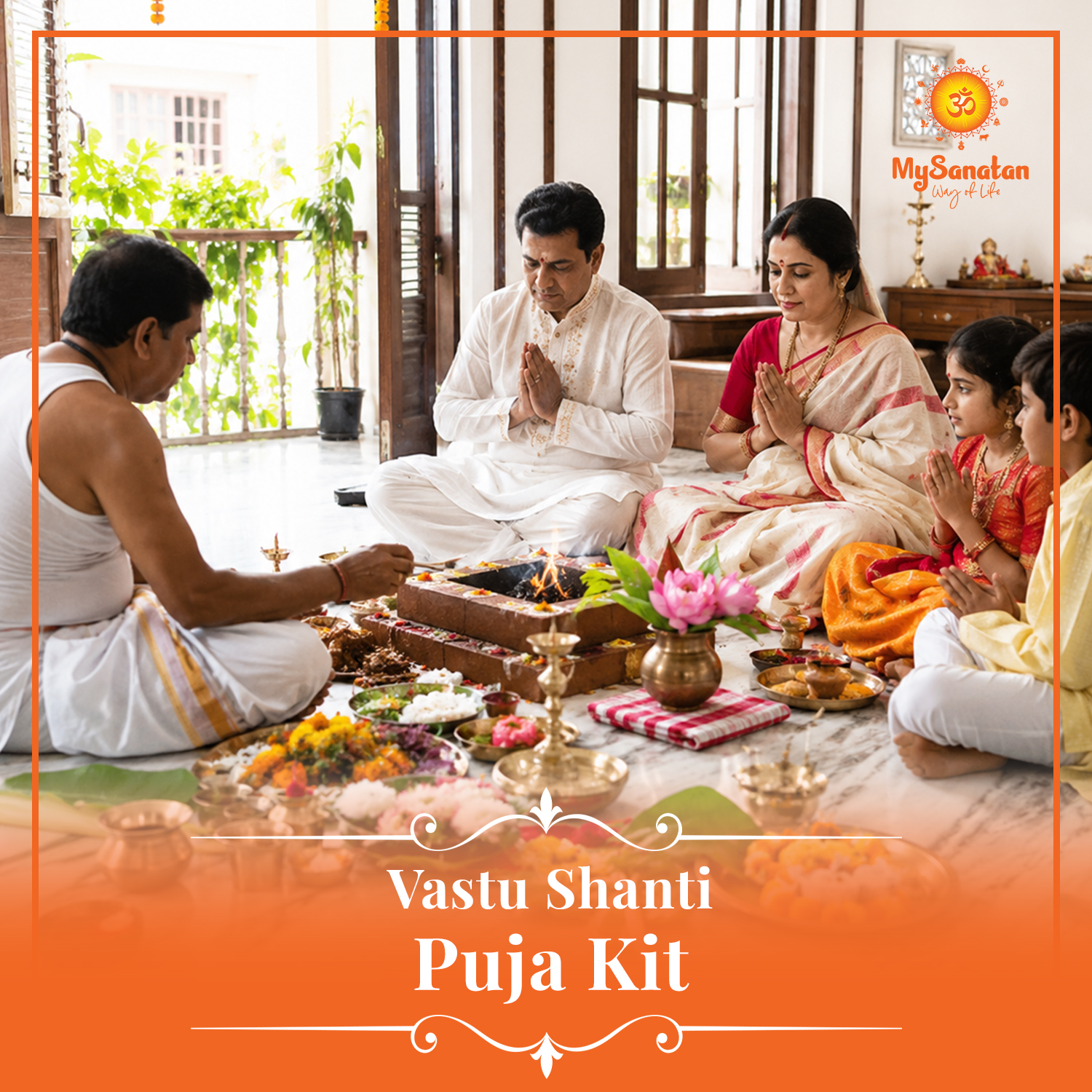
- For Beginners & Architecture Enthusiasts: A standard house blessing is a simple greeting, but a true Vastu Shanti involves a profound architectural ritual known classically as the Chatuṣṣaṣṭipada-Bāstuyāga (the 64-part Vastu sacrifice). According to the Purohit Darpan, the subtle energetic grid of your home is mapped out into 64 specific sections, with the creator deity Brahma residing in the exact center. A complete Vastu Shanti actively recognizes and pacifies each of these 64 distinct energetic forces to completely reset the physical and spiritual balance of the dwelling.
- Q2: We want to clear some heavy negative energy from our pre-owned home. Are there specific days of the week best suited for a Shanti (Pacification) ritual?
- For Experienced Practitioners: Yes, astrological timing is crucial when performing remedial pacifications (Shantyustyayana)! While general worship can happen anytime, the classical manuals instruct that rites meant to clear adverse planetary or karmic energy are most successful when performed during the waxing moon (Shukla Paksha). Furthermore, they should ideally be scheduled on auspicious weekdays such as Sunday, Monday, Wednesday, Thursday, or Friday, especially when aligned with favorable stars like Rohini or Pushya.
- Q3: If our home is experiencing sudden illnesses rather than just financial blockages, are there specific remedies we can add to this puja?
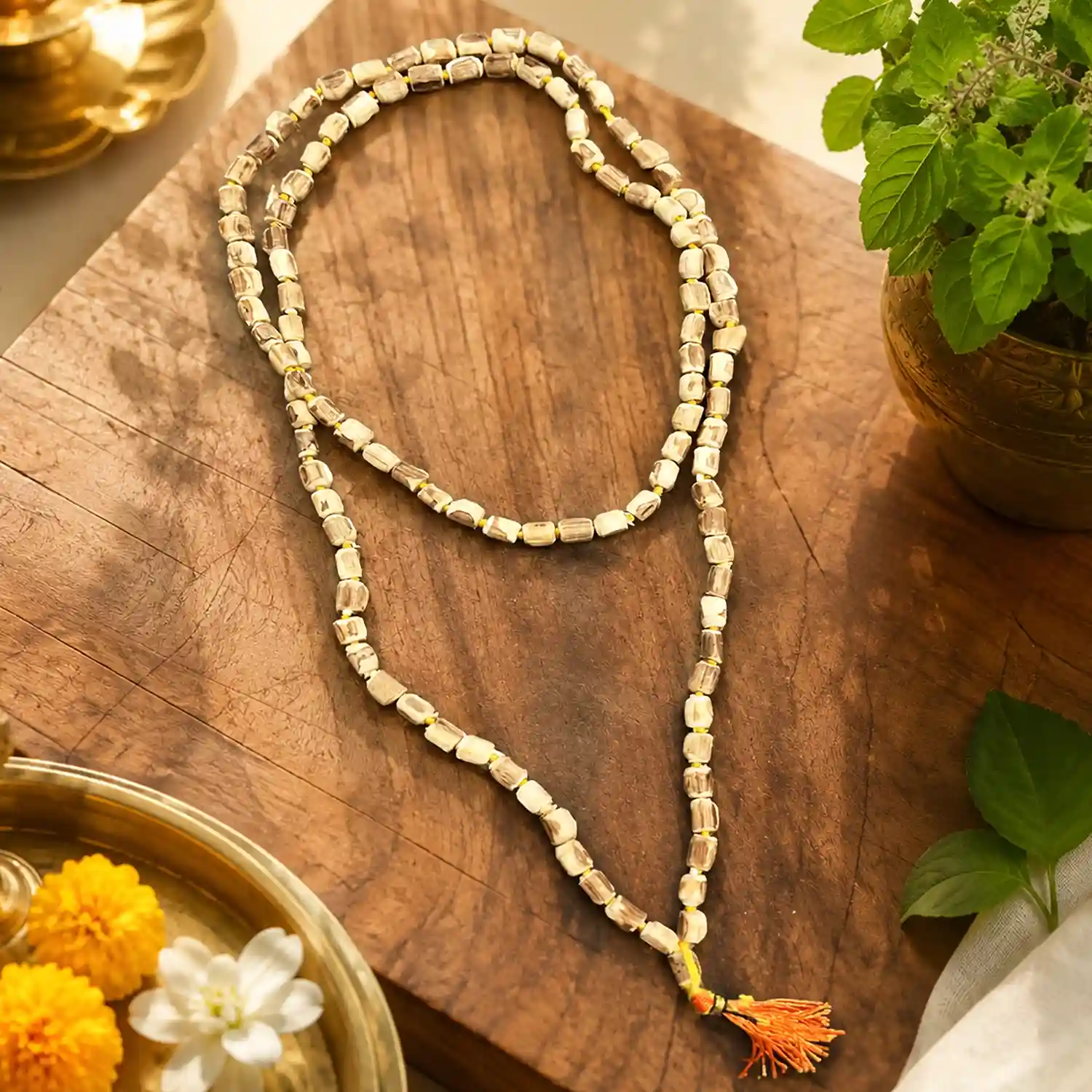
- For Families & Homeowners: Absolutely. The scriptures outline a highly powerful, 5-part remedial practice known as Panchanga-swastyayana, specifically designed to pacify severe physical diseases and deep karmic afflictions. This 5-part method involves chanting from the Chandi, reciting the Durga mantra, worshipping a Shiva linga, offering Tulsi leaves to Lord Narayana, and chanting the Madhusudan mantra. Incorporating these specific prayers into your home worship provides the ultimate spiritual shield for your family's health!
- Q4: We are setting up the "Shanti-Kumbha" (Peace Vase) ourselves. How exactly should it be decorated and placed?
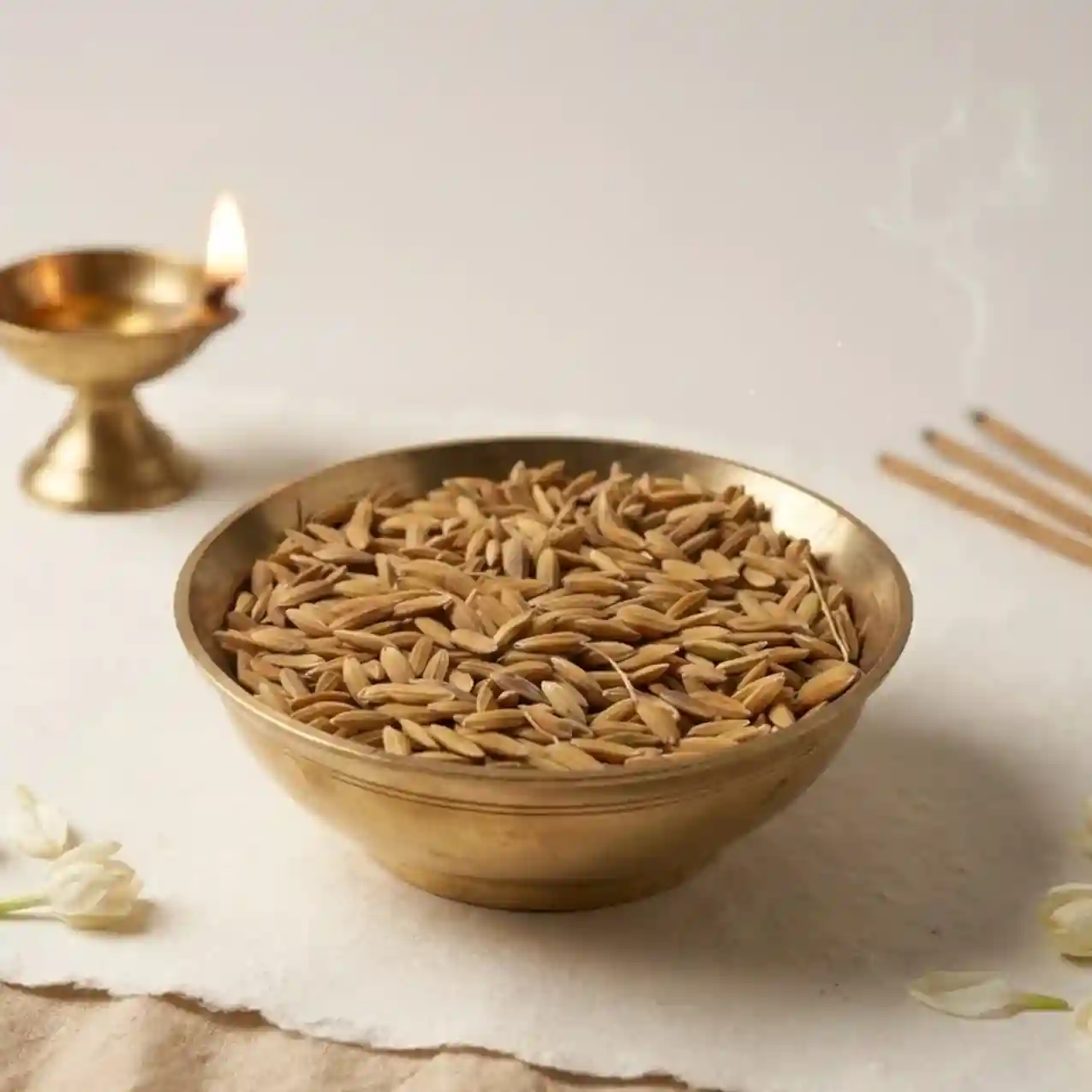
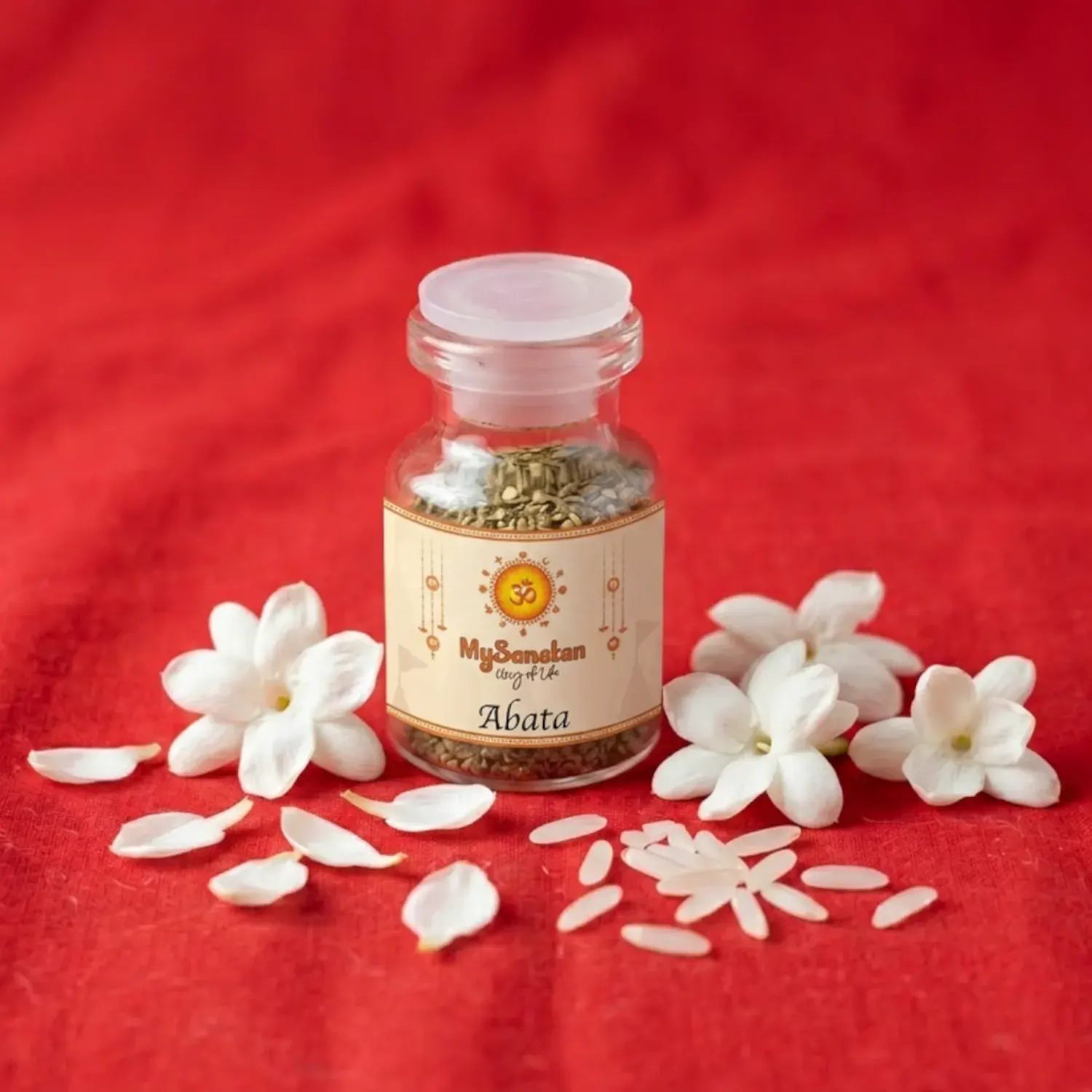
- For Decorators & Beginners: Establishing a peace vase for a remedial Shanti requires a very specific visual and spatial setup! According to the classical texts, the Shanti-Kumbha must be placed strictly in the Northeast corner (Ishana) of your altar or affected space. Unlike standard vases, this specific peace vase must be beautifully decorated on the outside with curds (dadhi) and unhusked rice (akshata) before you place the five sacred leaves (Pancha Pallava) inside it. This specific preparation physically anchors cooling, peaceful energy into the most volatile corners of the house!
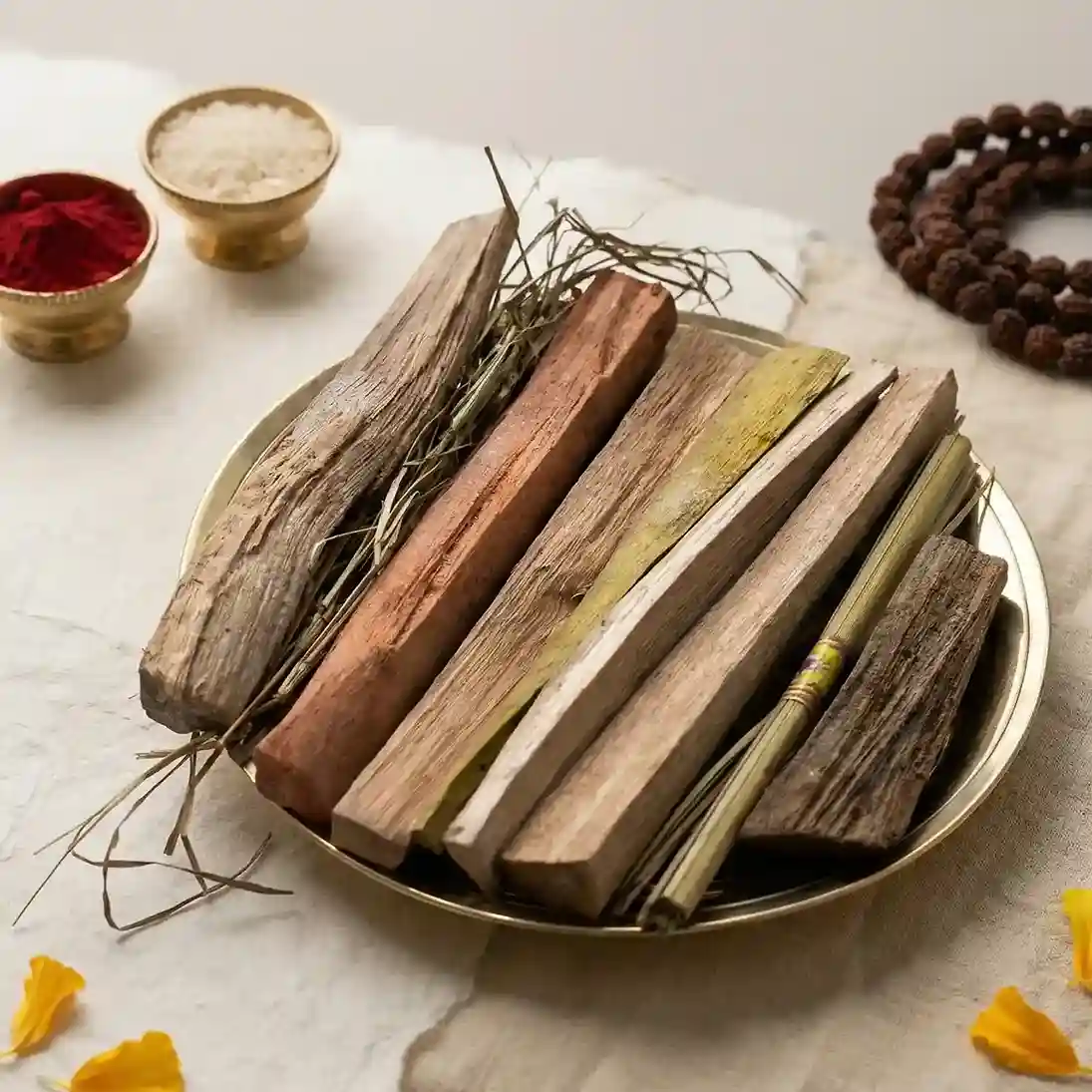
- Q5: The kit includes "Joggo Dumur Pata" (Sacred Audumbar) and "Navgrah Samidha". Why are we burning these specific woods instead of regular firewood?
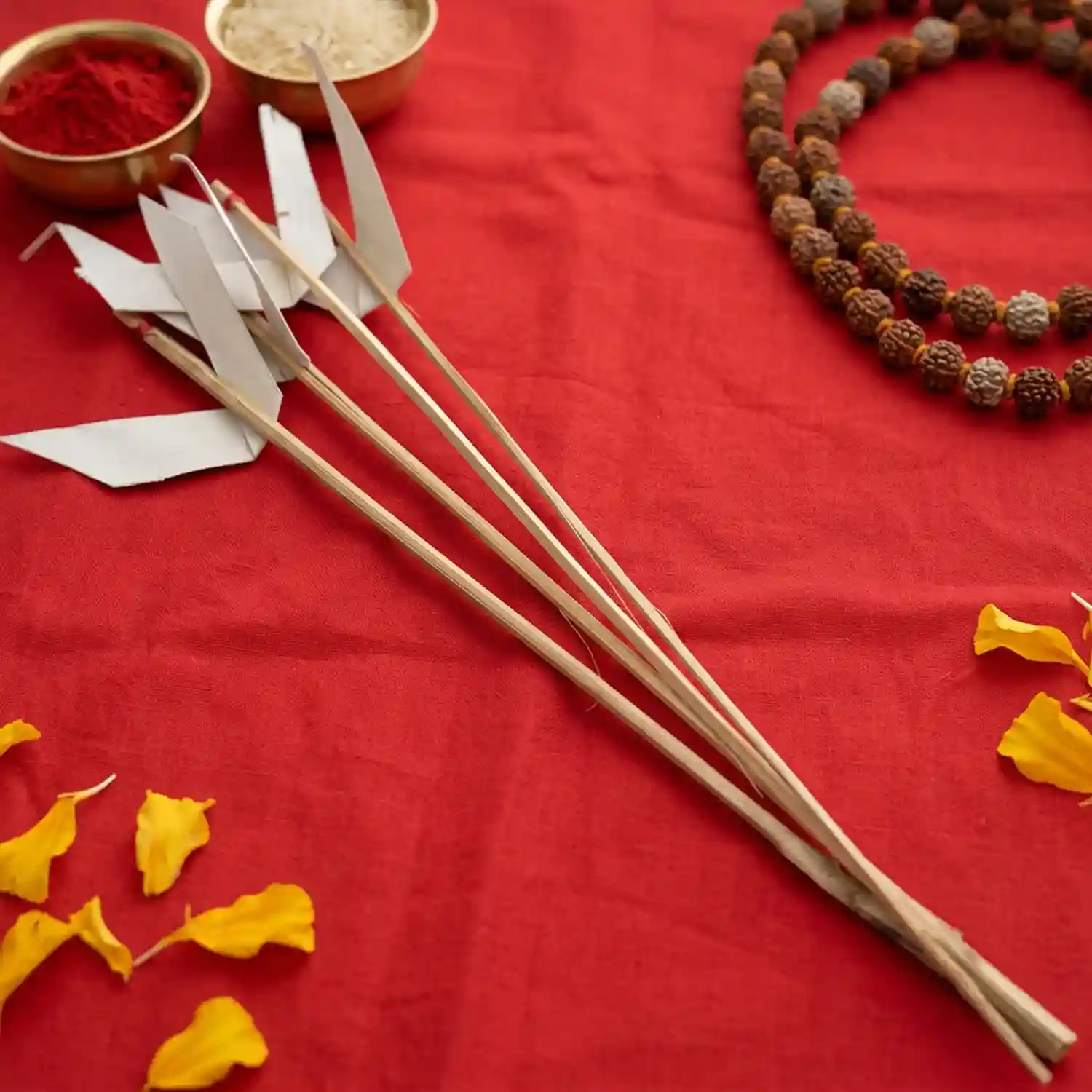
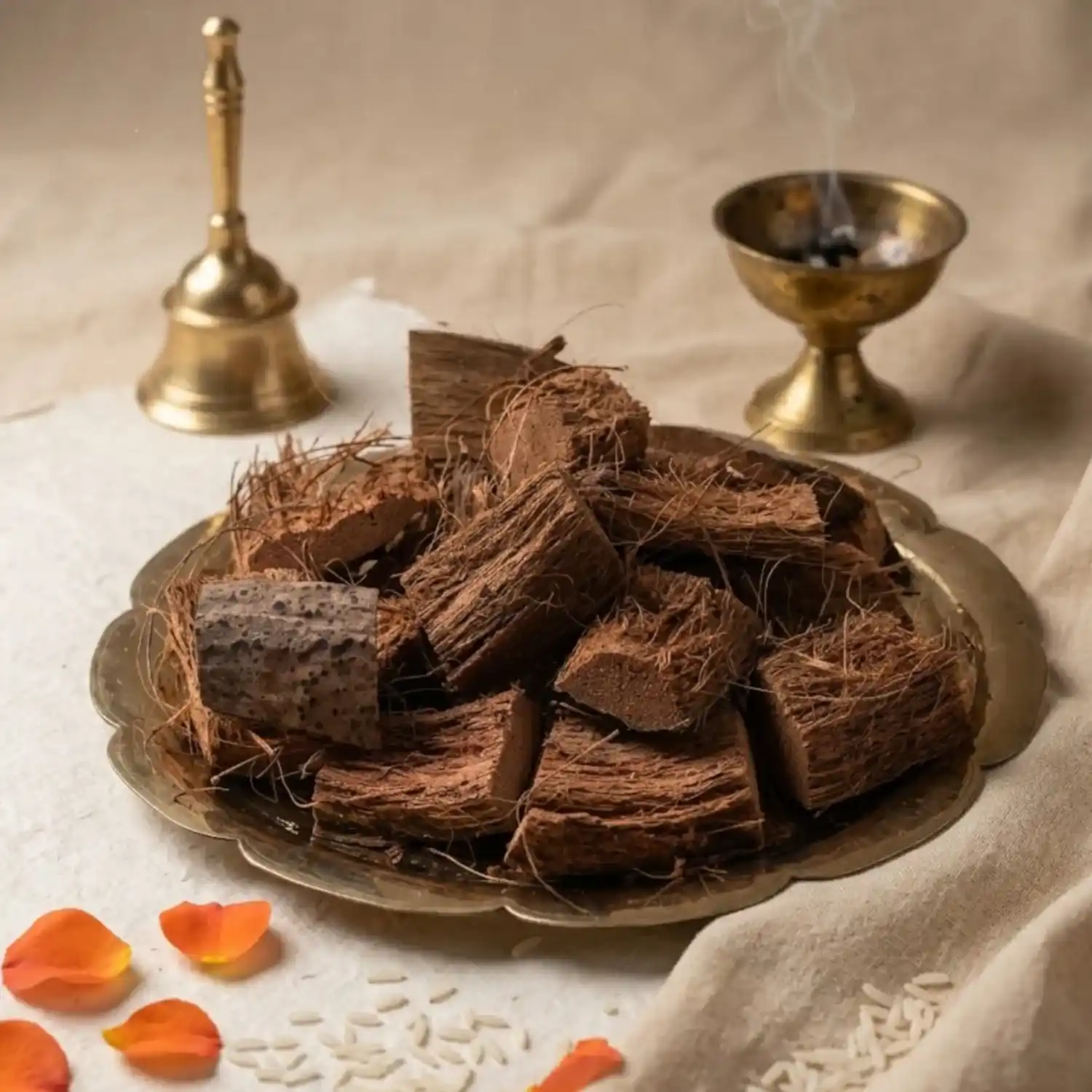
- For Experienced Householders: In a remedial fire rite, you are not just maintaining a flame; you are actively performing a Navagraha Homa to appease aggressive planetary forces. Classical manuals explicitly dictate that specific sacred woods—such as the wood of the Audumbara (Joggo Dumur) or Palasha tree—must be coated in ghee and offered directly into the flames. Offering these exact, scripturally mandated woods ensures that the nine planets are individually satisfied, permanently removing their negative architectural influence from your living space!
_11zon.webp)


_11zon.webp)

_11zon.webp)
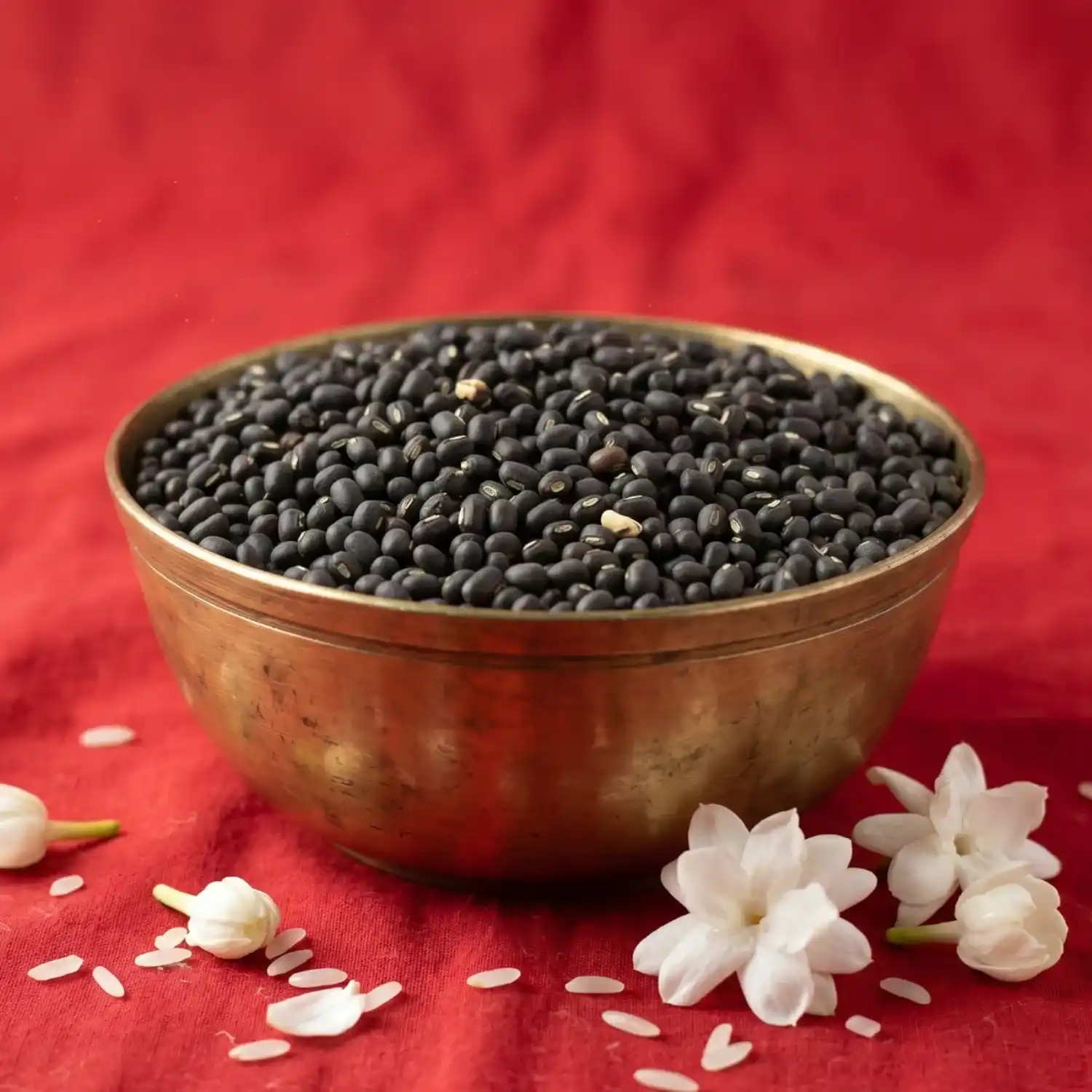
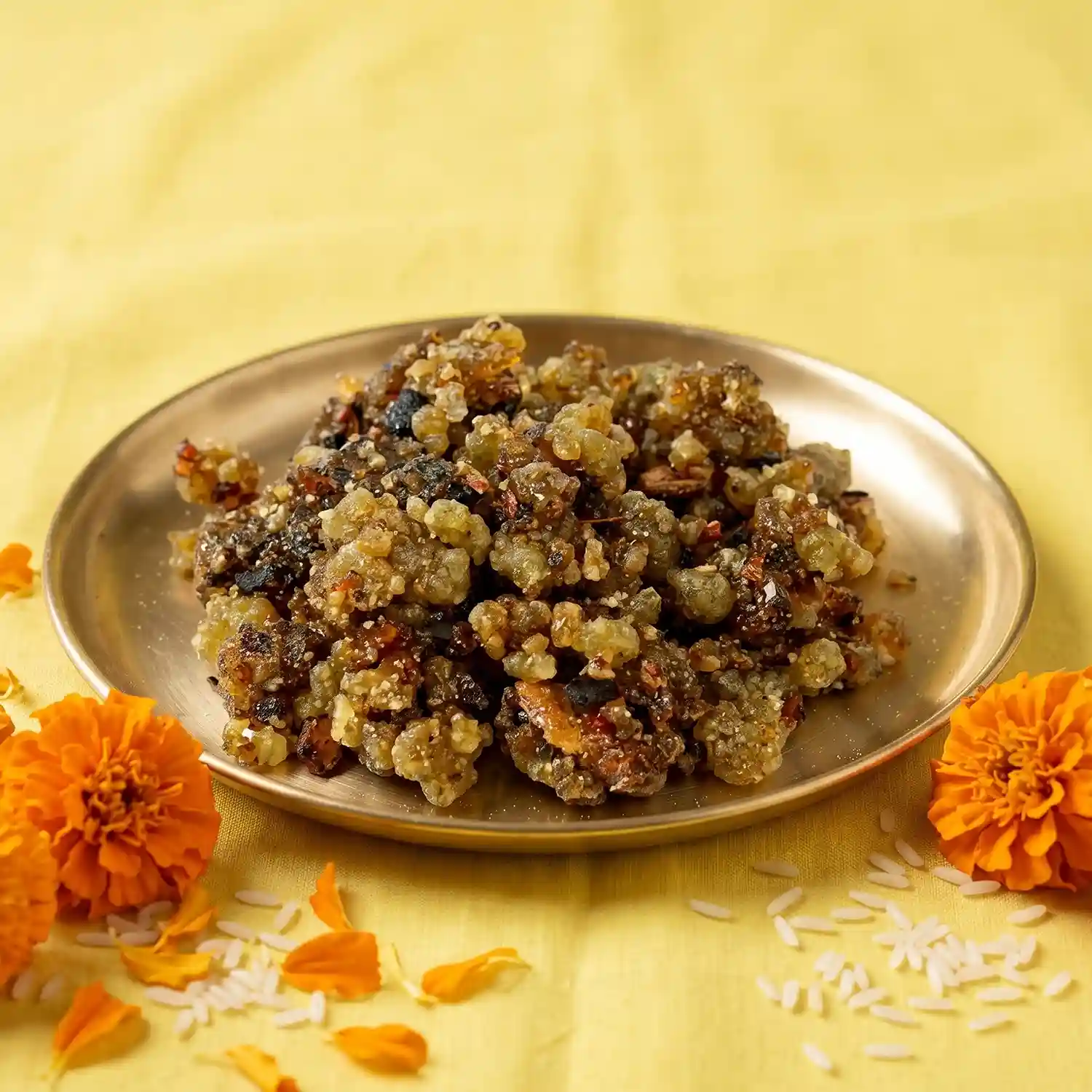
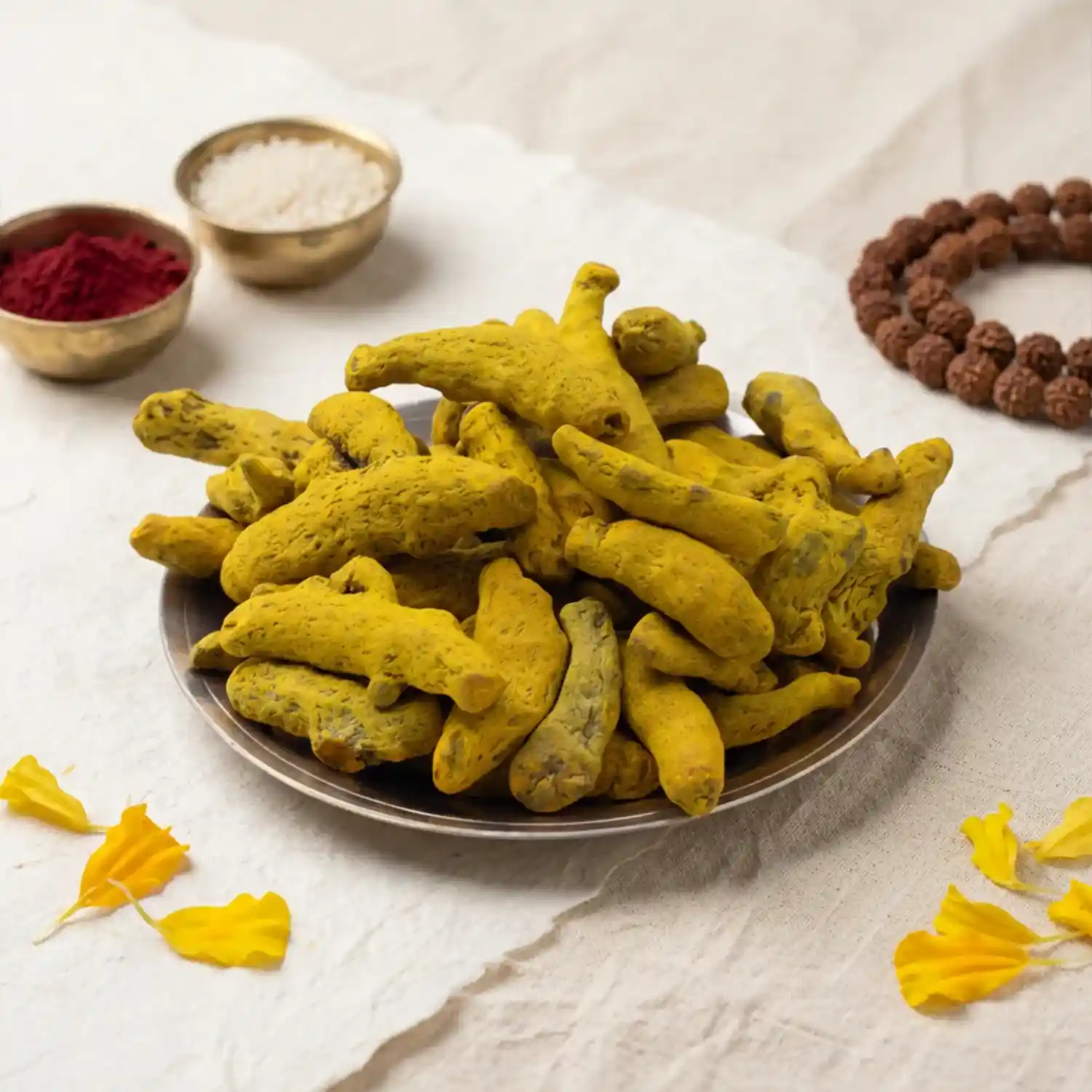
_11zon.webp)
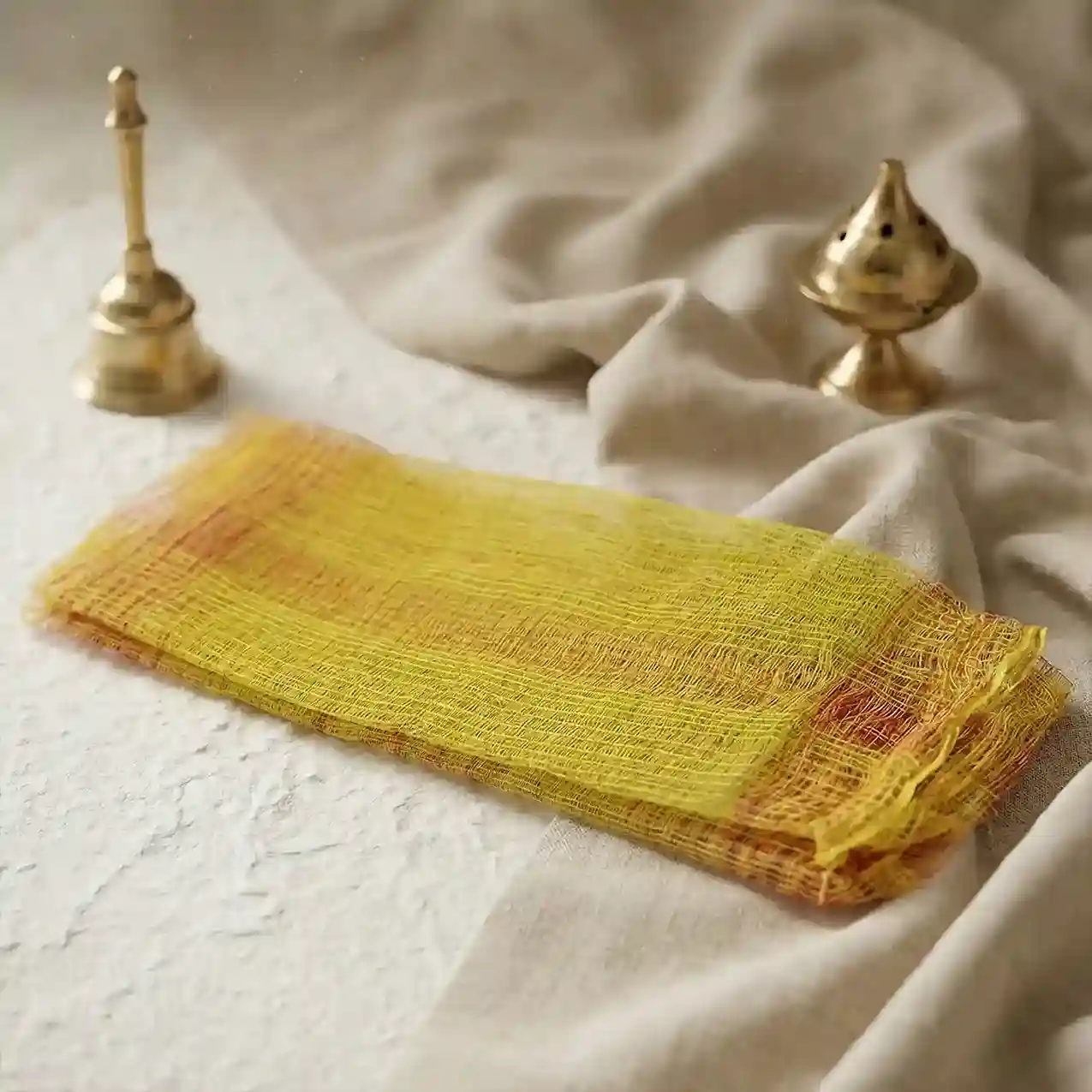

.webp)
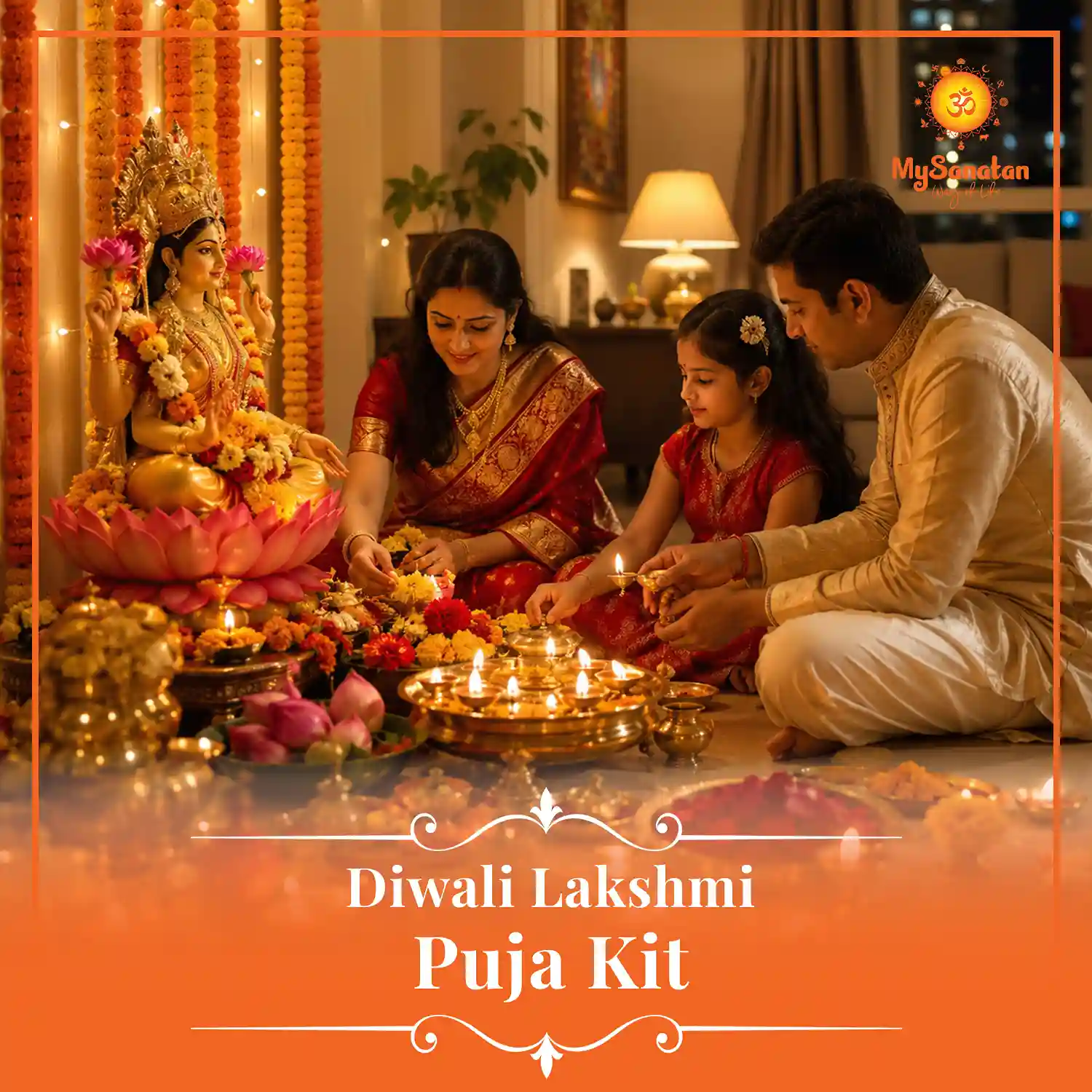

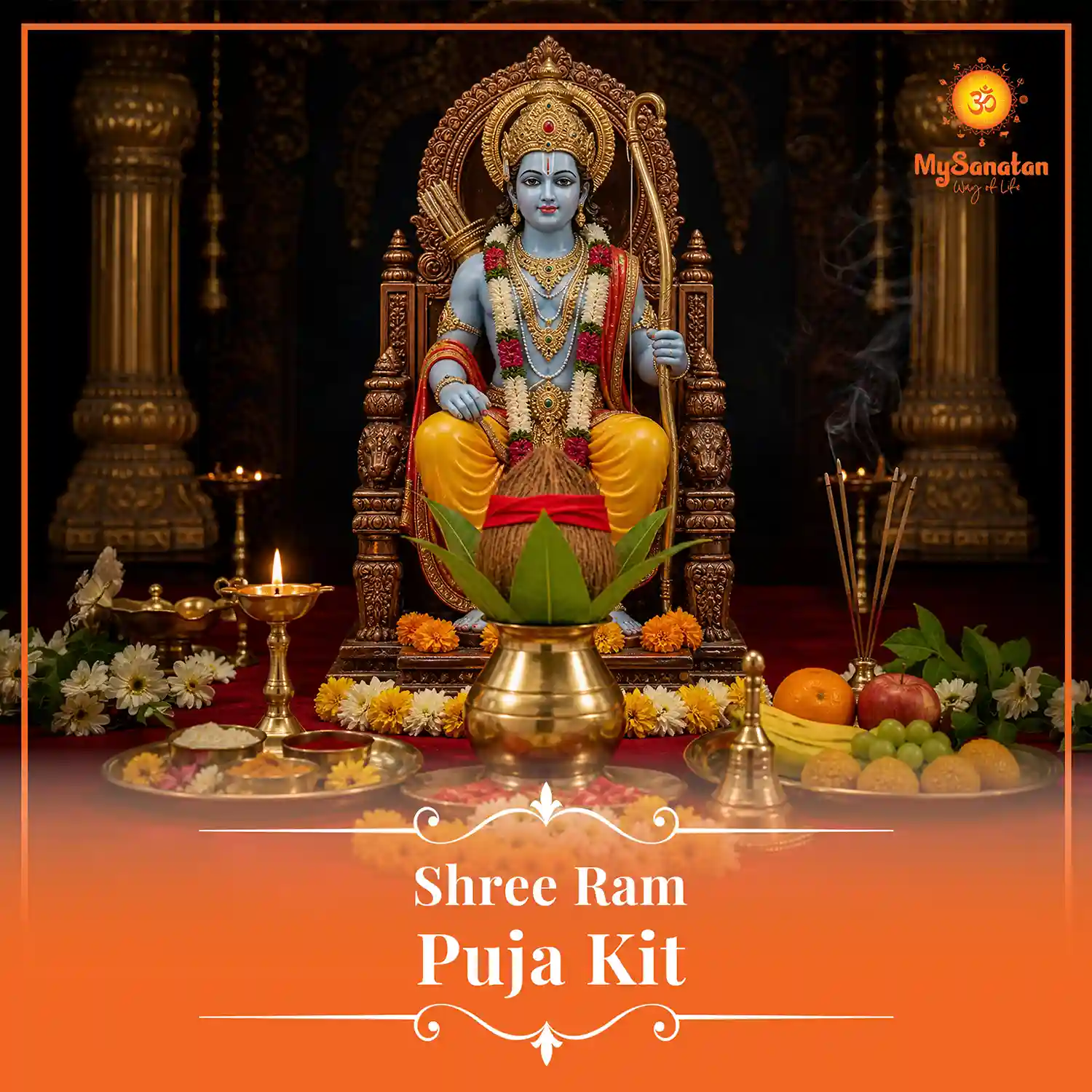
 _4_11zon.webp)
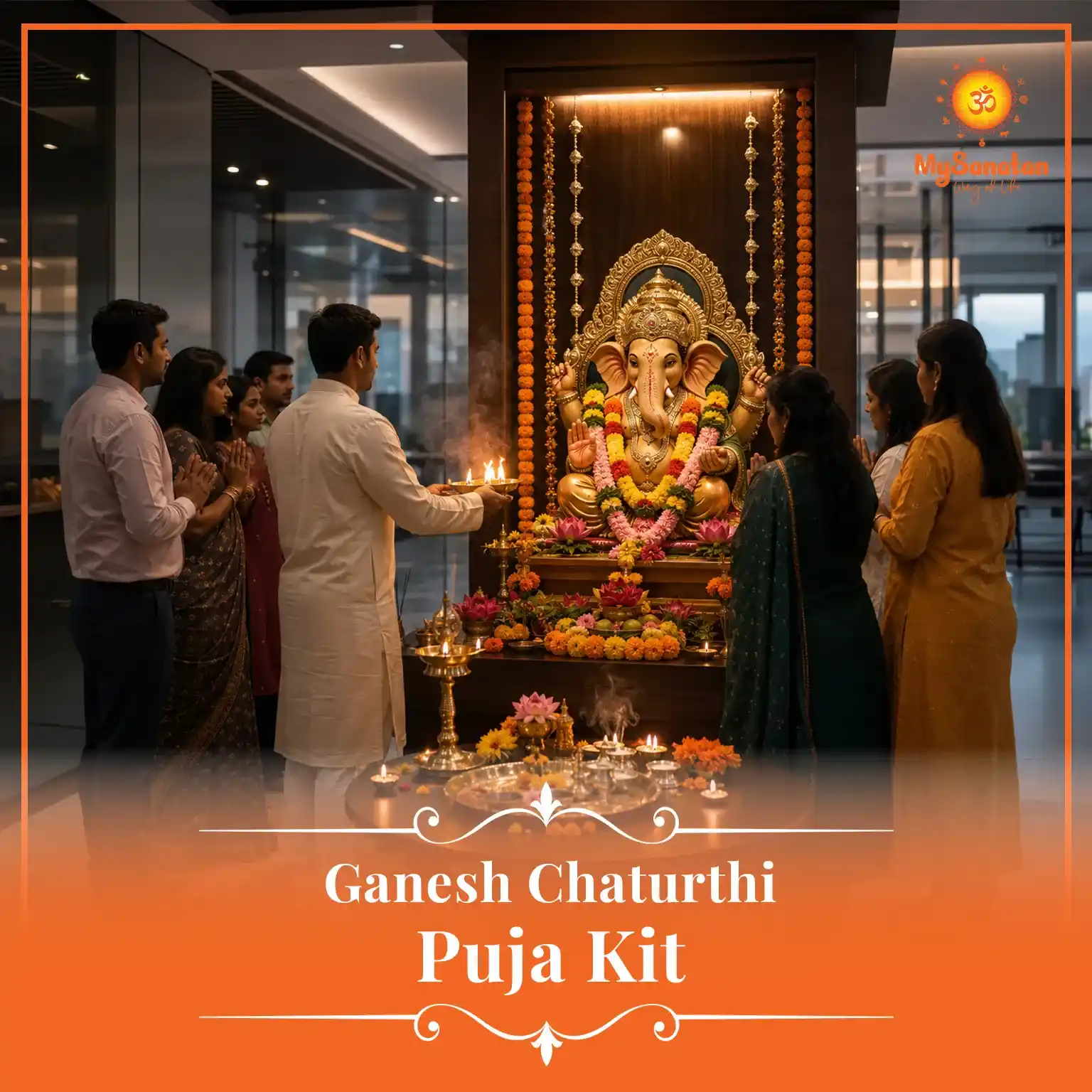
_8_11zon.webp)
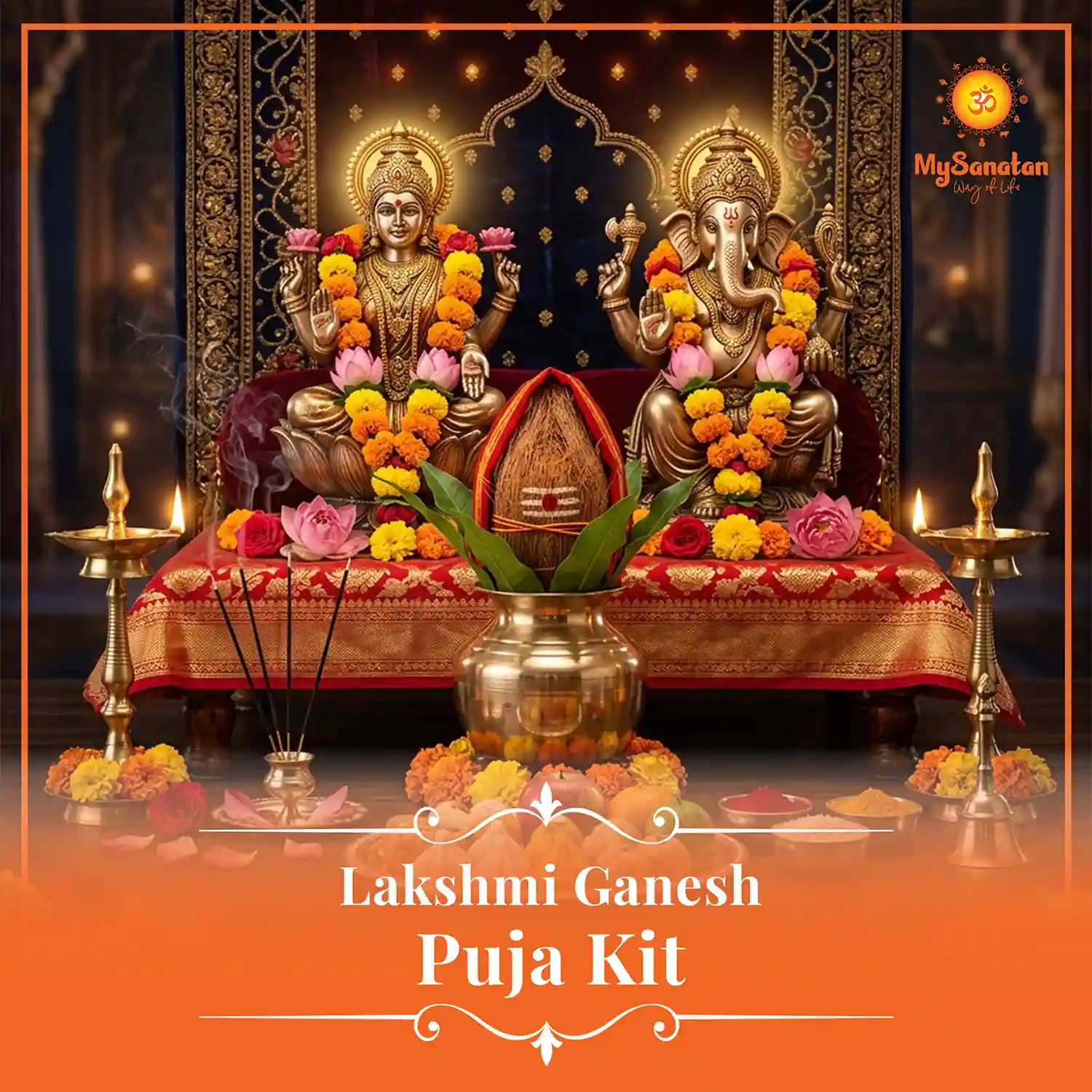
_5_11zon.webp)
.jpg)
_11zon.webp)
_11zon.webp)
_11zon.webp)
_11zon.webp)
_11zon (1).webp)

_11zon.webp)
_11zon.webp)