
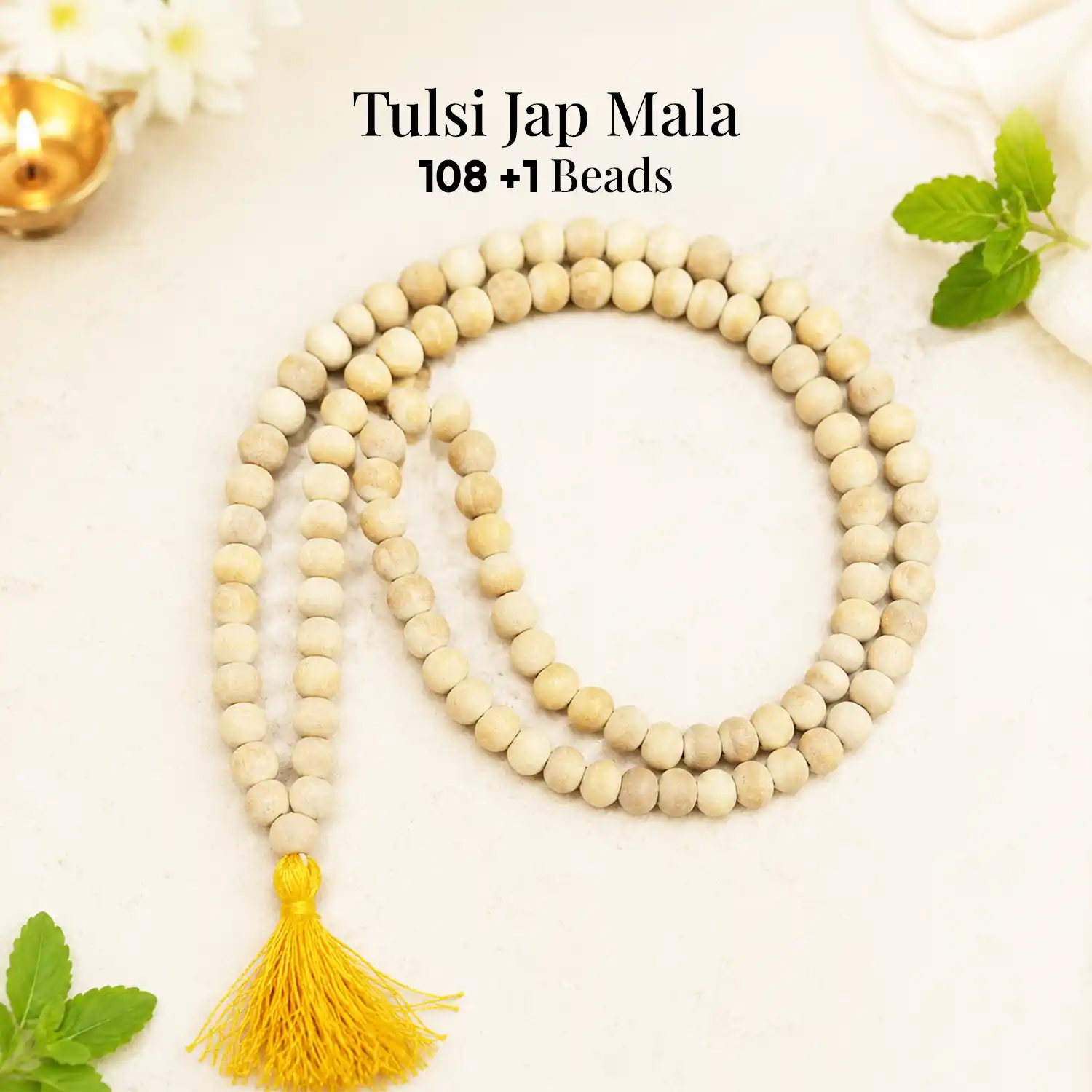
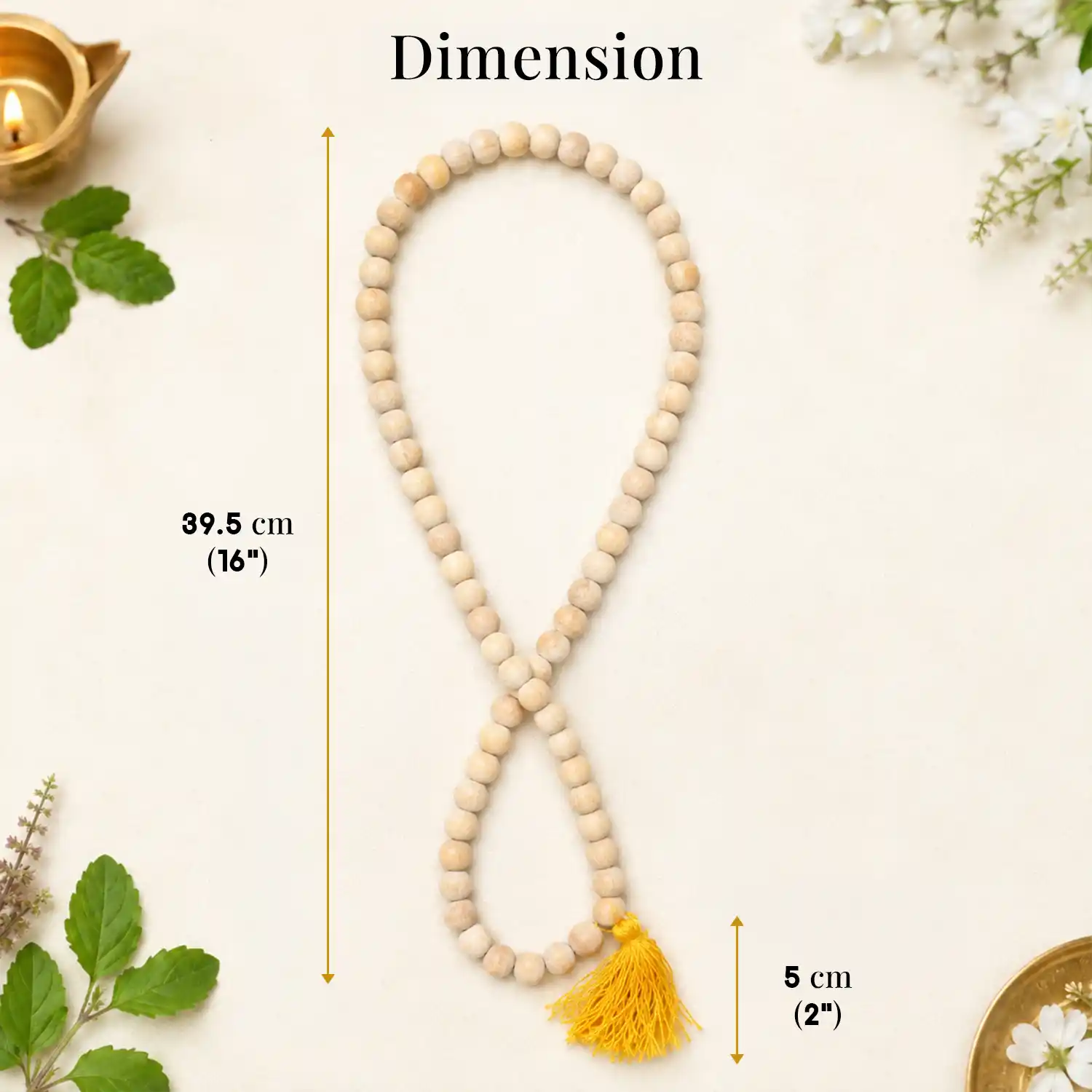
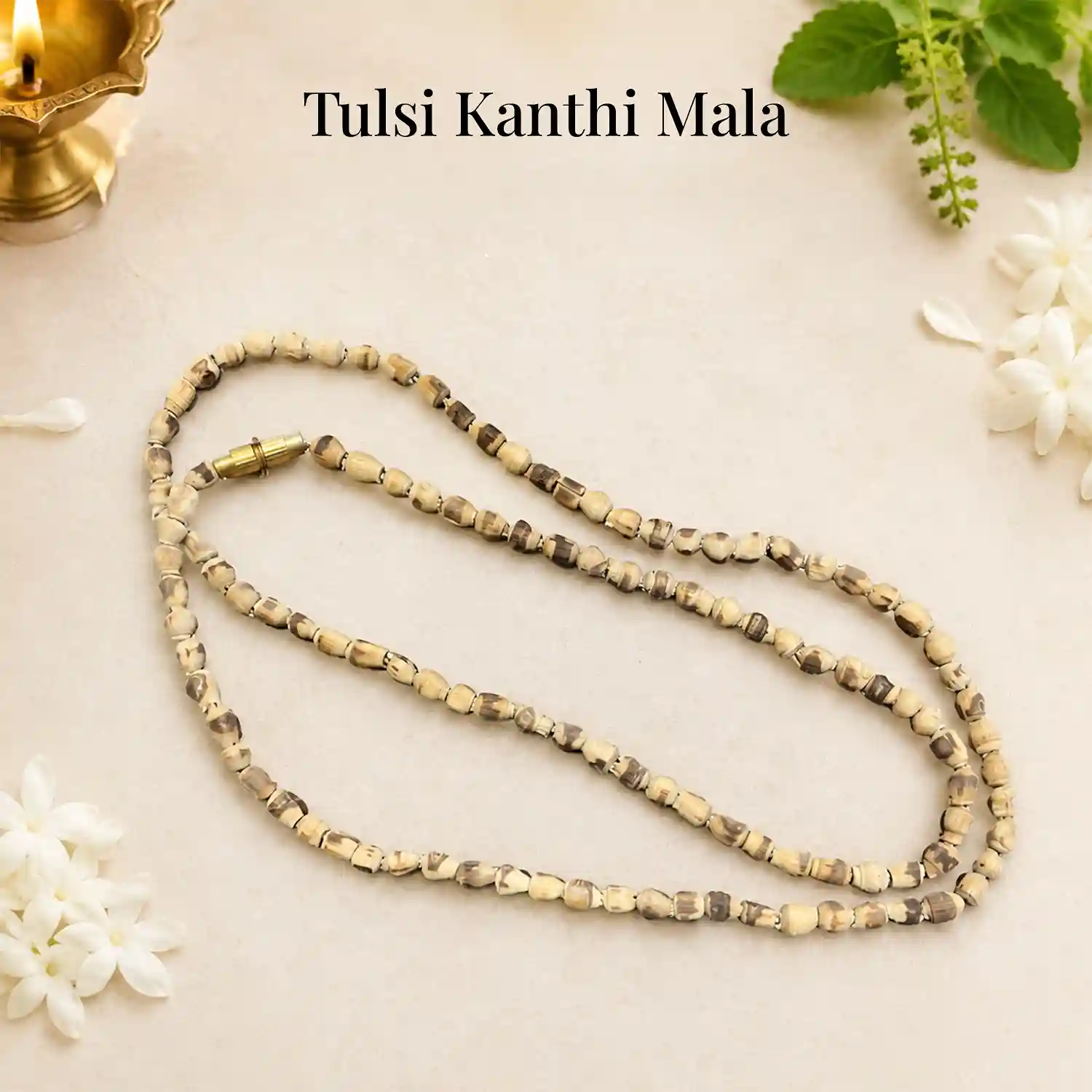
Sacred Tulsi Jap Mala 108+1 beads for Divine Peace Devotion & Purification | 39.5 Inches
1 Piece
₹349
MRP 799
Discount: 56% OFF 56% OFF Availablity: Only 10 left
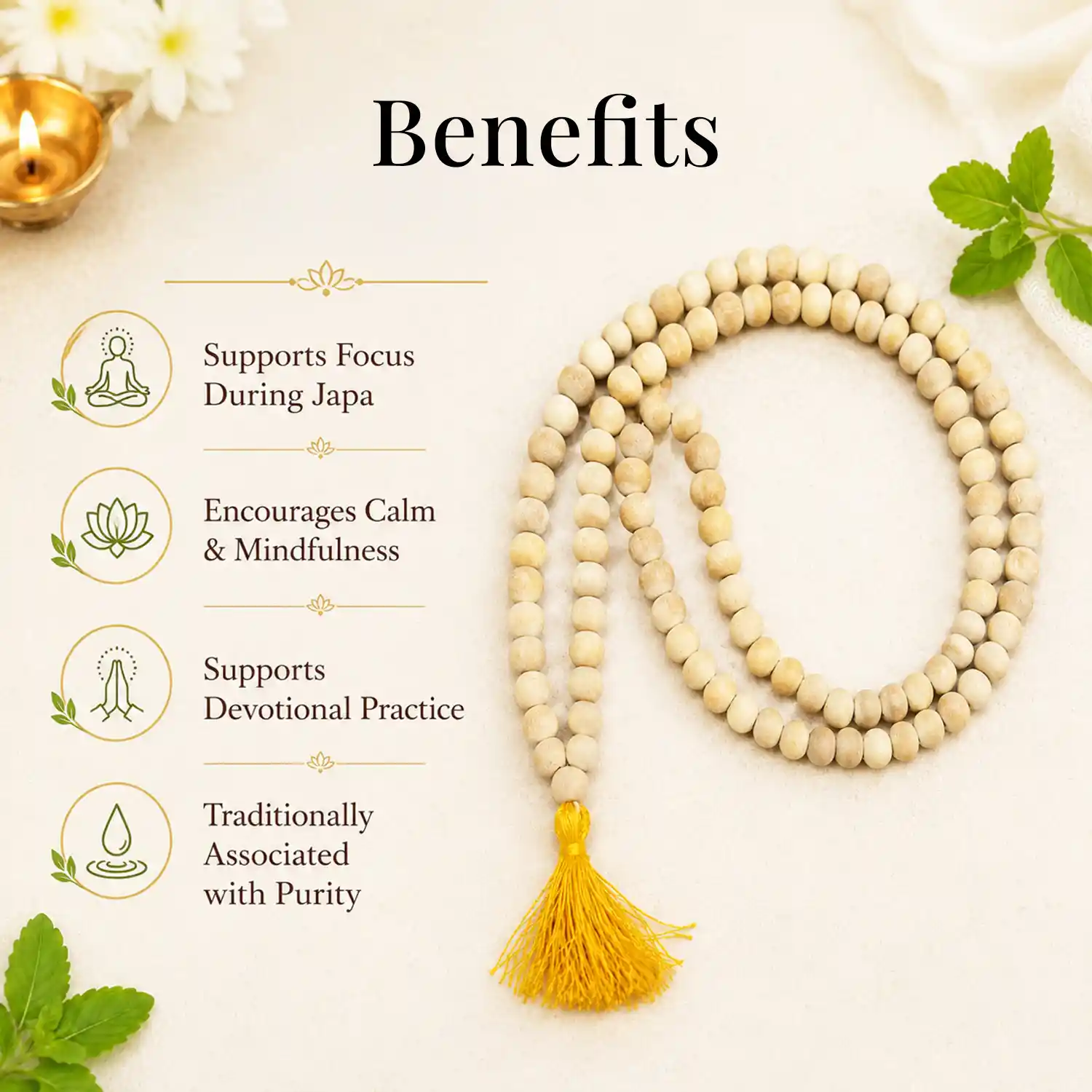
- ✅ Enhances Spiritual Purification & Mental Clarity
- ✅ A Divine Associate of Lord Sri Krishna & Lord Vishnu
- ✅ Protection from Negative Vibrations
- ✅ Constant Companion for Devotees & Meditation
- ✅ Natural Adaptogen for Stress & Wellbeing
- ✅ Encourages a Sattvic (Pure) Lifestyle
- ✅ Comfortable for Everyday Wear
- The Sacred Tulsi Mala is a handcrafted spiritual tool meticulously carved from the wood of the holy basil plant, revered in Hinduism as a divine associate of Lord Sri Krishna and Lord Vishnu. Used for spiritual purification, mental clarity, and protection from negative vibrations. It serves as a constant companion for devotees, aiding in meditation and serving as a reminder of one's commitment to a sattvic (pure) lifestyle.
|
|
|
|
|
|
|
|
|
|
|
|
- In Hindu tradition, Tulsi is known as Vishnupriya, the beloved of Lord Vishnu. It is a very dear devotee and associate of Lord Sri Krishna, who does not accept any offering made without a Tulsi leaf. Tulsi is always residing at the lotus feet of the Lord and is considered a merciful giver of bhakti (devotion) to fallen souls; even the mere touch of the wood is believed to vanish millions of sins. Wearing the mala strengthens the spiritual connection with the Divine and is considered highly auspicious in Vaishnavism and Sanatan Dharma.
- • Symbolic 108 Beads: Represents a precise count designed for traditional chanting and meditation, helping practitioners keep track of mantras and deepen their spiritual routine with grace.
- • Natural Adaptogen: As an adaptogen, Tulsi wood is believed to help the body adapt to stress, promote respiratory and immune health, and act as a natural detoxifier.
- • Spiritual Growth & Purification: Instrumental in cleansing the mind, body, and soul of all impure karma and negative thoughts.
- • Stress Reduction & Focus: The repetitive movement of beads during Japa helps quiet the mind, inducess focus, and brings down stress and anxiety levels.
- • Protective Shield: Acts as a barrier against negative energies, evil influences, and external spiritual disturbances.
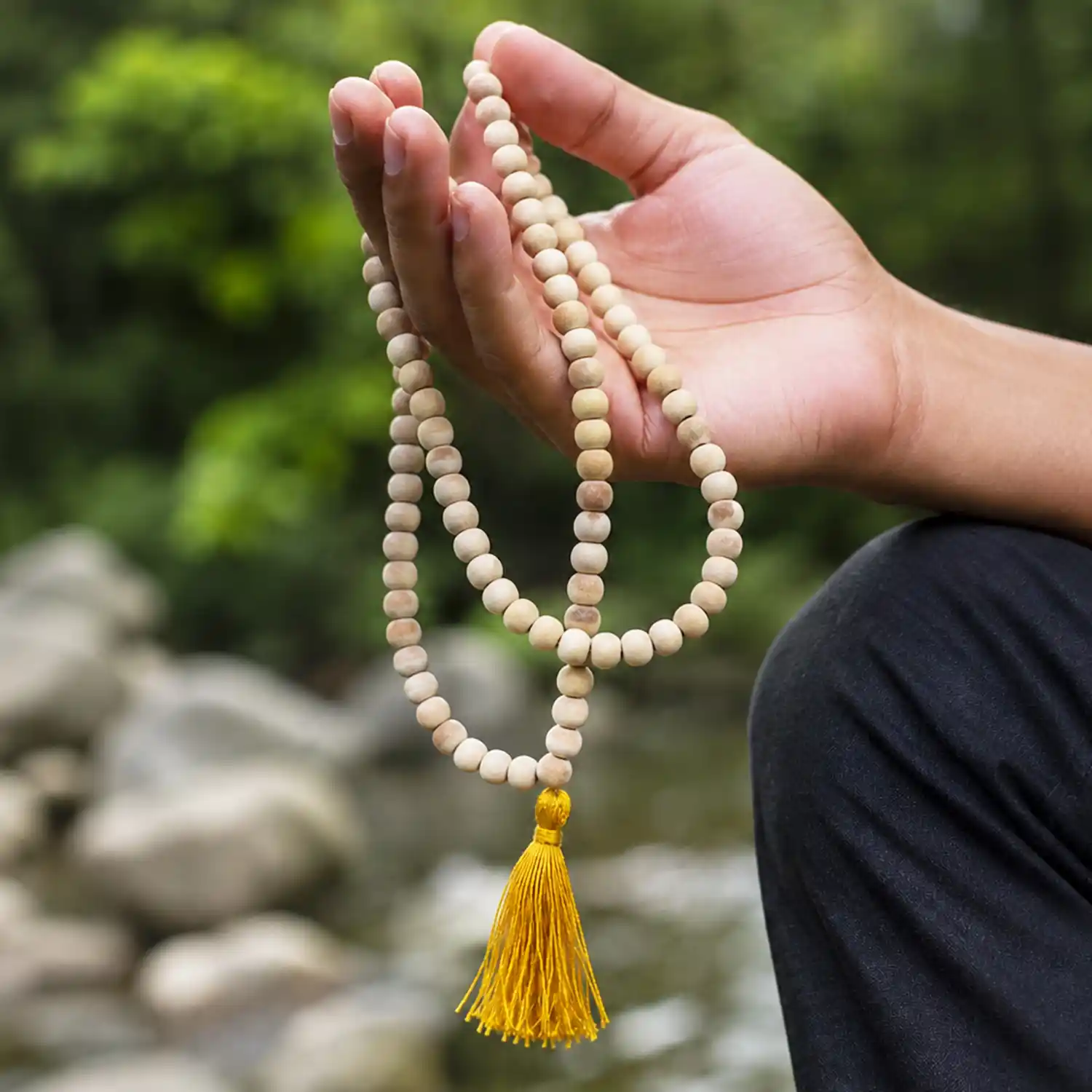
- Meditation (Japa): Hold the mala in your right hand while sitting in a quiet place. Use your thumb and middle finger to rotate the beads towards you, ensuring the index finger (symbolizing the ego) does not touch the beads. Reverse the mala after reaching the Guru bead if you wish to perform another round.
- Purity Tip: Remove the mala during "impure" activities such as bathing, sleeping, or visiting a cemetery to respect its symbolic energy.
- • Maintenance: Store your mala in a clean cloth or a dedicated mala bag when not in use to avoid scratches and maintain its sacred energy.
Safety Tip: Handcrafted Tulsi beads are brittle and should be handled with care. If the mala breaks, it is traditionally seen as a sign of spiritual growth or that a specific intention has been fulfilled, rather than bad luck.
- 1. What is the difference between a Tulsi Jap Mala and a Tulsi Kanthi Mala?
- A Tulsi Jap Mala is primarily used during mantra chanting and meditation, while a Tulsi Kanthi Mala is worn around the neck as a symbol of devotion.
- 2. Can beginners use the Tulsi Jap Mala?
- Yes. Beginners can use it to establish a regular mantra-chanting routine, while experienced practitioners may include it in their existing spiritual discipline.
- 3. Which mantras can be chanted using this mala?
- It is especially suitable for the Hare Krishna Mahamantra, Om Namo Narayanaya, Om Namo Bhagavate Vasudevaya, and other mantras dedicated to Lord Vishnu or Lord Krishna.
- 4. How long should a daily Japa practice continue?
- There is no fixed duration for everyone. Devotees may chant according to their available time, personal spiritual commitment, or guidance received from their Guru.
- 5. Can the same Tulsi Jap Mala be shared?
- A Jap Mala is traditionally regarded as a personal spiritual tool. Using an individual mala supports devotional discipline and maintains personal hygiene.
- 6. Will every Tulsi Jap Mala look identical?
- No. Natural Tulsi wood may vary slightly in grain, shade, texture, bead shape, and surface markings, making every handcrafted mala unique.
- 7. Is the Tulsi Jap Mala suitable for gifting?
- Yes. It makes a meaningful devotional gift for Janmashtami, Ekadashi, birthdays, spiritual initiations, temple visits, and other sacred occasions.
- 8. Can children use a Tulsi Jap Mala?
- Children may use it for supervised chanting and prayer. Since it contains small wooden beads, it should be kept away from infants and unsupervised young children.
- 9. Can someone outside the Vaishnava tradition use this mala?
- Yes. Although Tulsi holds special importance in Vaishnavism, anyone who respects its sacred significance may use it for sincere prayer and meditation.
- 10. Does using Tulsi wood provide guaranteed medical benefits?
- No. This mala is intended for spiritual practice and meditation, not for diagnosing or treating health conditions. Traditional wellness beliefs should not replace professional medical advice or treatment.
- Tulsi Japa Mala, Tulasi Jap Mala, Vaishnav Mala, Krishna Tulsi Mala, Vishnupriya Mala, Holy Basil Wood Mala, Tulsi Prayer Beads, Bhakti Mala and Mantra Chanting Mala
- This product is intended for traditional, devotional and meditation purposes. Claims related to protection, stress relief, purification or physical healing reflect traditional beliefs and are not scientifically guaranteed. It should not replace medical advice, diagnosis or treatment. Japa methods, dietary restrictions and purity rules vary among traditions; devotees may follow guidance from their Guru or Sampradaya. Natural Tulsi beads may vary in colour, texture and size.


_11zon.webp)
_11zon.webp)
_11zon.webp)

_11zon.webp)
_11zon.webp)
_11zon.webp)
_11zon.webp)
_11zon.webp)
.webp)
_11zon.webp)
_11zon.webp)
_11zon.webp)
_11zon.webp)
_11zon.webp)
_11zon.webp)
_11zon.webp)

_11zon.webp)
.webp)








.webp)
.webp)

_11zon.webp)
.webp)
_11zon.webp)
.webp)

.webp)


_11zon.webp)
_11zon.webp)
.webp)