












_2_11zon.webp)
_4_11zon.webp)


Frequently Asked Questions
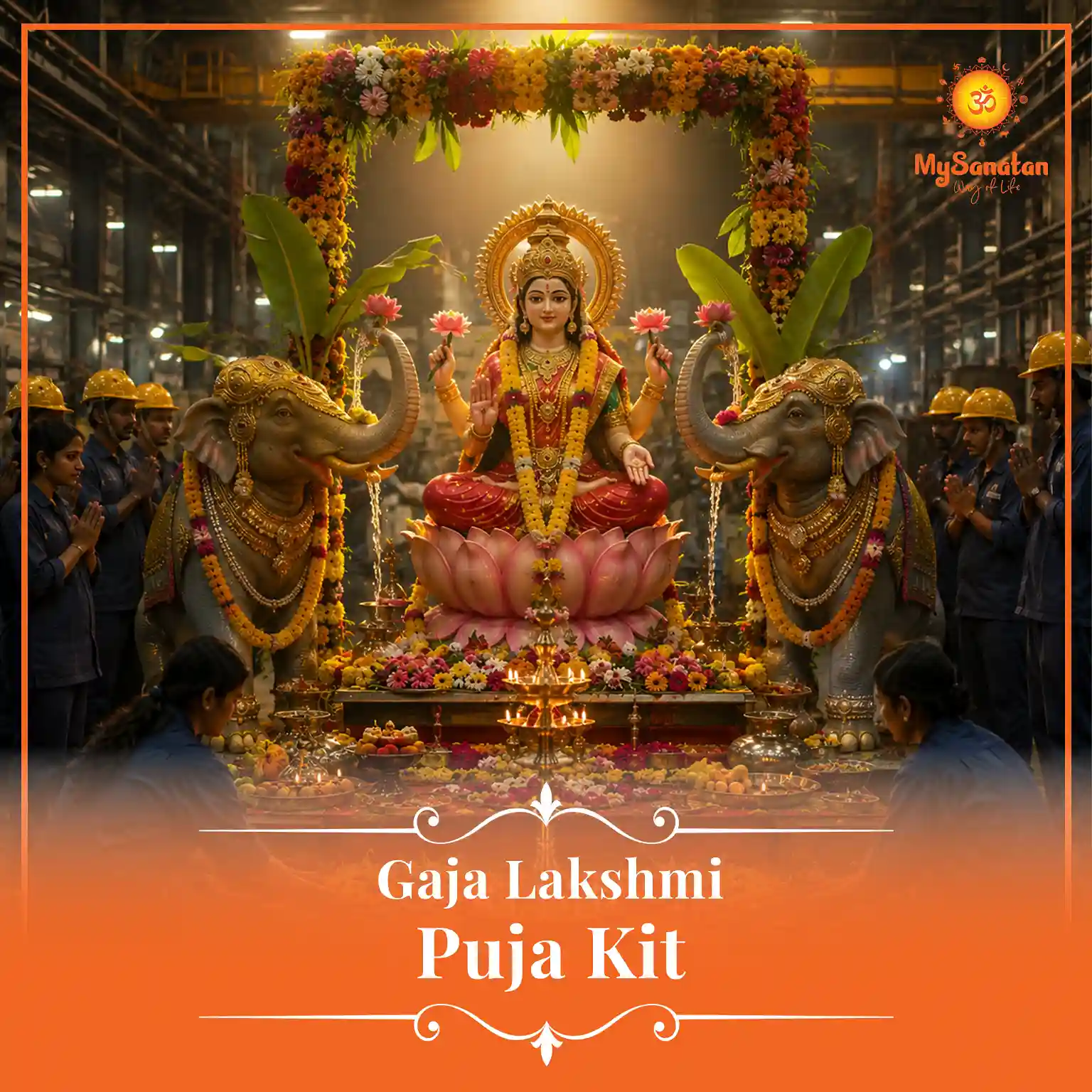
- Q1. Who is Goddess Gaja Lakshmi, and how does Her energy apply to my modern business?
- Gaja Lakshmi is the royal manifestation of the Goddess of Wealth, traditionally depicted flanked by two elephants pouring sacred water. In a modern commercial setting, the "Gaja" (Elephant) symbolizes massive structural power, heavy factory machinery, logistics operations, and fleets of commercial delivery vehicles. Worshipping Her protects these heavy corporate assets from costly accidents and sudden mechanical breakdowns.
- Q2. Can I use this kit to perform the puja on my own if a priest is unavailable?
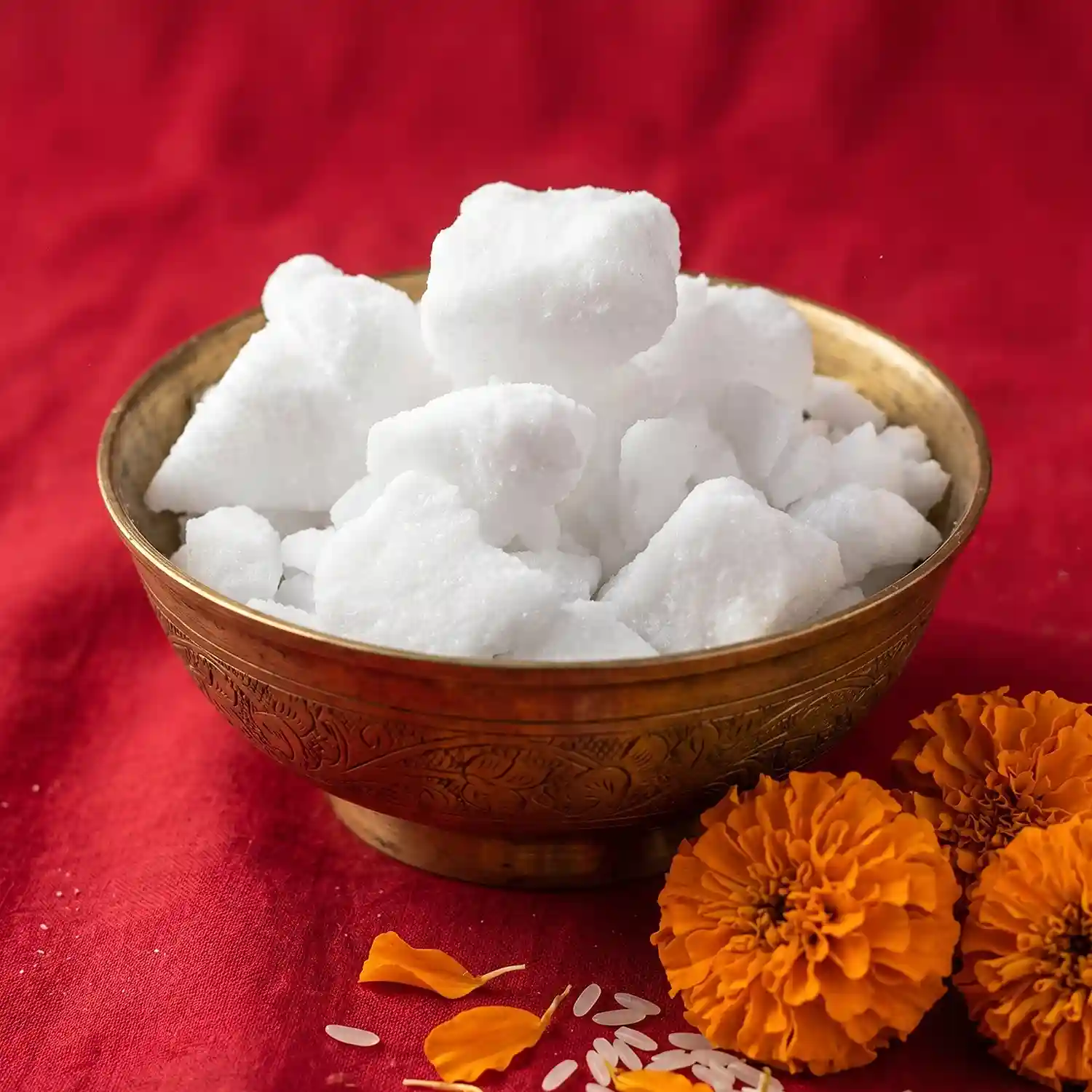
- Yes, you can. While the kit is pre-stocked to support a priest's strict scriptural standards, it features a dual-purpose layout. For an independent ritual, you can use the purification elements (Ganga Jal), foundational adornments (White Chandan, Roli Kumkum, Turmeric), and primary offerings (Akshat Rice, Paddy, and Agarbatti) to offer a simple, heartfelt prayer over your main tools or machinery desk.
- Q3. What should I do with the specialized wealth items (Kamal Gatta and Paddy) after the puja?
- Kamal Gatta (Lotus Seeds): These are beloved by Goddess Lakshmi. Leave them offered at the feet of the Goddess during the ritual to anchor financial growth.
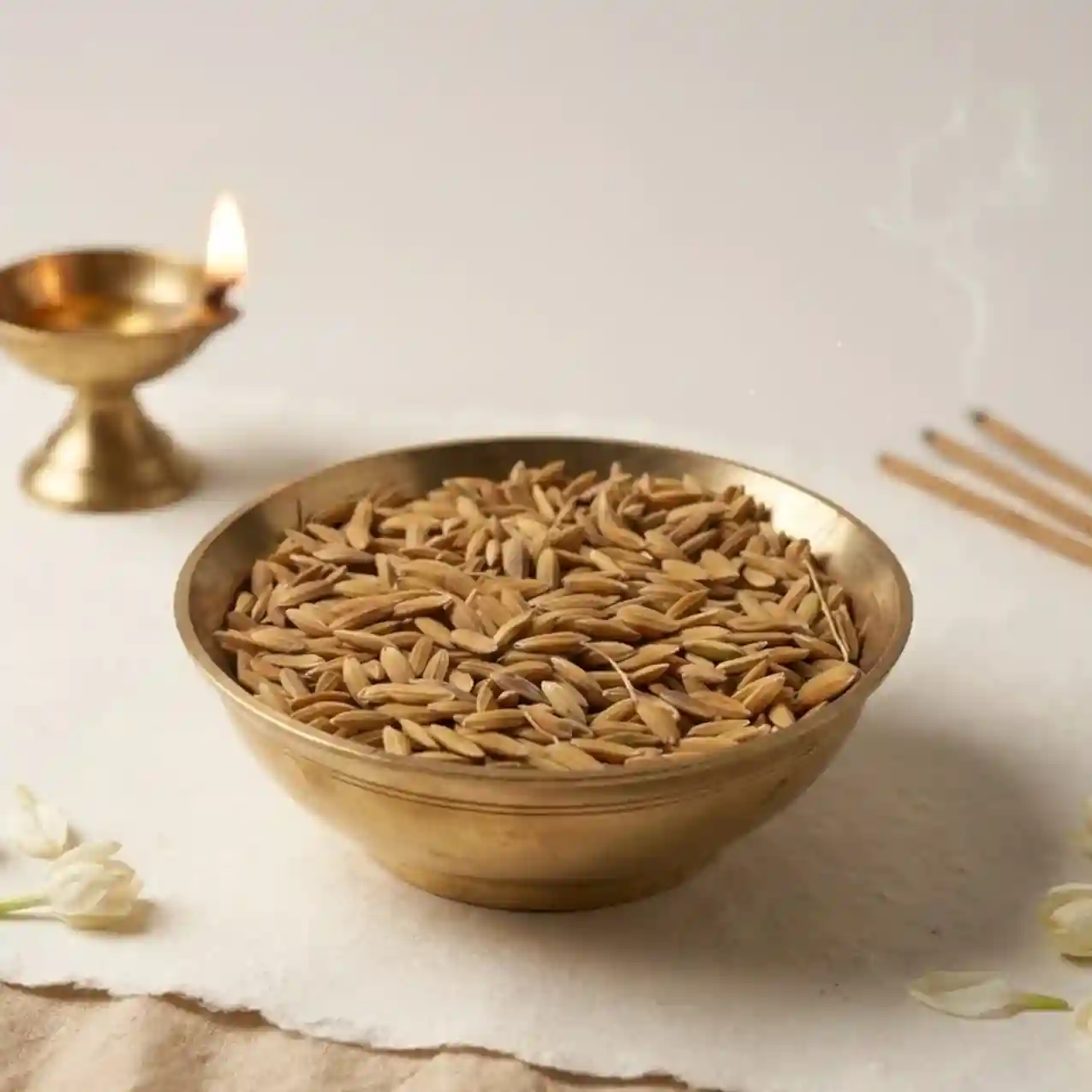
- Paddy (Dhan): Symbolizes non-depleting prosperity and abundant baseline inventory. You can wrap a small portion of the blessed paddy in a clean cloth and keep it inside your commercial safe or cash register.
- Q4. When is the most effective time to open this kit and execute the ritual?
- This commercial worship is highly recommended:
- On the nights of Sharad Purnima (Kojagari Purnima) or Deepavali, which are the most scripturally potent windows for invoking Goddess Lakshmi.
- Right before activating new heavy machinery on your factory floor.
- When officially inaugurating new delivery trucks, commercial vehicles, or expanding a logistics center.
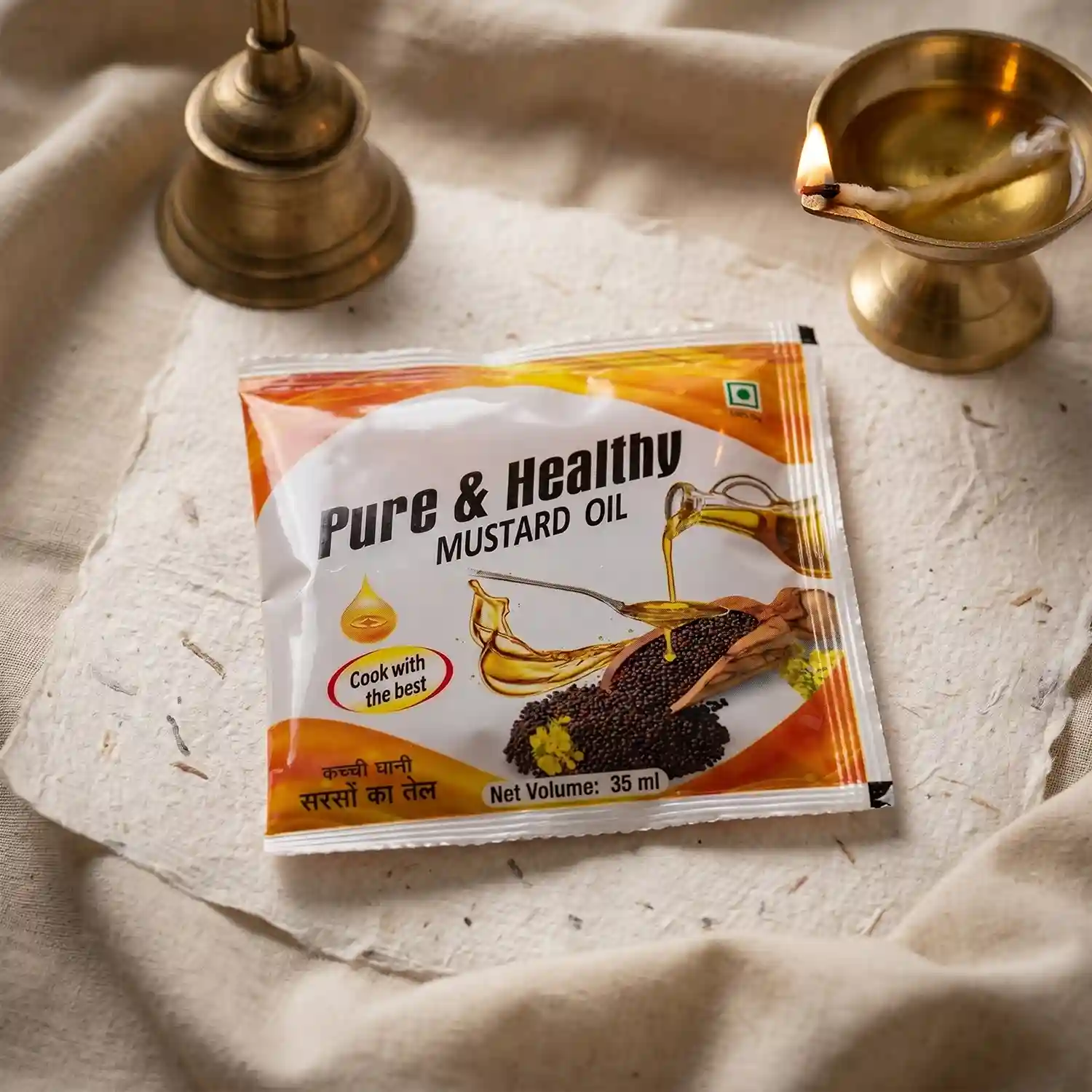
- Q5. Why does the kit contain both Cow Ghee and Mustard Oil?
- They are included to handle separate functional tracks on your commercial Puja Place:
- Cow Ghee: Strictly reserved for lighting your primary Puja Place Diya (Phool Batti) to attract high-vibrational corporate prosperity and peace.
- Mustard Oil: Best used for secondary or outer lamps (Long Wicks) placed near the entrance or the factory floor to burn away negative intentions and competitive jealousy (Nazar).
- Q6. How does this kit assist the priest in executing Bhuta-shuddhi across an industrial workspace?
- The kit provides authentic, pure Ganga Jal. In Step 1, the priest utilizes this sacred water along with advanced breath control (Pranayama) and elemental purification (Bhuta-shuddhi) to thoroughly clear out stagnant manufacturing energy and reset the physical elements of the factory floor or logistics center.
- Q7. How are the Alta and Red Churni utilized during the primary invocation?
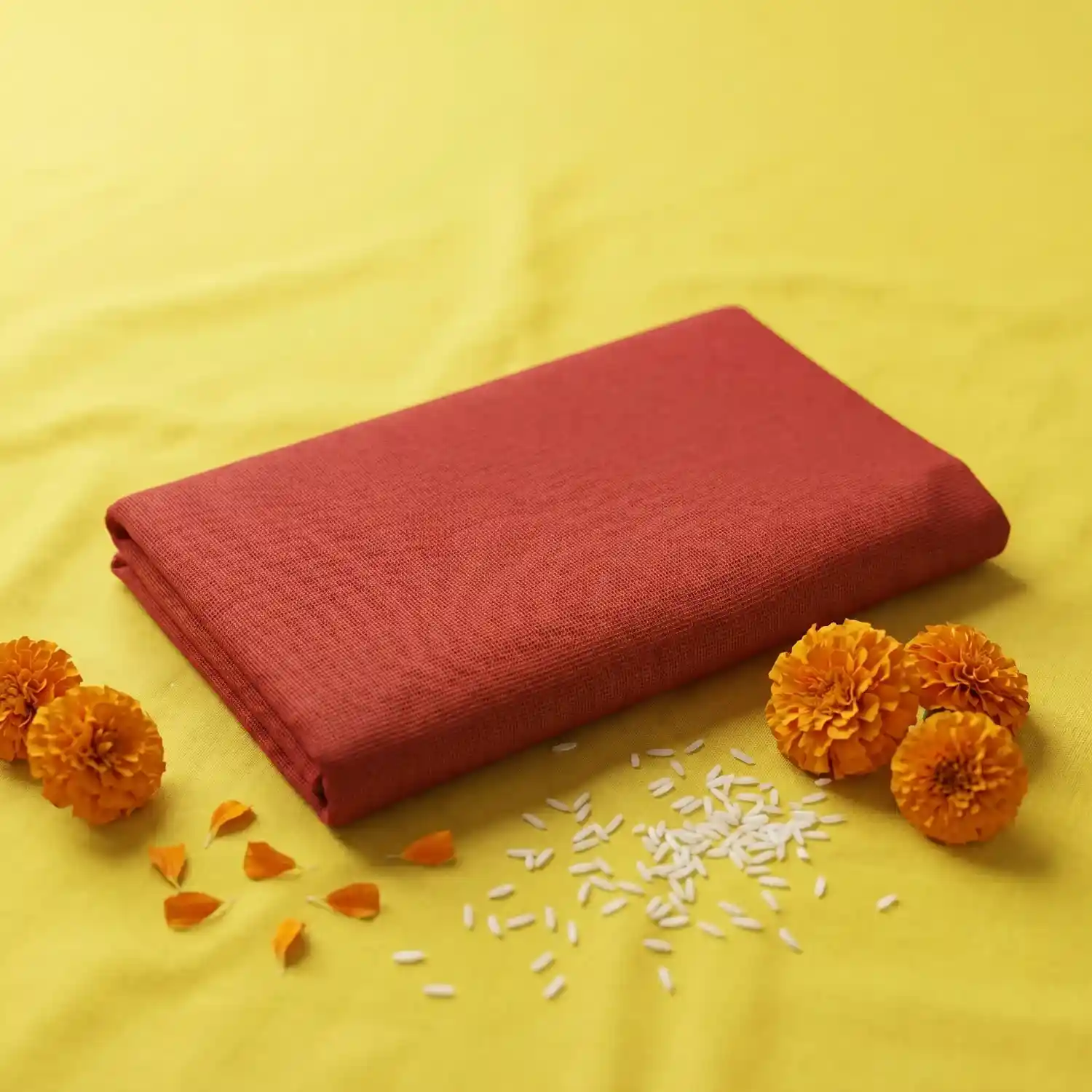
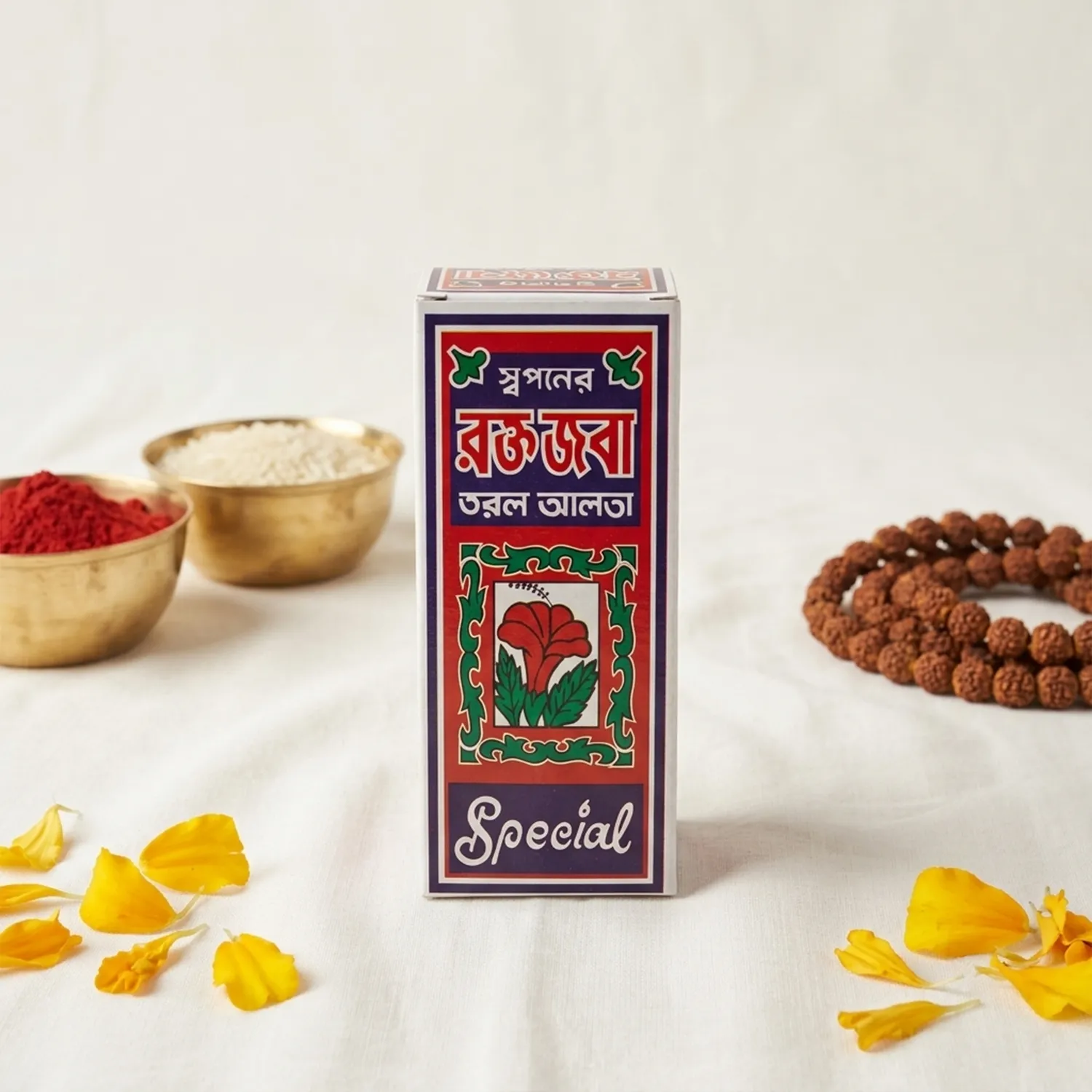
- Gaja Lakshmi is invoked with royal, sovereign honors (Rajopachara). In Step 2, after seating the deity on the Red Asan and Red Puja Cloth, the priest utilizes the traditional Alta (liquid red dye) and the Red Churni (sacred veil) to formally adorn the Goddess, aligning the commercial space with vibrant Raja-Guna financial energy.
- Q8. What role does the traditional Chawar play at the climax of the ritual?
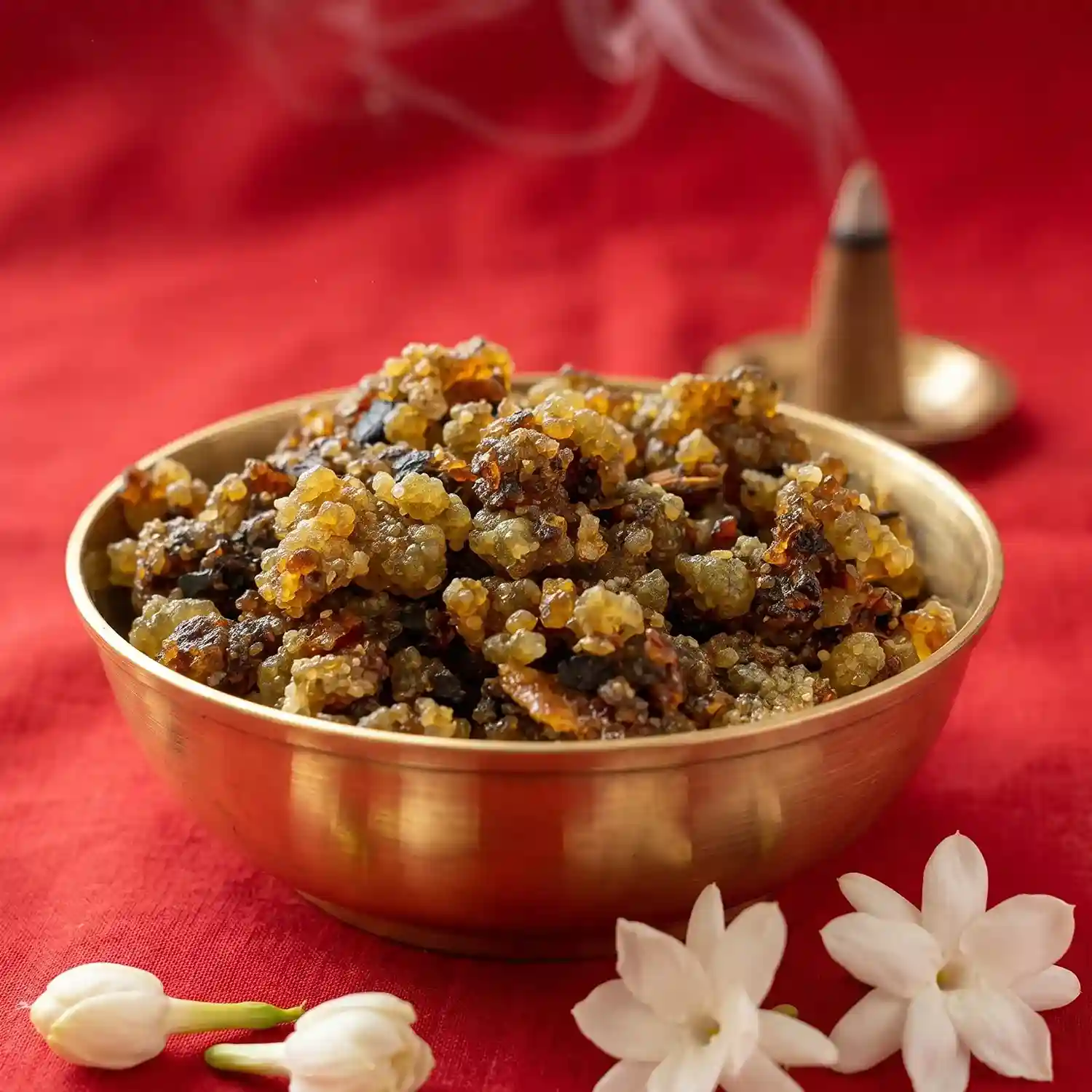
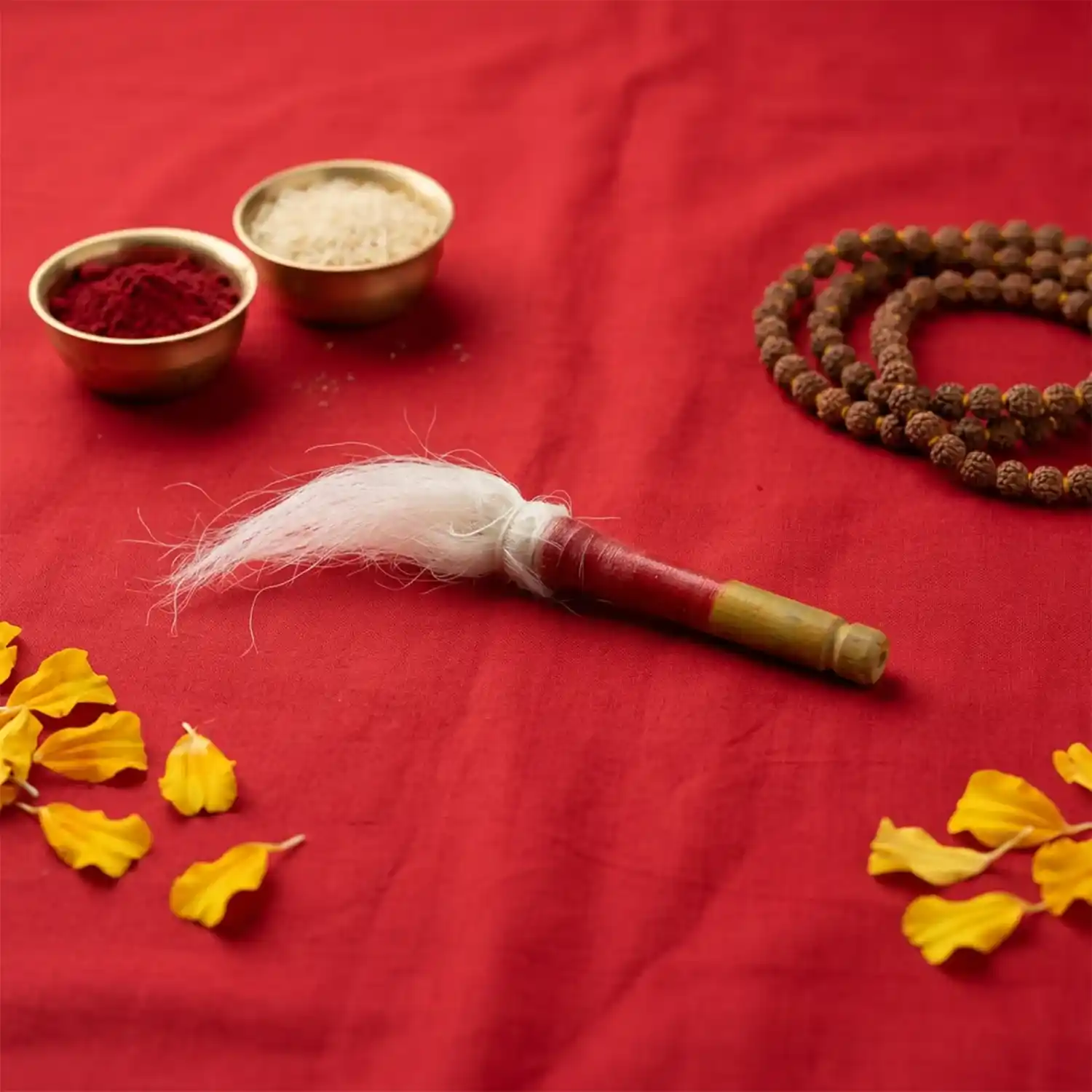
- The metal-handled Chawar (puja fan) is an ancient emblem of royal authority. At the conclusion of the grand Aarti, the priest uses the Chawar to formally fan the deity. This final wave of the ceremony serves to distribute the high-vibrational, energized Dhuna smoke throughout the workspace, sealing the property with market dominance and safety.
- Q9. Why does this standard kit include Haritaki along with the standard Tambula spices?
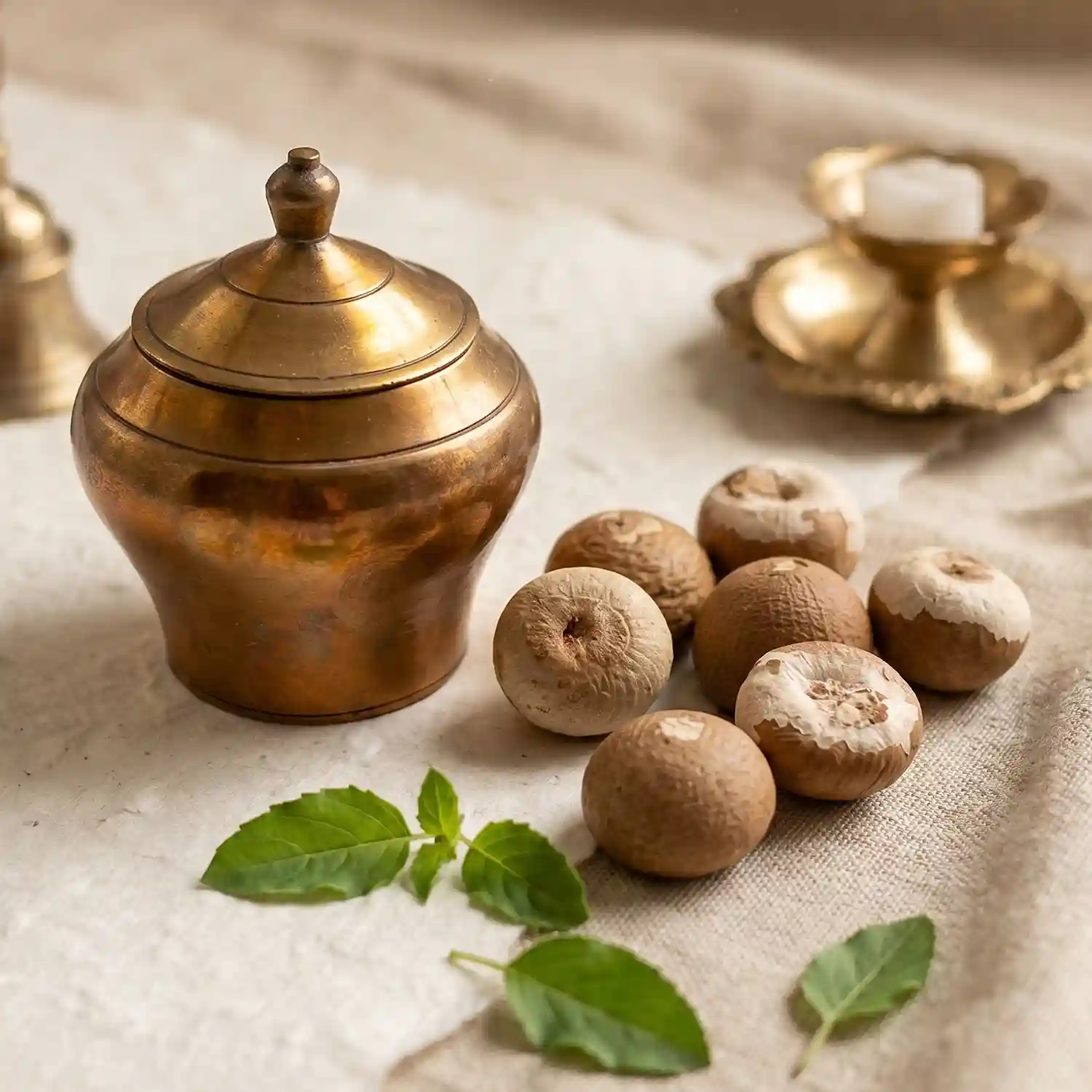
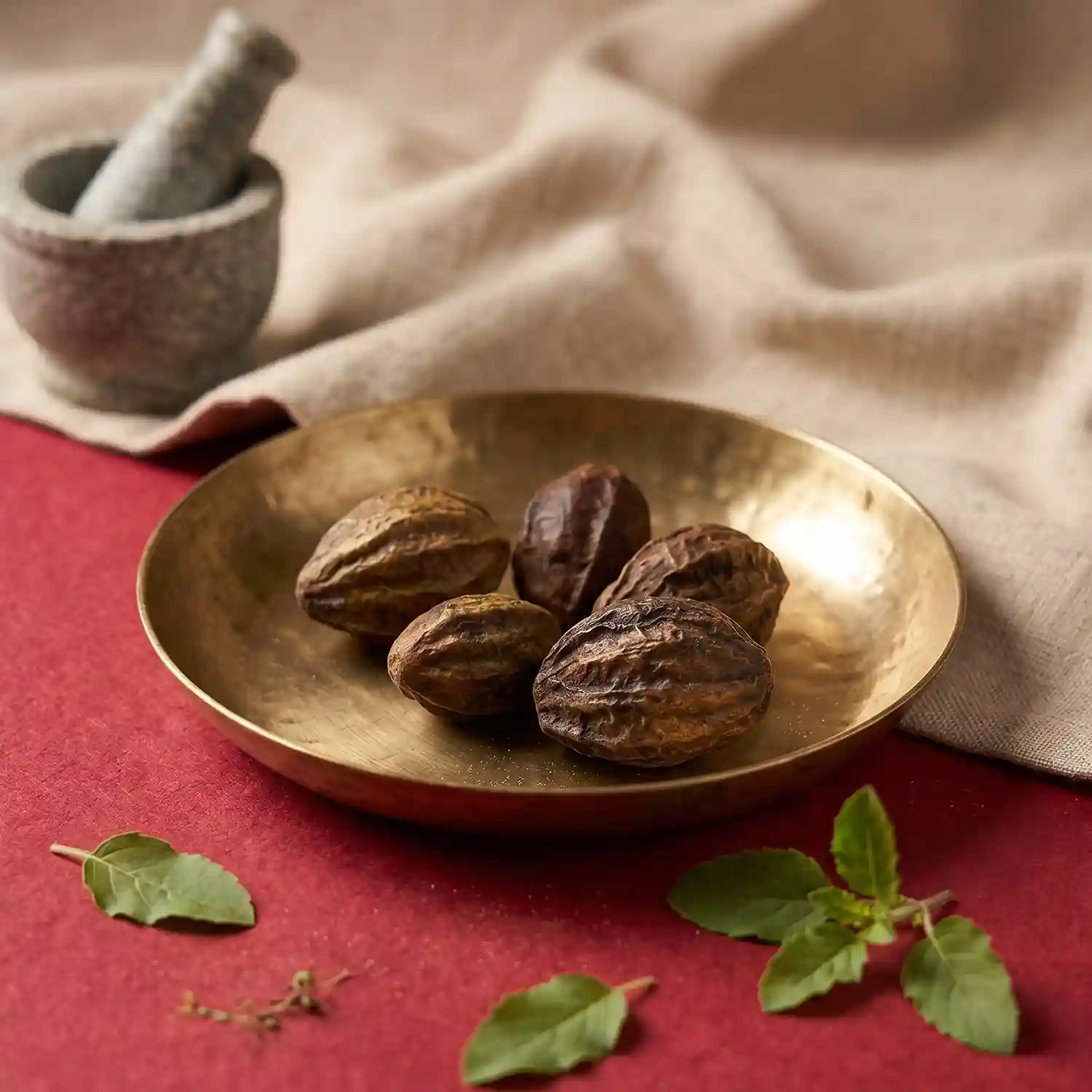
- In orthodox Vedic hospitality (Shodashopachar), a Tambula (the final mouth-freshening offering that seals the royal honors) is incomplete with just betel nut and spices. The addition of Haritaki (Harad Fruit) alongside Supari, Clove, and Green Cardamom satisfies a specific scriptural requirement to mathematically balance the elemental energies immediately following the main food offerings.