
_9_11zon.webp)


_11zon.webp)
_11zon.webp)





.webp)



_11zon.webp)


2_2_11zon.webp)
_7_11zon.webp)


Frequently Asked Questions
- Q1: Who is Lord Vishwakarma?
- For Devotees: Lord Vishwakarma is revered as the "Divine Architect" of the universe. He is the patron deity of all creators, engineers, artisans, mechanics, and craftsmen!
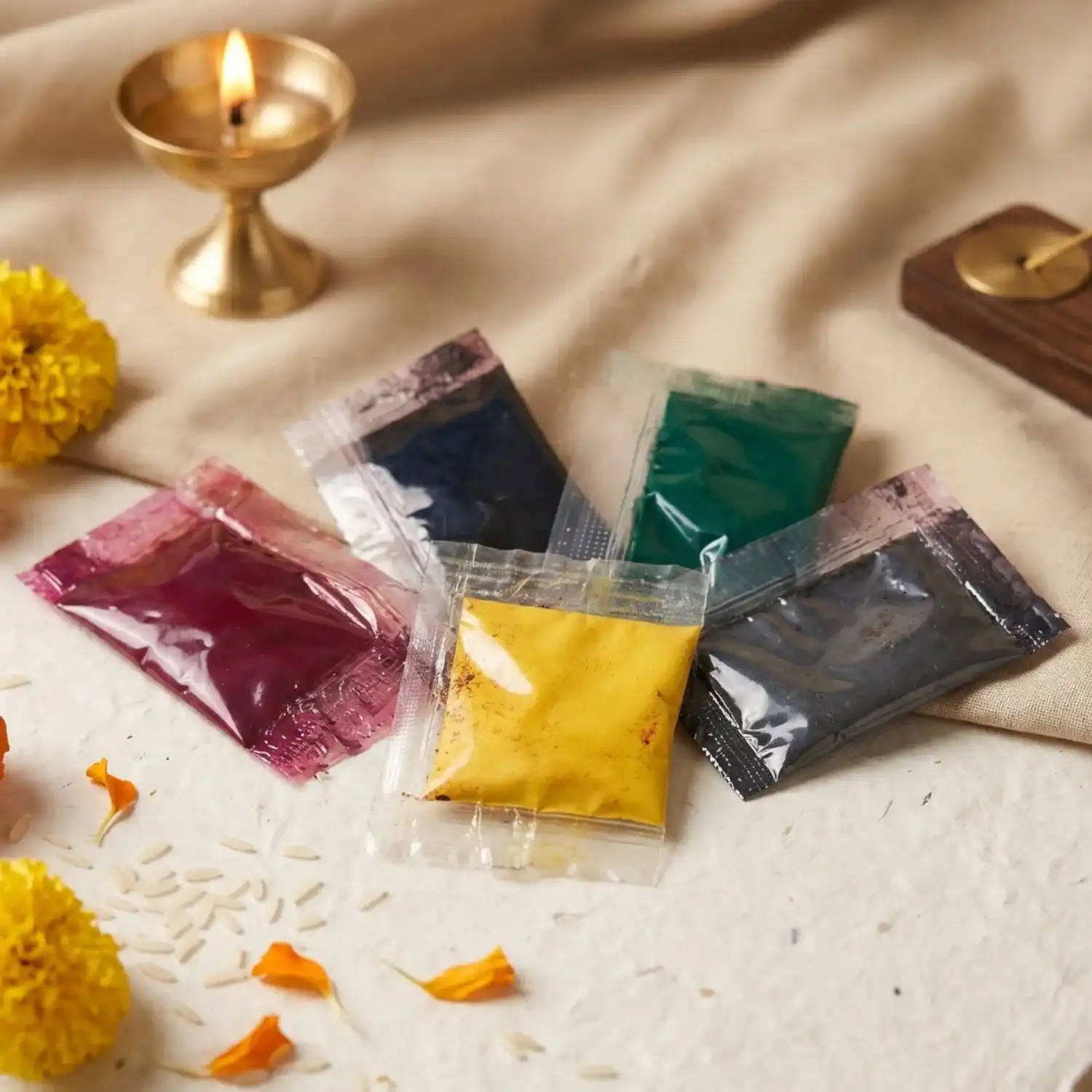
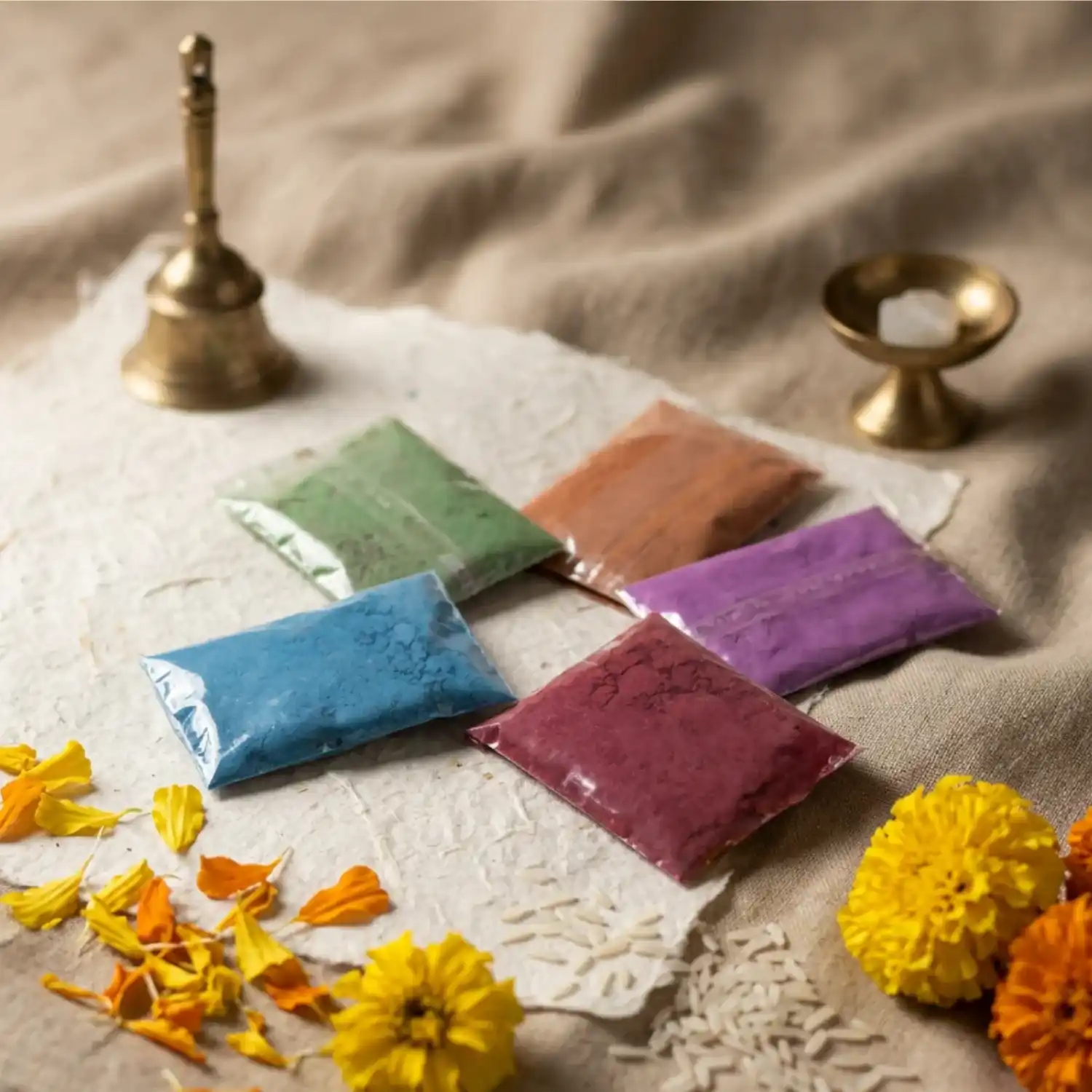
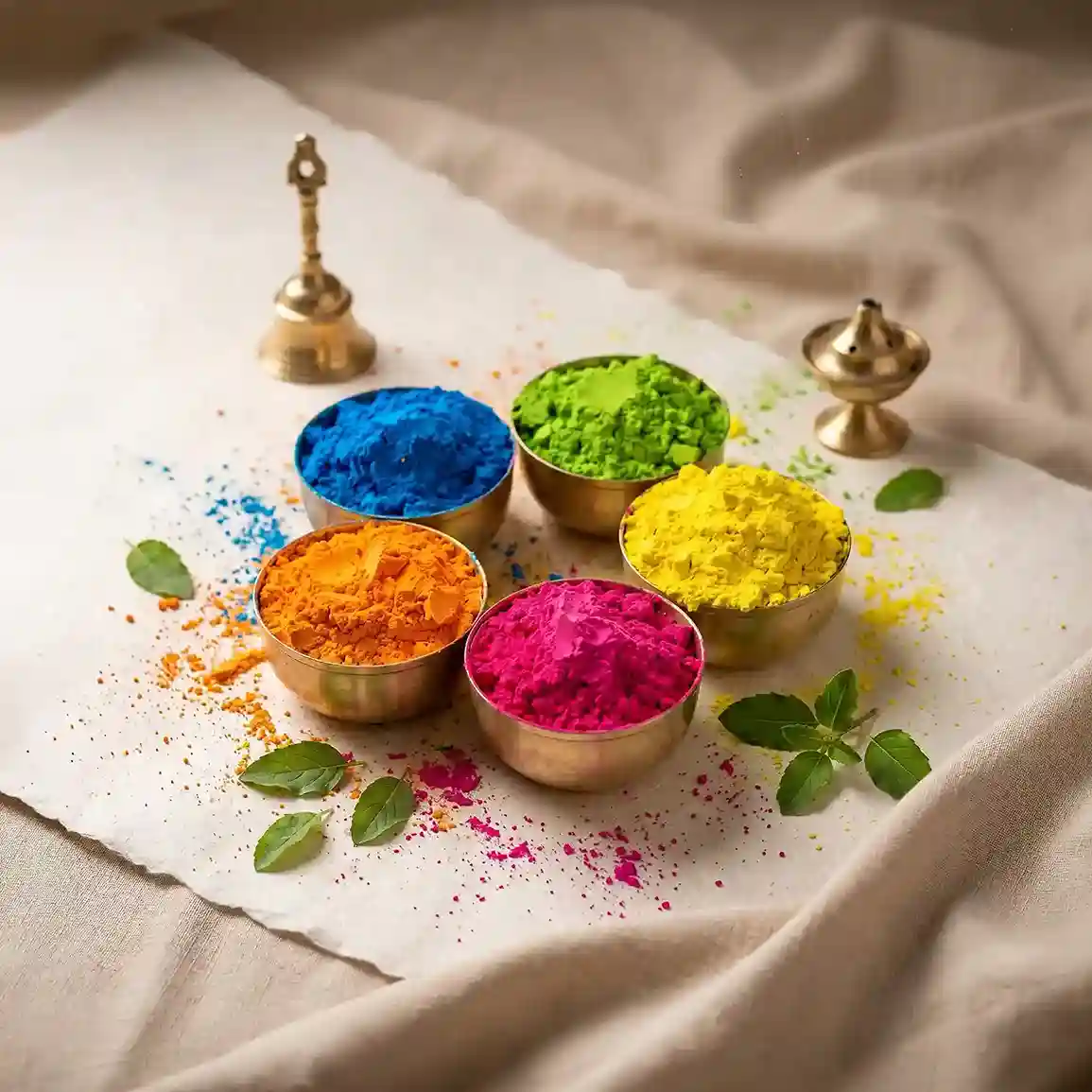
- Q2: Why does this kit include so many different powders and colors like Abir, Pancha Guri, and Pancha Rang?
- For Tradition Seekers: Vishwakarma Puja is a celebration of creation, art, and building! Using vibrant colors, traditional sacred powders (Pancha Guri), and colored Abir to decorate the altar, the Ghot, and the tools represents the beauty, creativity, and joy of the Divine Architect's work.
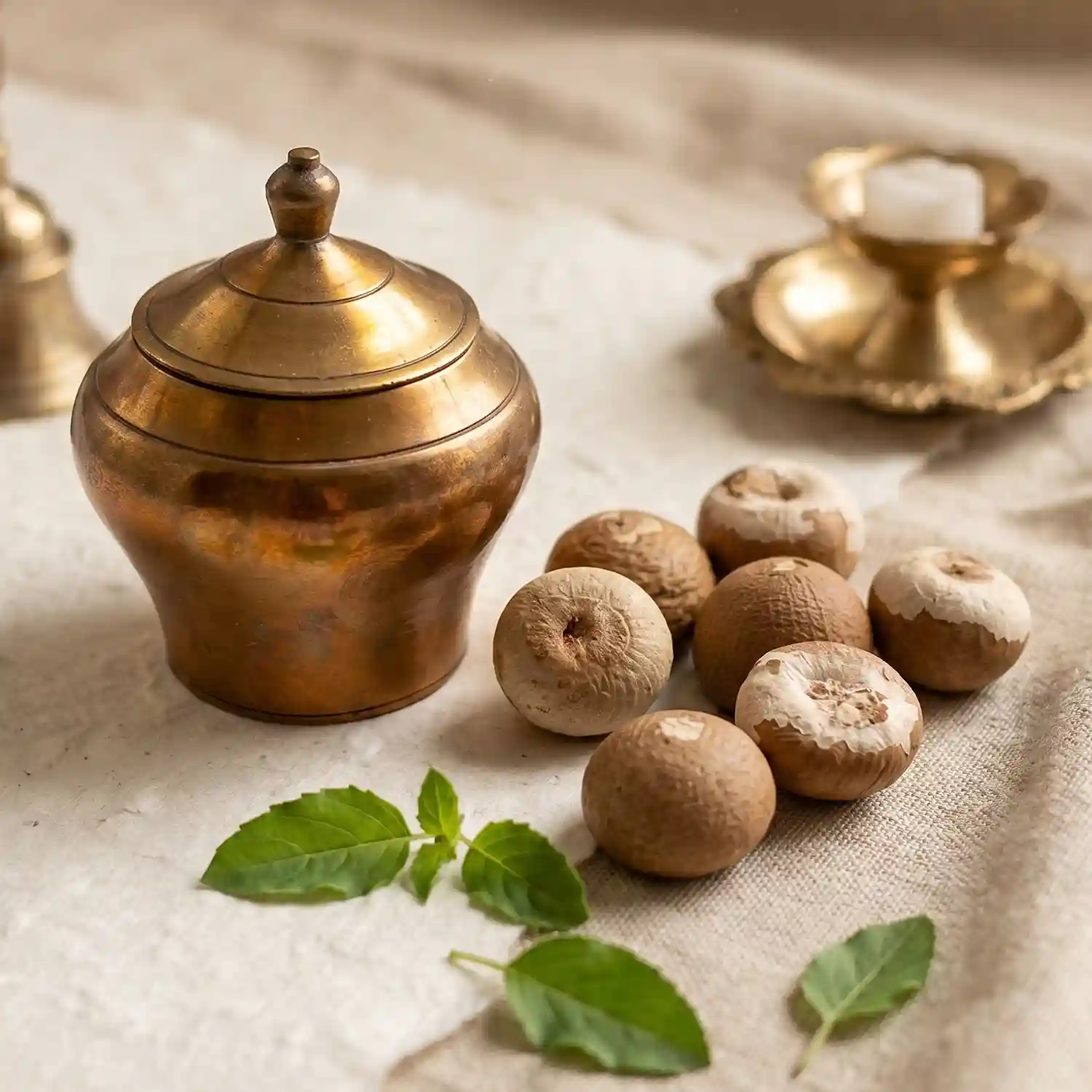
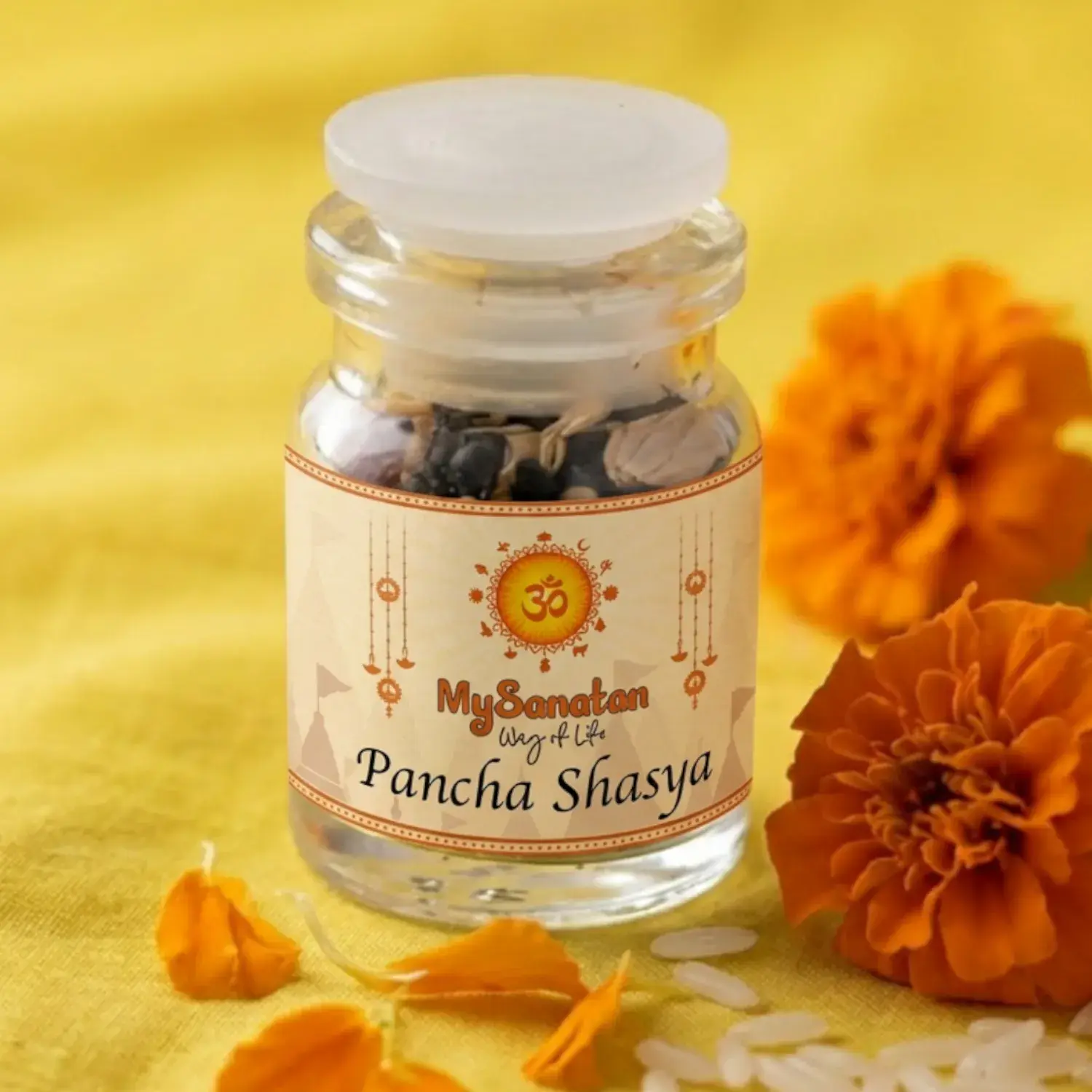
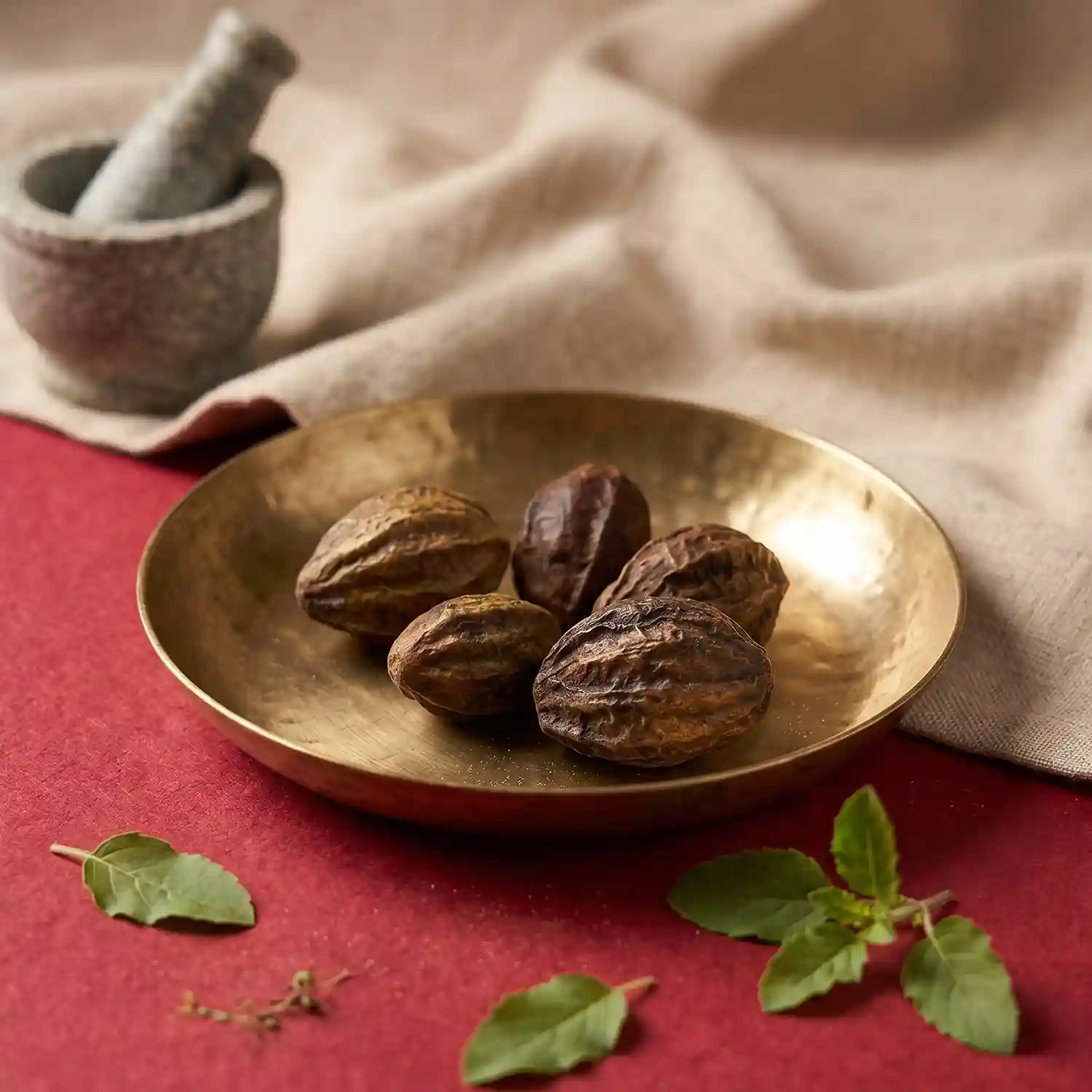
- Q3: The kit highlights Betel Nut, Haritaki, Clove, and Cardamom for 'Tambula'. Are all of these necessary?
- For Home Ritualists & Pandits: Yes, they make your home altar scripturally invincible! If a Pandit performs the formal 16-step (Shodashopachar) worship, classical manuals like the Purohit Darpan dictate that there is no 16-step puja where Tambula is not mandatory. As the exact 16th offering, it specifically requires these spices.
- Q4: Why are items like Bel Kath, Homa Cheli, and Havan Samagri included?
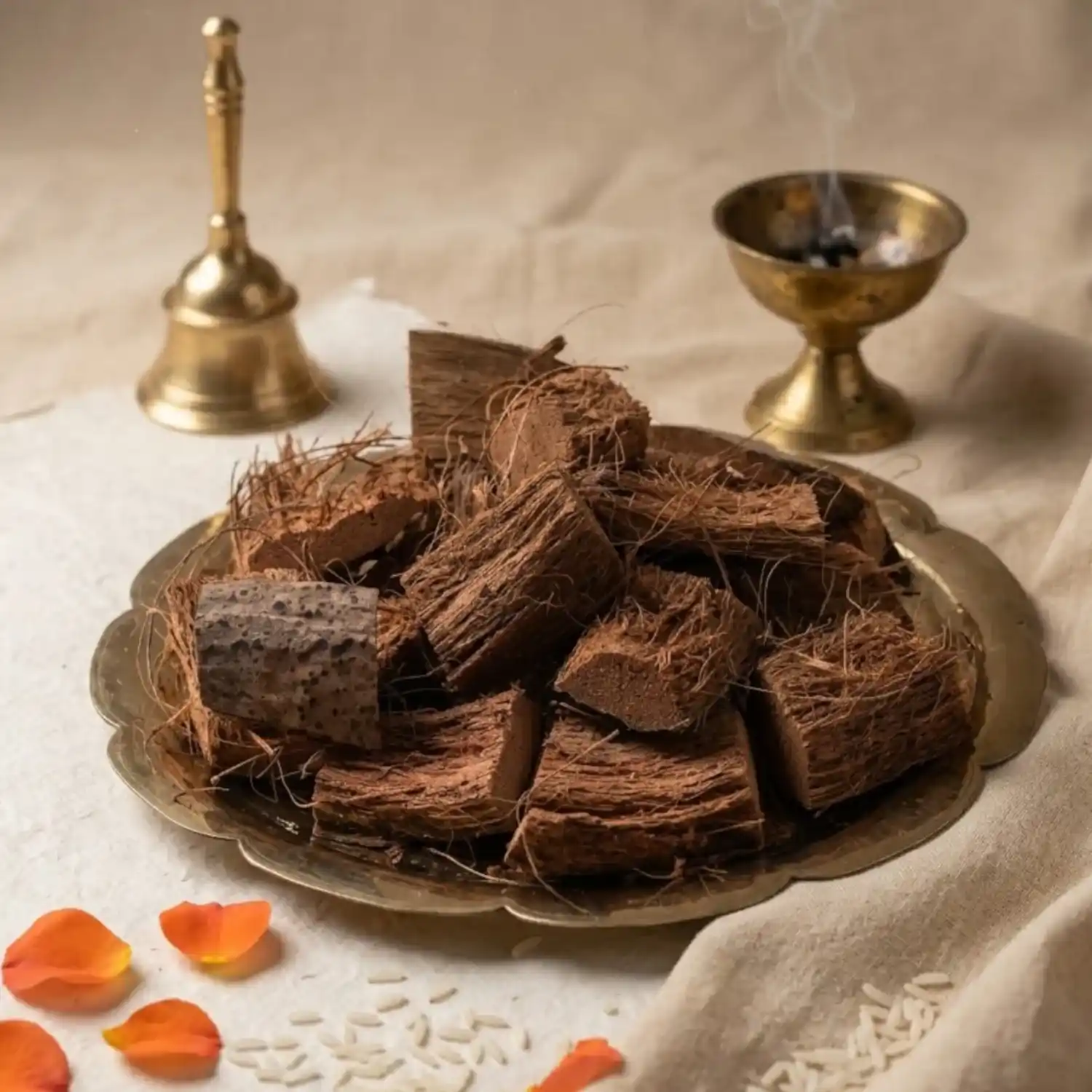
- For Devotees: These are for the Havan (sacred fire ritual). Classical Vedic manuals highly recommend performing a Havan to purify the environment and send oblations directly to the divine. This kit provides a complete set of sacred woods and herbs so your Pandit can perform a flawless fire sacrifice.
- Q5: What is the "Madhu Parker Bati" used for?
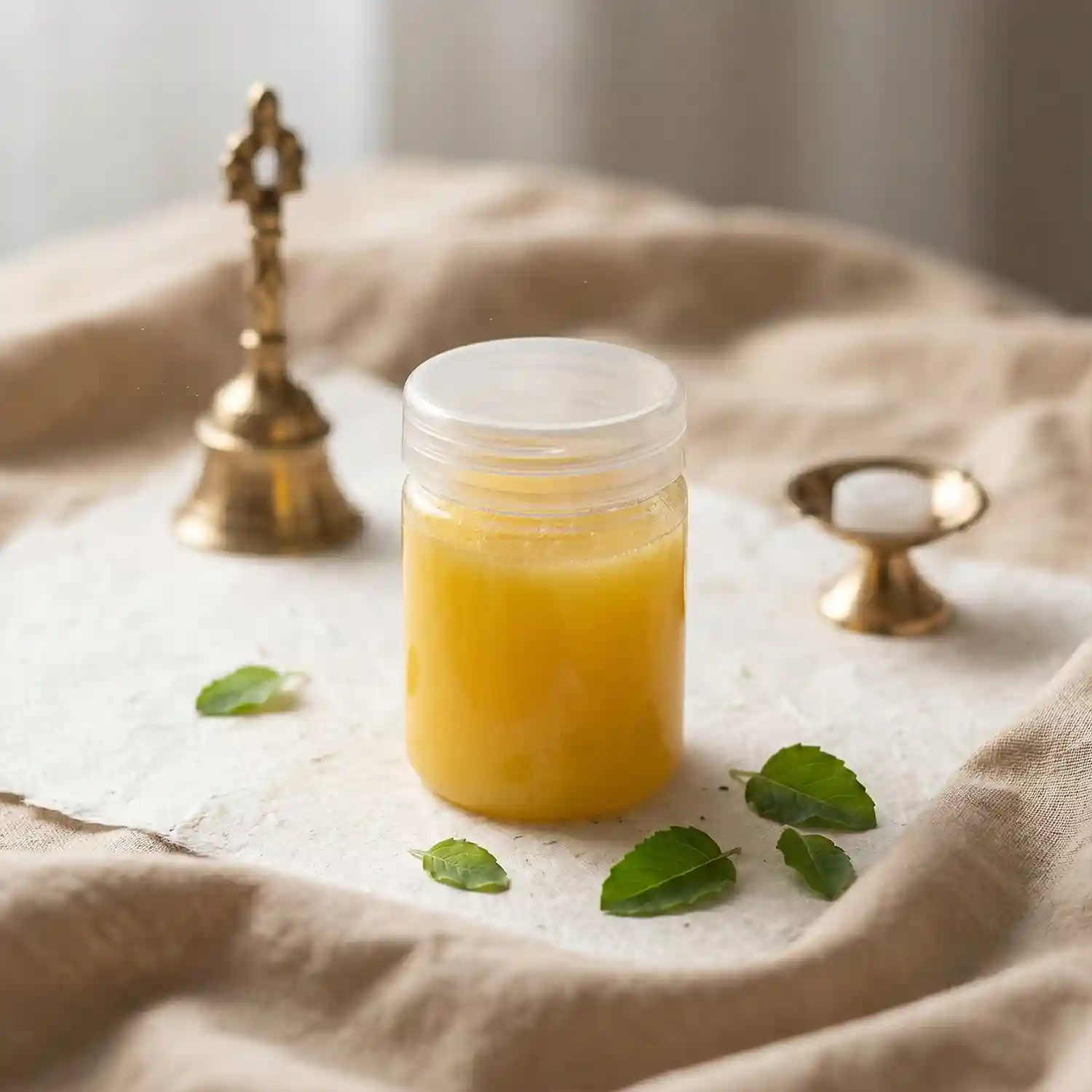
- For Dedicated Devotees: It is a special bowl used for the Madhuparka offering. According to classical Vedic hospitality, when a supreme deity arrives at your home, they must be offered a sacred sweet mixture utilizing honey as the 6th step of worship to honor their presence.
- Q6: Can ordinary householders perform the 5-step puja themselves without a priest?
- For Families: Absolutely! The classical Vedic NityaKarma manual explicitly states that daily worship and spiritual rituals are meant for the development of everyone, regardless of expertise. Families are fully encouraged to clean their tools, set up the altar, and perform the joyful prayers themselves!