
_15_11zon.webp)









Frequently Asked Questions
- Q1: What does the word "Ugadi" actually mean?
- For Cultural Enthusiasts: The word "Ugadi" is beautifully derived from two terms: Yuga (meaning age or era) and Adi (meaning beginning). Put together, it translates to "the beginning of a new era," perfectly capturing the hopeful essence of the traditional South Indian New Year!
- Q2: Why is the "Sesame Oil" (Til Tel) the most important item in this kit?
- For Tradition Seekers: Waking up before sunrise to apply sesame or herbal oil to the body before bathing is the very first and most vital Ugadi ritual, known as the Abhyanga Snanam. It is believed to deeply purify the body and mind. Beginning the New Year with such strict cleanliness and discipline naturally invites massive prosperity.
- Q3: Which specific deities are worshipped during Ugadi?
- For Devotees: Because ancient mythology states that Lord Brahma began creating the universe on this exact day, Ugadi is strongly associated with cosmic beginnings, and he is highly revered. Additionally, devotees offer major prayers to Lord Vishnu, who is considered the supreme preserver and protector, seeking his blessings for health, success, and balance in the coming year.
- Q4: Why must we draw Rangolis (Muggulu) and tie Mango Leaves?
- For Families: These are essential customs to prepare the home for divine blessings! Decorating doorways with fresh mango leaf torans is believed to attract good luck and remove negative energy. Similarly, drawing beautiful Muggulu (rangolis) outside the home symbolizes abundance; a clean and welcoming home easily attracts positive energy and good fortune!
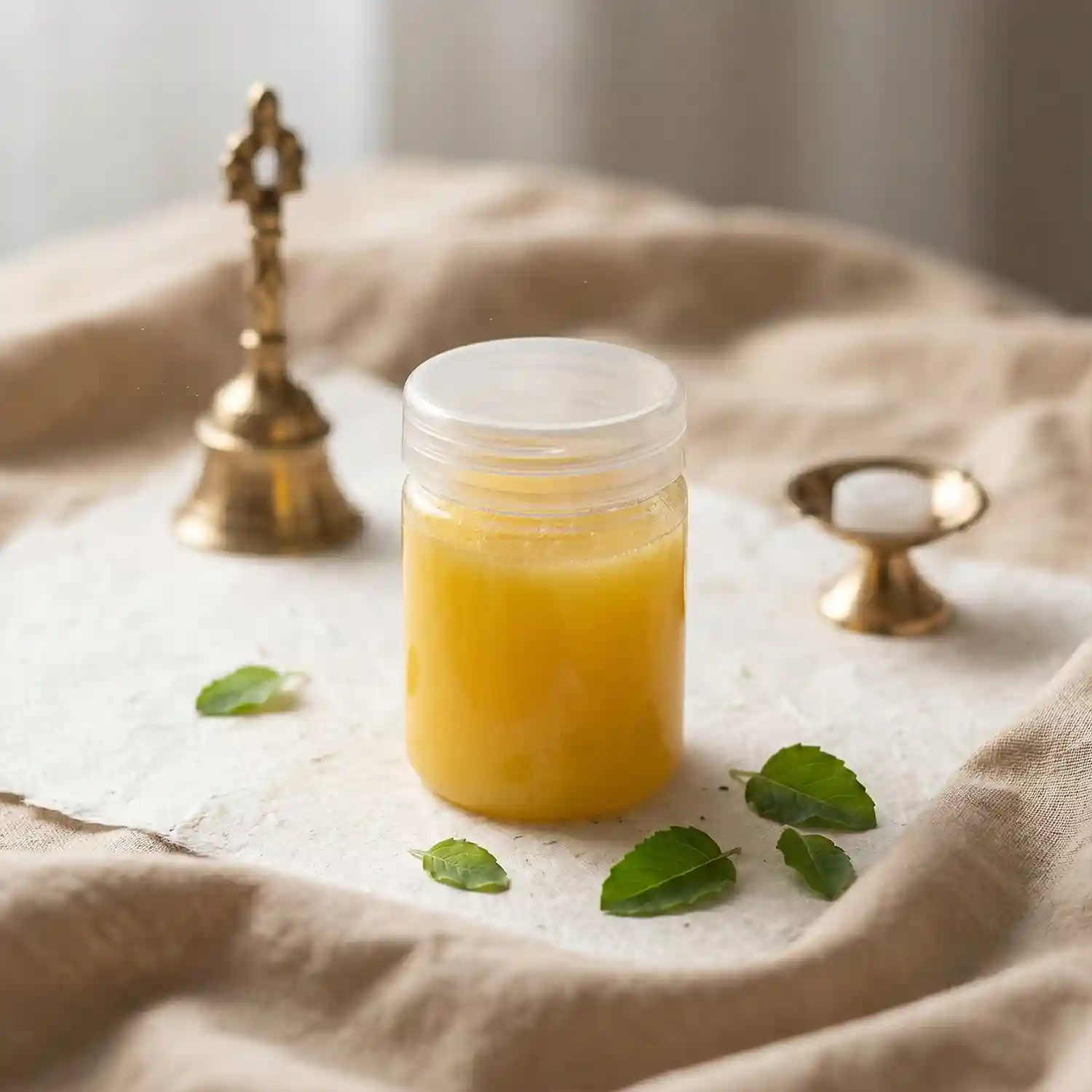
- Q5: What is the significance of the Honey in this kit?
- For Dedicated Devotees: Honey is essential for Madhuparka, a highly auspicious sweet offering. According to classical Vedic hospitality, when a supreme deity arrives to bless your home during a 16-step worship, they must be offered a sacred sweet mixture of curds or milk and honey as the 6th step to honor their presence.
- Q6: Can ordinary householders perform the 5-step puja themselves without a priest?
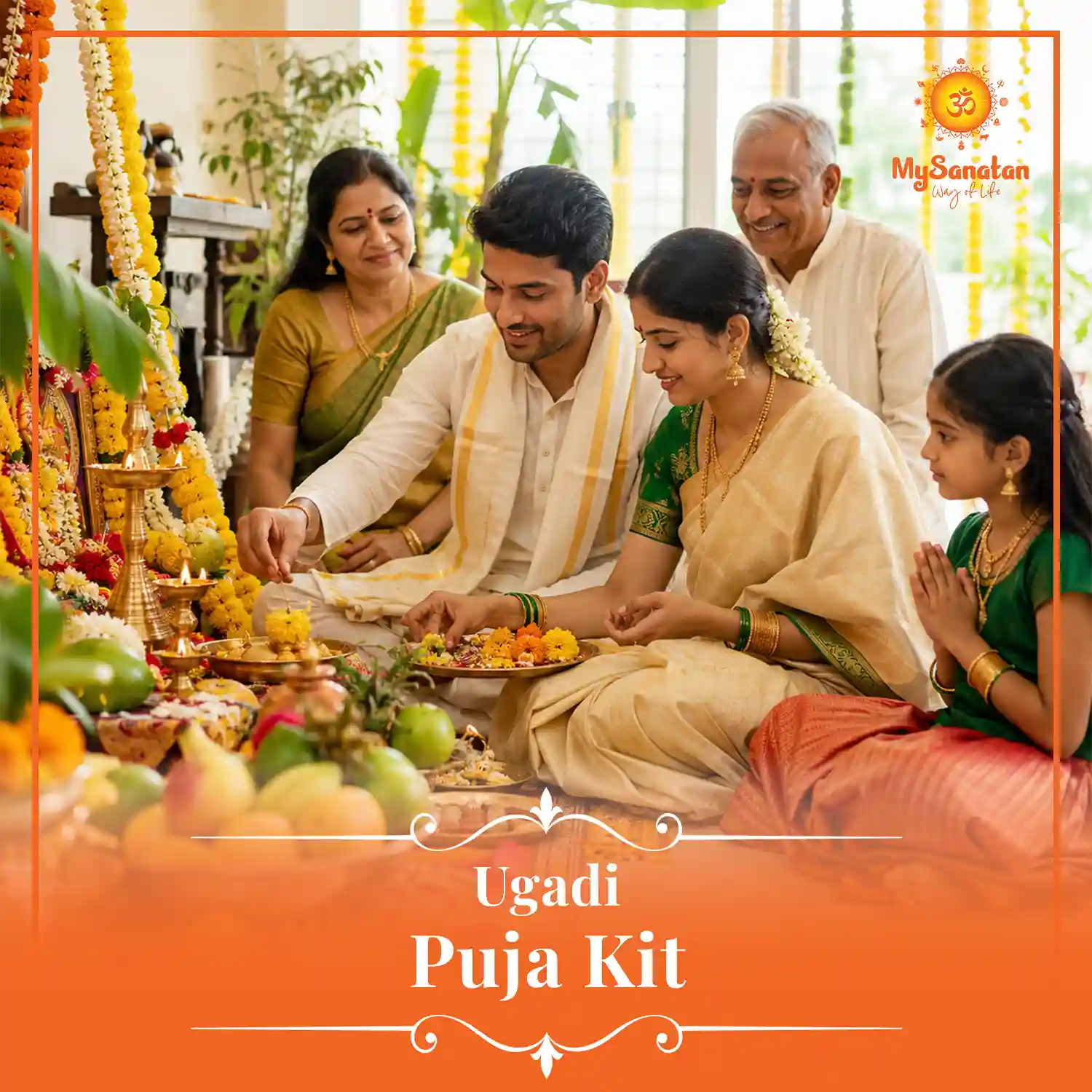
- For Families: Absolutely! The classical Vedic NityaKarma manual explicitly states that daily worship and spiritual rituals are meant for the physical, intellectual, and spiritual development of everyone. Families are fully encouraged to perform their own morning prayers to Lord Brahma and Lord Vishnu!