
_10_11zon.webp)

_15_11zon.webp)



Frequently Asked Questions
- Q1: The kit includes Akshat Rice, but I have heard that we shouldn't offer unbroken rice to Lord Shiva. Is this true?
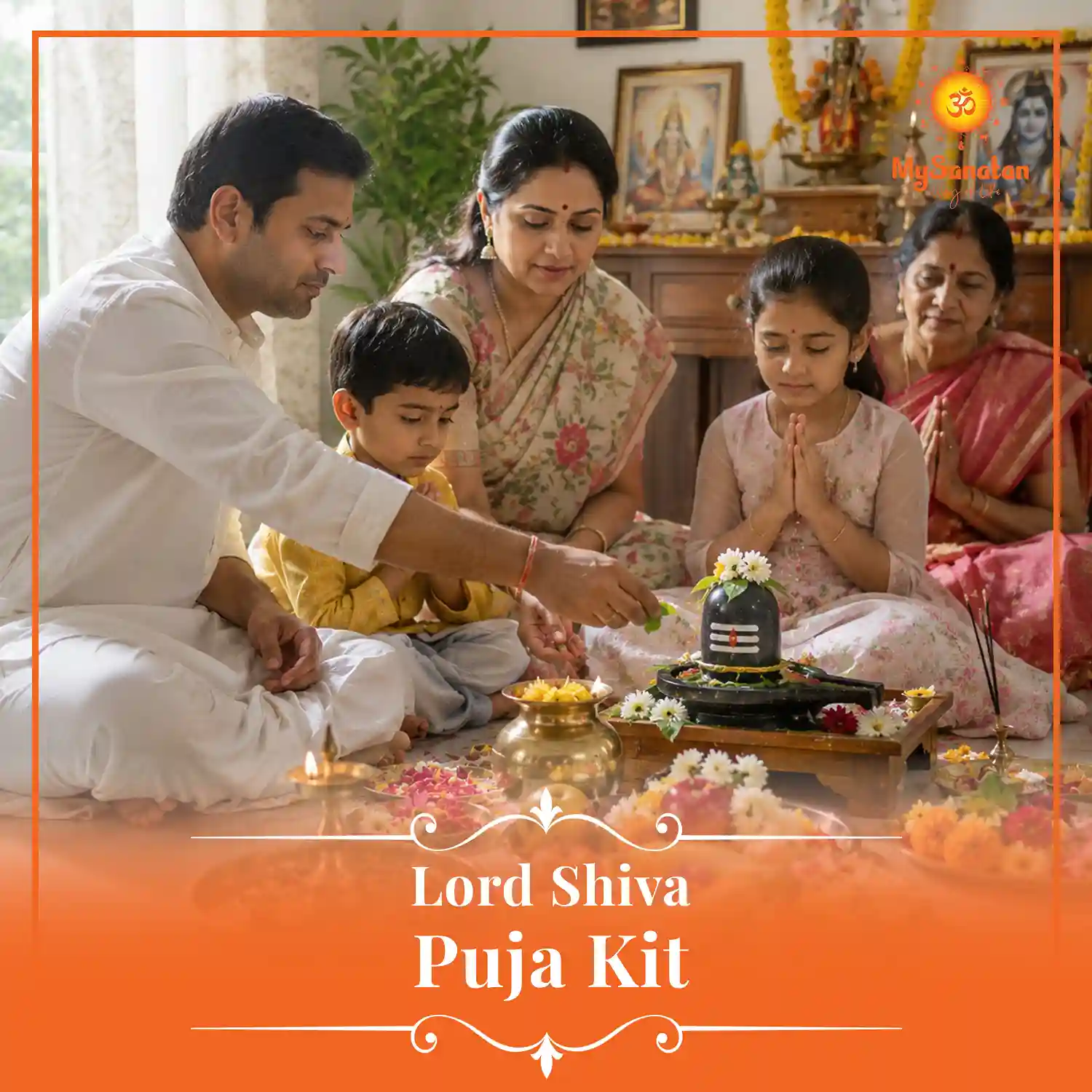
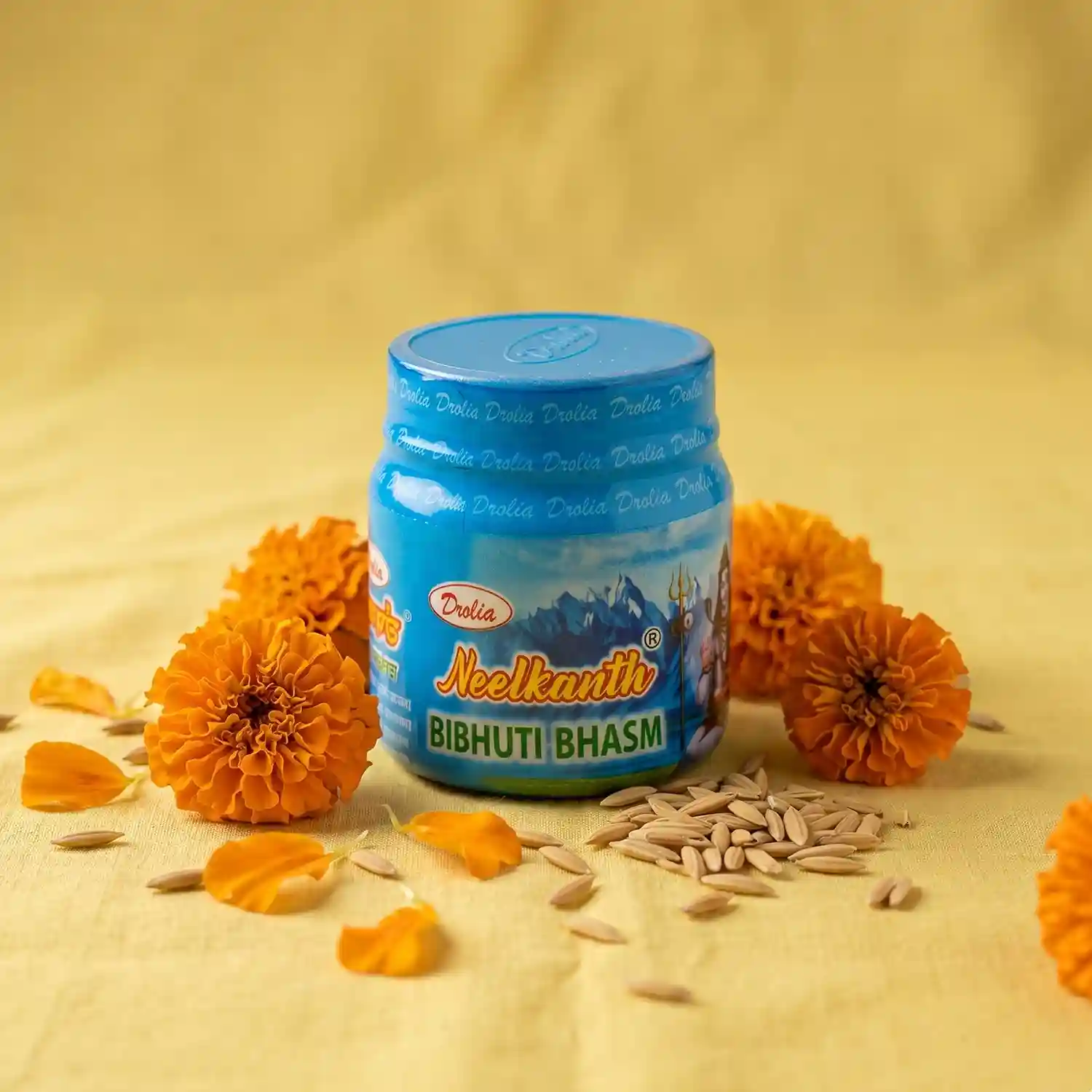
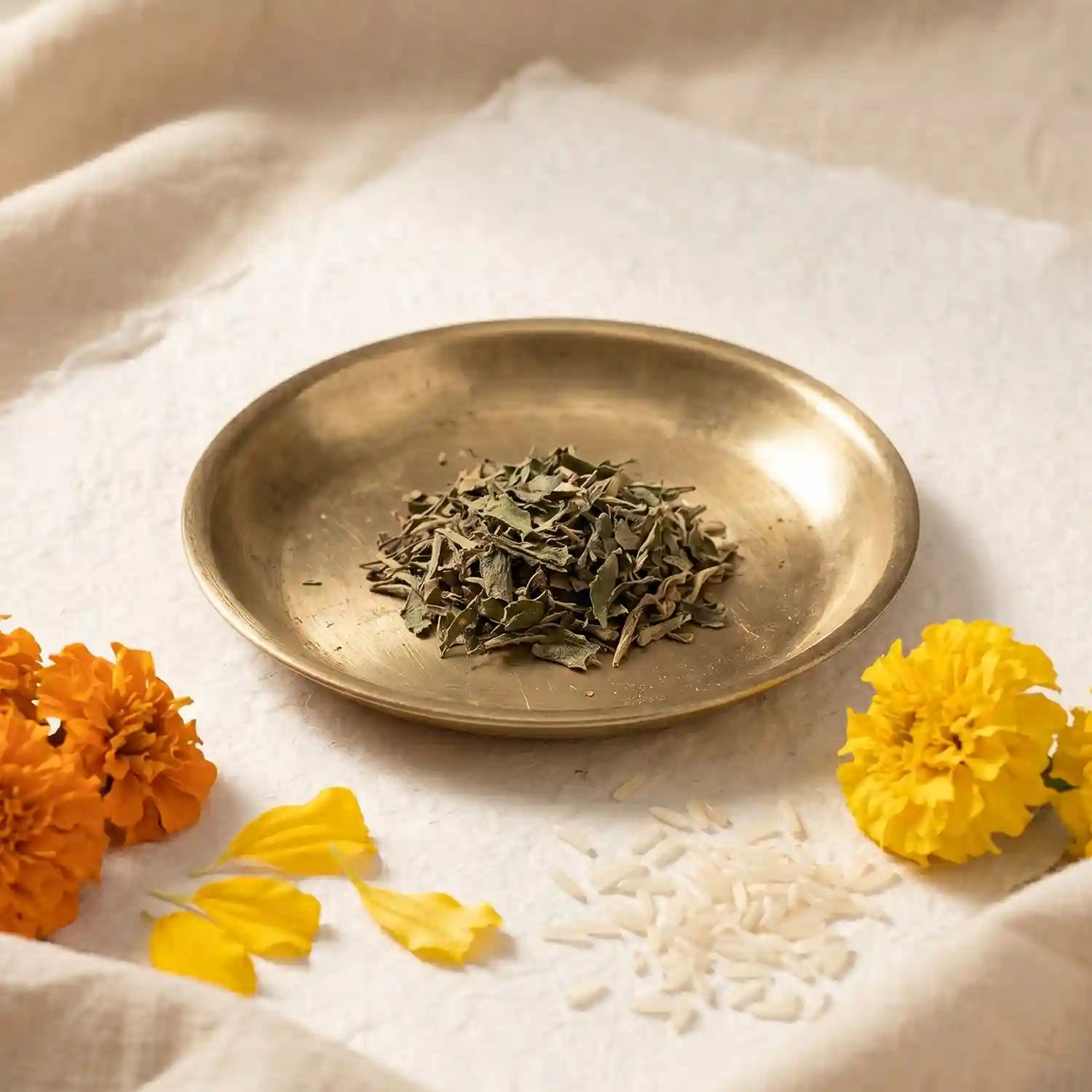
- For Devotees & Scholars: Yes, this is an incredible scriptural secret! The Purohit Darpan explicitly commands: "na akshatair archayed shivam" (One must not worship Shiva directly with Akshat). While Akshat is essential for setting up the altar, making the sacred base for the Kalash, or offering to attendant deities, you should never place the rice directly onto the Shiva Linga. Use the provided Vibhuti Bhasma and Siddhi Leaves for his direct adornment!
- Q2: Since Shivaratri is celebrated at night, should I face a different direction than I normally do for daytime worship?
- For Experienced Practitioners: No! Lord Shiva holds a very special directional rule. While classical texts often require facing East during the day and North at night for general deities, the Purohit Darpan explicitly states: "Shiva puja diva o ratri ubhay samayei uttar-mukh hoiya koribe". This means that whether you are worshipping Lord Shiva in the bright morning or the dead of night, you must always perform his rites facing North!
- Q3: The kit includes a beautiful brass Gaumukhi (cow-mouth vessel) for the Abhishek. How should I ritually purify it before the bath?
- For Home Ritualists: Simple water is not enough to achieve ceremonial purity for metals! According to the ancient Apastamba Sutras, different materials require highly specific natural cleaners. The text dictates that a vessel made of metal or brass "becomes pure by being scoured with ashes". You must physically scour the brass Gaumukhi using clean ash or earth and rinse it before filling it with the sacred Ganga Jal!
- Q4: I have a beautiful garden full of Kunda and Ketaki flowers. Can I offer them to Lord Shiva?
- For Beginners: You must strictly avoid this! The Purohit Darpan contains a highly specific list of Prohibited Flowers (Nishiddha Pushpa) exclusively for Lord Shiva. The text explicitly mandates that Kunda, Ketaki, Bandhuka, and Red Jaba (Hibiscus) are strictly forbidden in Shiva worship. To properly honor him, stick to white flowers, Dhatura, and the botanical leaves provided in your kit!
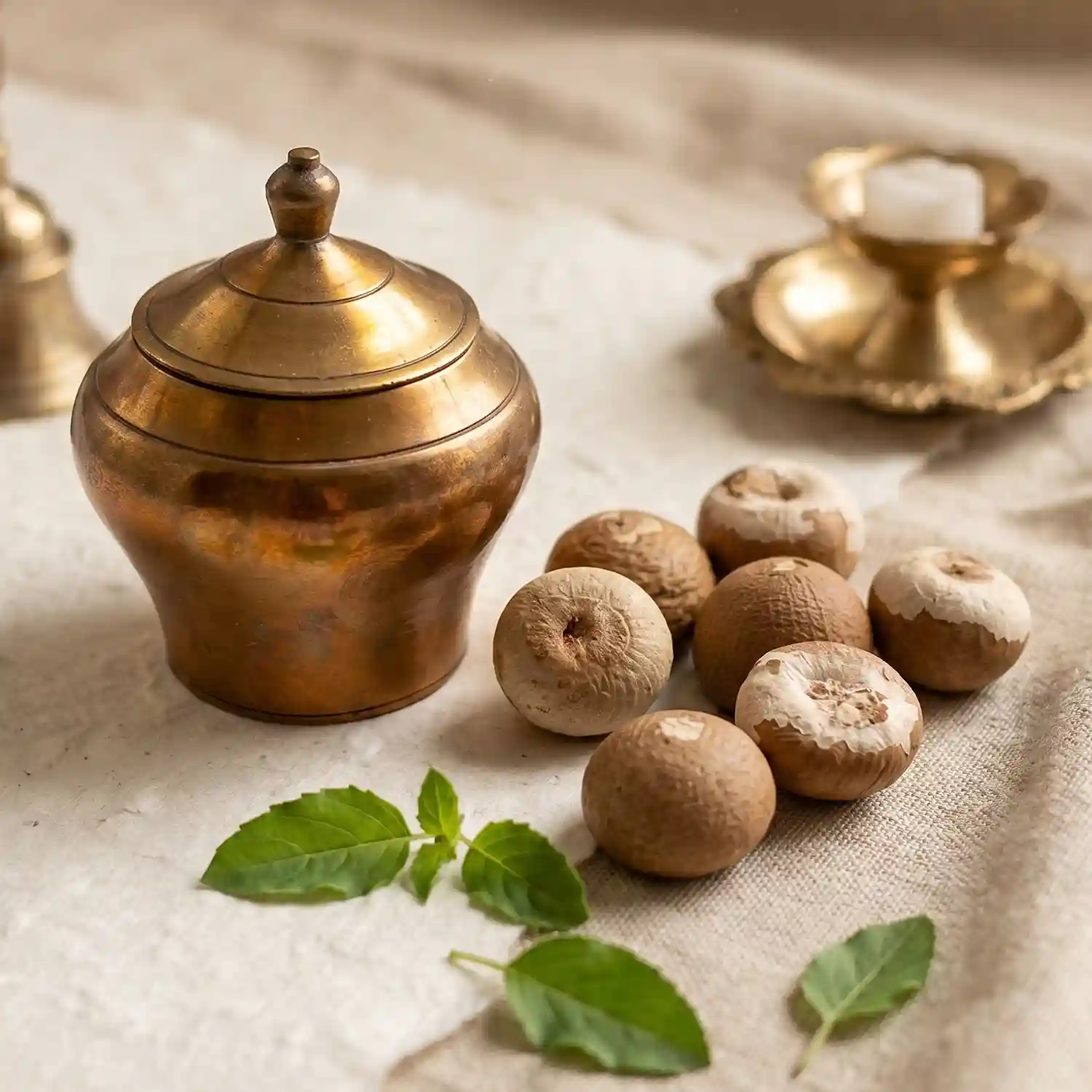
- Q5: The kit highlights specific spices like Betel Nut, Clove, and Cardamom for 'Tambula'. Why is this called out for the 16-step puja?
- For Cultural Enthusiasts: Because it is scripturally non-negotiable! The classical texts dictate that there is no 16-step (Shodashopachar) puja where Tambula is not mandatory. As the exact 16th and final required offering, Tambula is presented to sweeten the deity's mouth after the grand feast. Without these specific spices, a grand royal worship is technically incomplete, which is why we ensure they are perfectly packaged in your premium kit!