
.webp)




_11zon.webp)
1_1_11zon.webp)
_9_11zon.webp)


_11zon.webp)



.webp)

_11zon.webp)
_11zon.webp)




_11zon.webp)

Frequently Asked Questions
Q1: We have beautiful Tulsi plants in our garden. Can I offer Tulsi leaves to Goddess Kali during the puja?
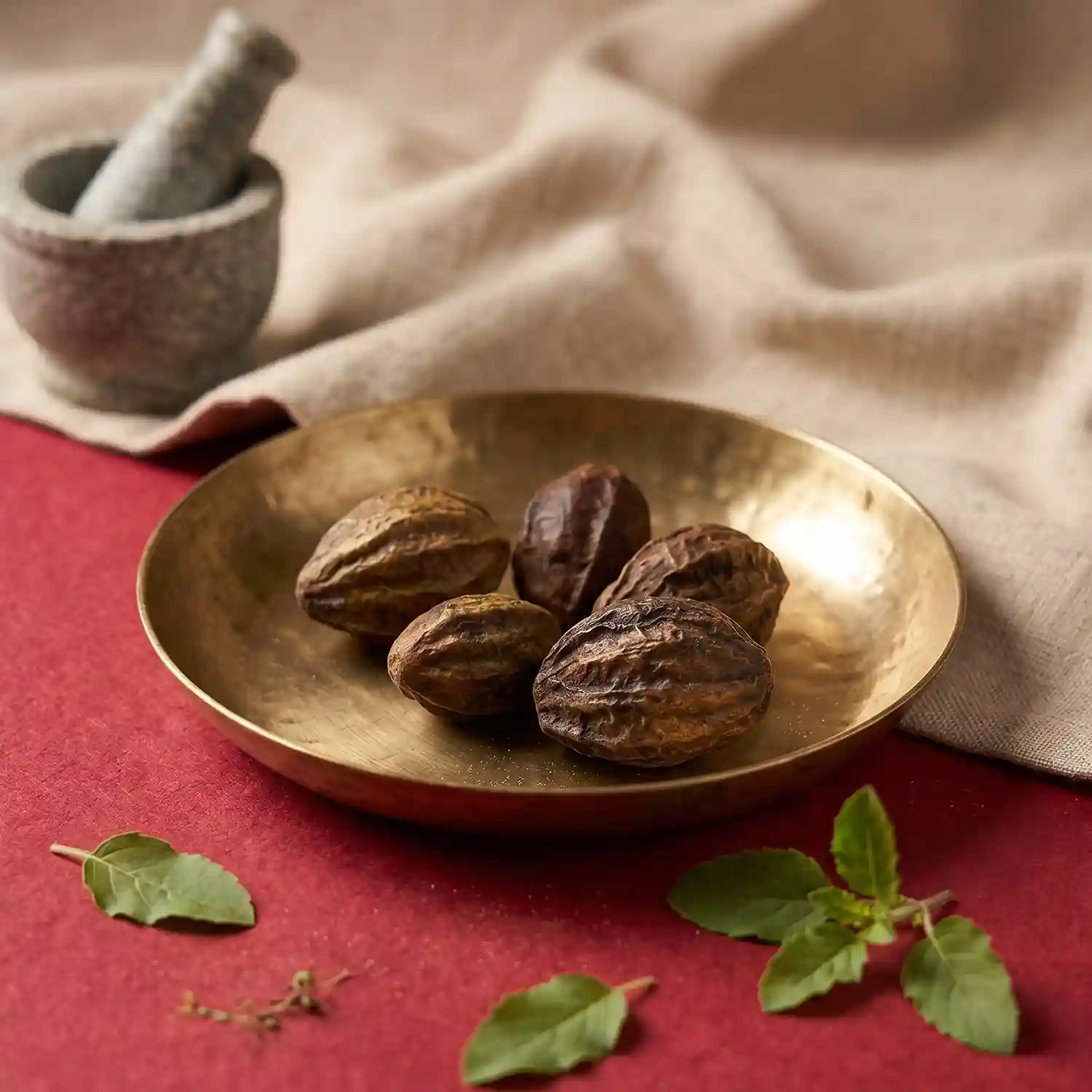
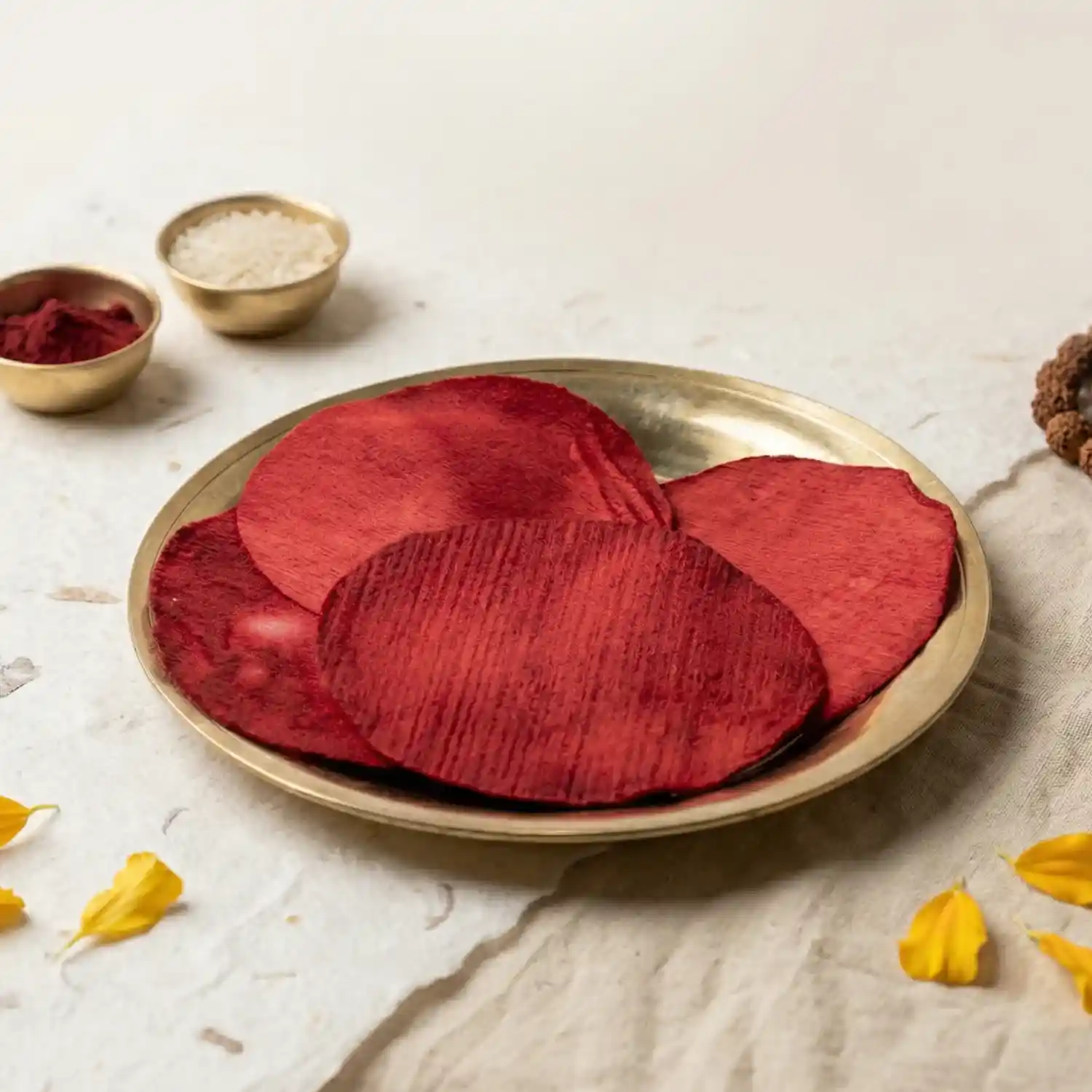
For Beginners & Families: You must absolutely avoid this! While Tulsi is highly sacred to Lord Vishnu, the classical Purohit Darpan outlines strict prohibitions regarding which leaves can be offered to which deity. The text explicitly mandates: "Tulasi is prohibited for Ganesha" and "Durva is prohibited for Durga [and other Goddesses]". To perfectly honor the Divine Mother, you should offer her preferred items, such as red flowers and the provided Siddhi Leaves!
Q2: Since Dipanwita Kalipuja coincides with Diwali, we hired a caterer to prepare the grand feast. Is it scripturally allowed to offer food cooked by uninitiated helpers?
For Busy Householders & Hosts: Yes, but it requires a very specific Vedic purification step! According to the Apastamba Sutras, if food is prepared by uninitiated persons or outside of your direct supervision, the householder must not offer it directly. Instead, they must first "place on the fire that food which has been prepared... and shall sprinkle it with water." By doing this simple purification, the ancient texts declare that the food becomes completely "fit for the gods"!
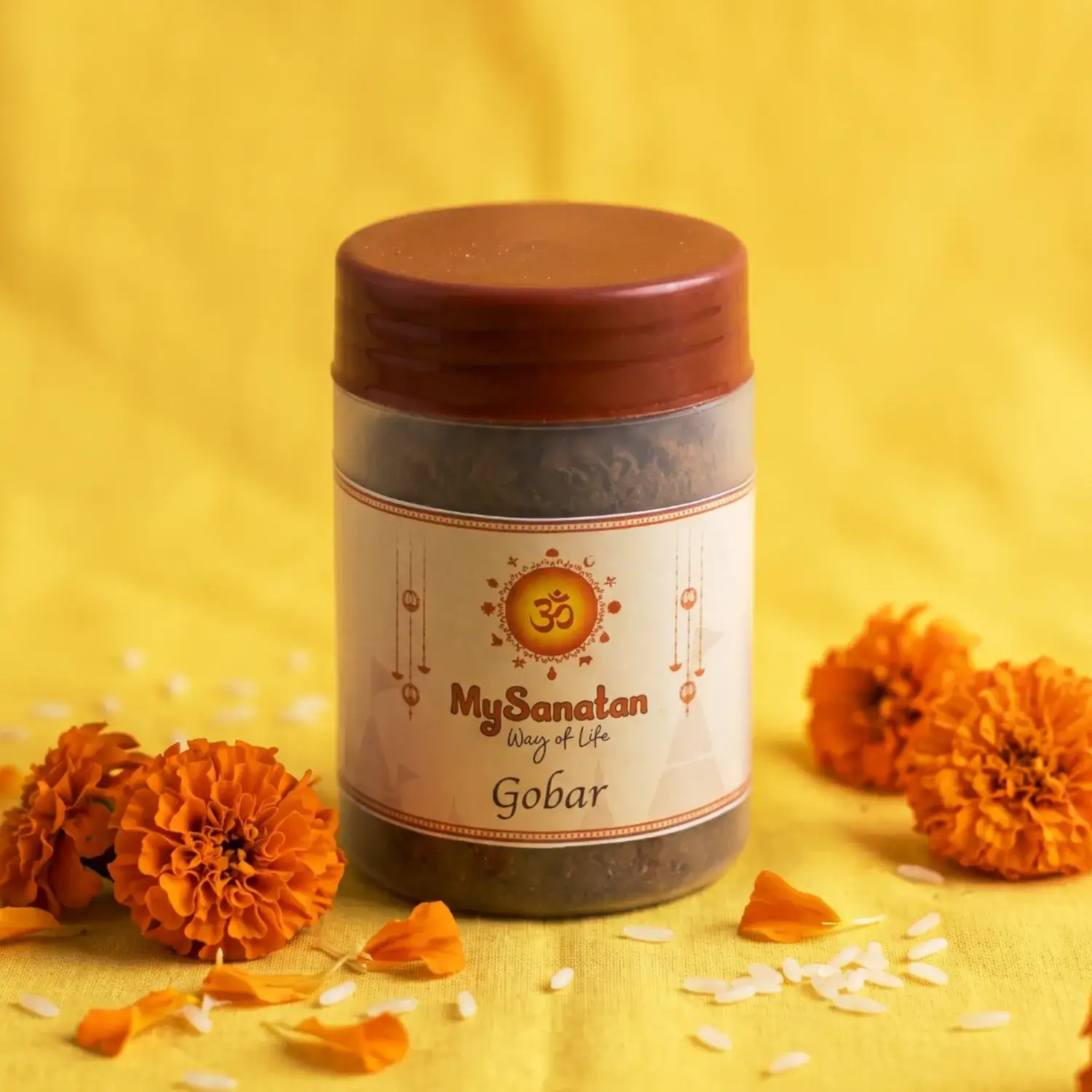
Q3: The kit includes 'Gau Mutra' (Cow Urine) and 'Gobar' (Cow Dung). How exactly are these used in the sacred setup?
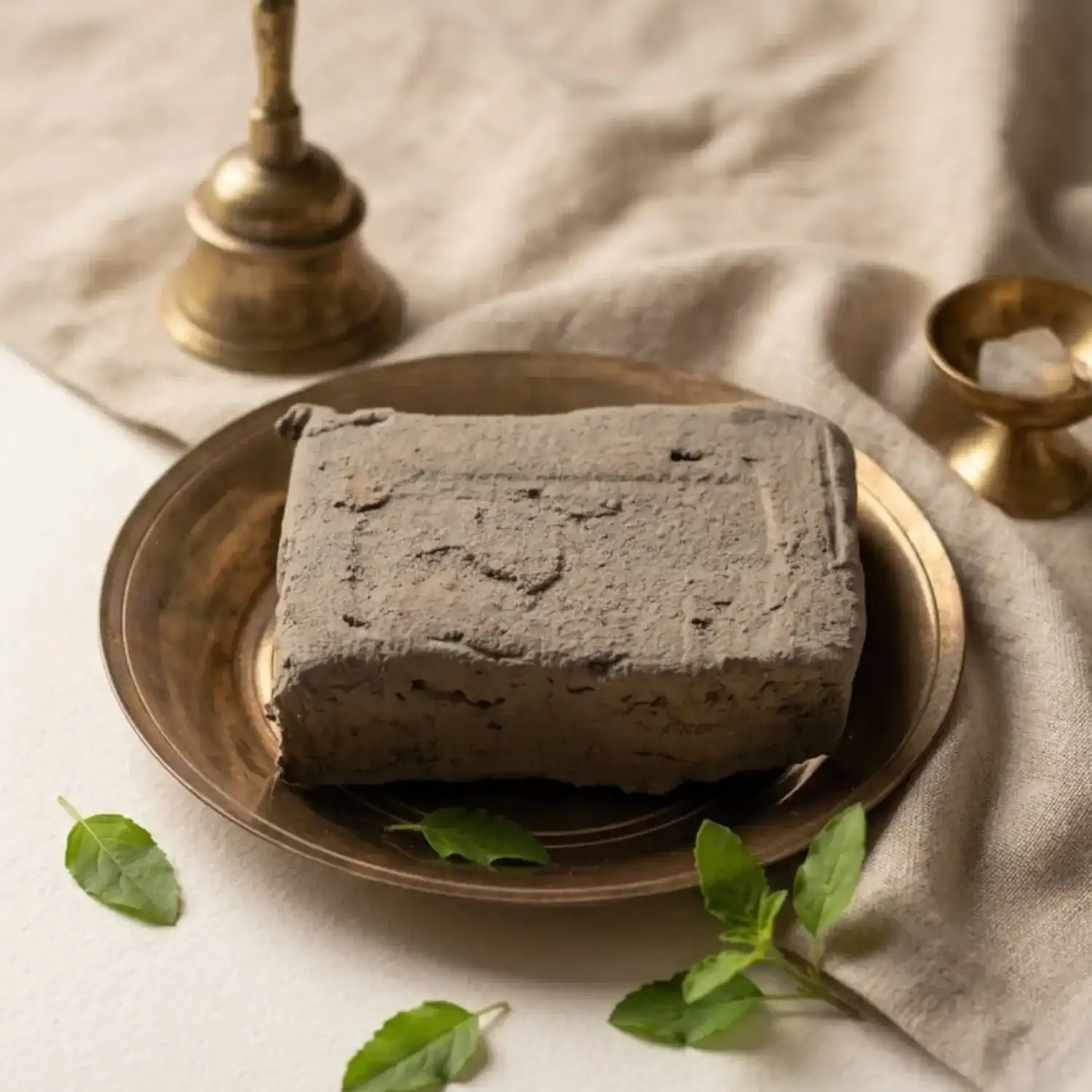
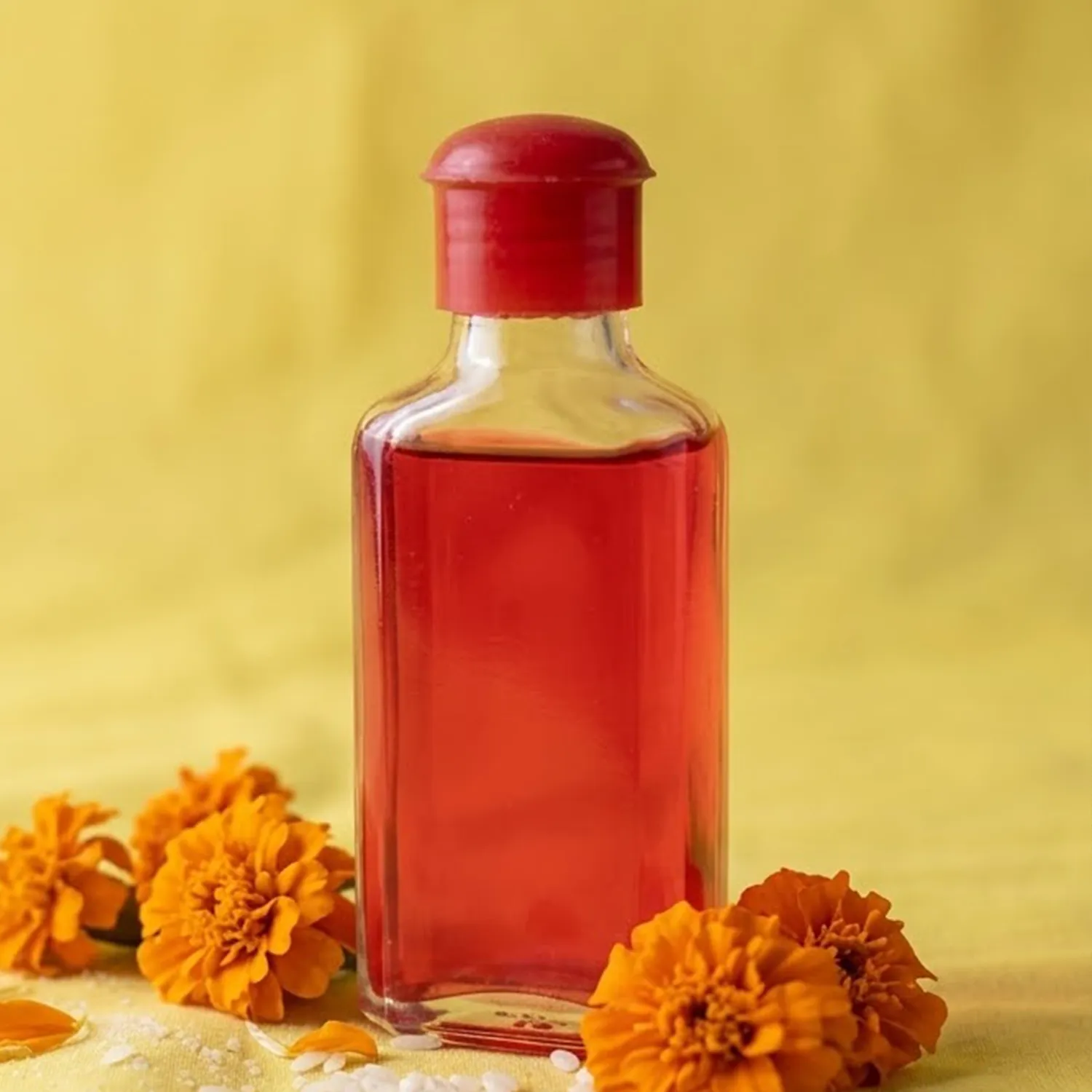
For Home Ritualists: In traditional Vedic science, products from the cow are considered the ultimate spiritual and physical purifiers! According to the Purohit Darpan, before the sacred fire pit (Vedi) or the altar is established, the ground must be ritually cleansed and coated using the Gomaya (Cow Dung). Furthermore, these items are key ingredients in the Panchagavya—a sacred mixture used to spiritually cleanse the idol or the sacred space before the Goddess is formally invited.
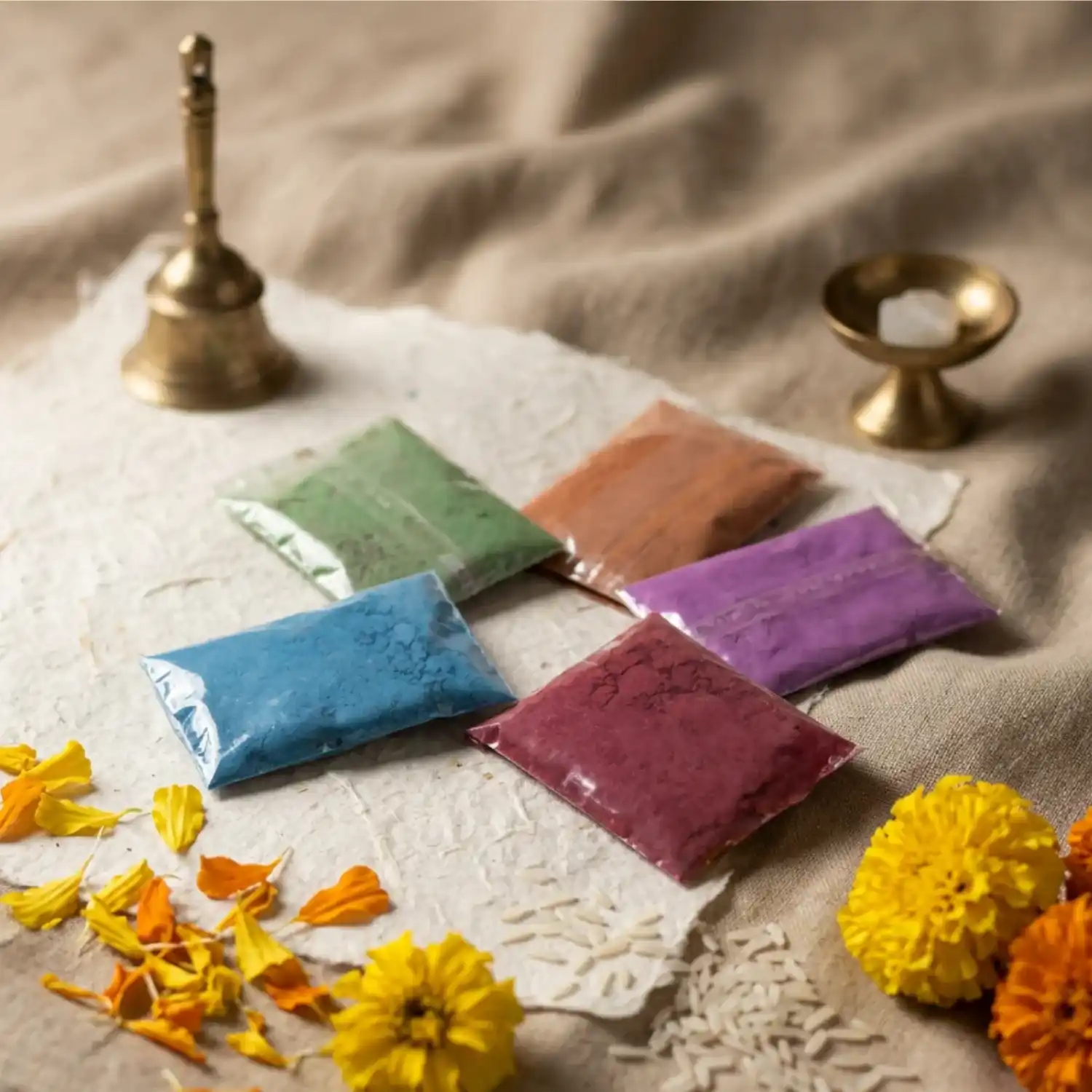
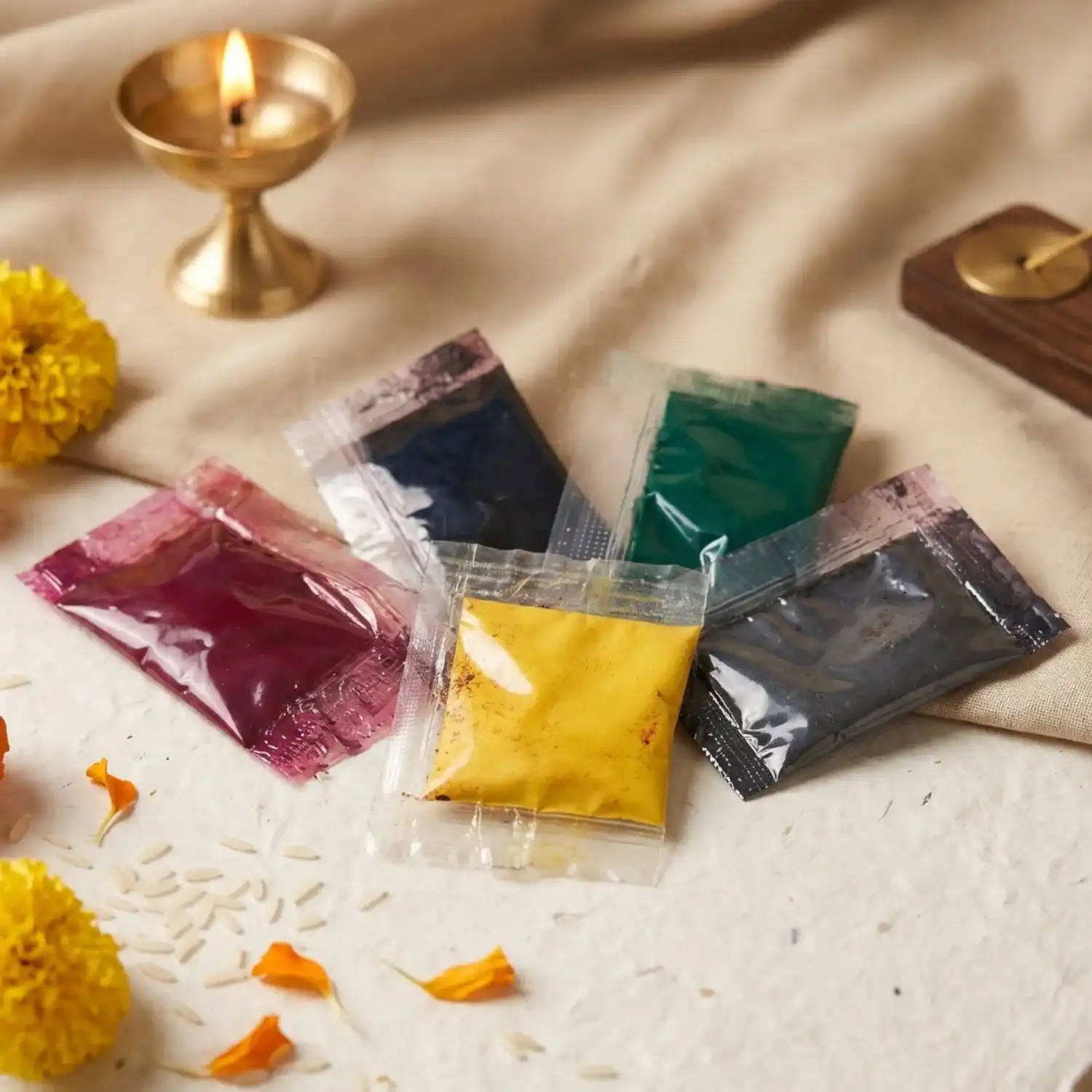
Q4: I notice "Pancha Rang" (Five Colors) and "Pancha Guri" (Five Powders) are included. Where do these go on the altar?
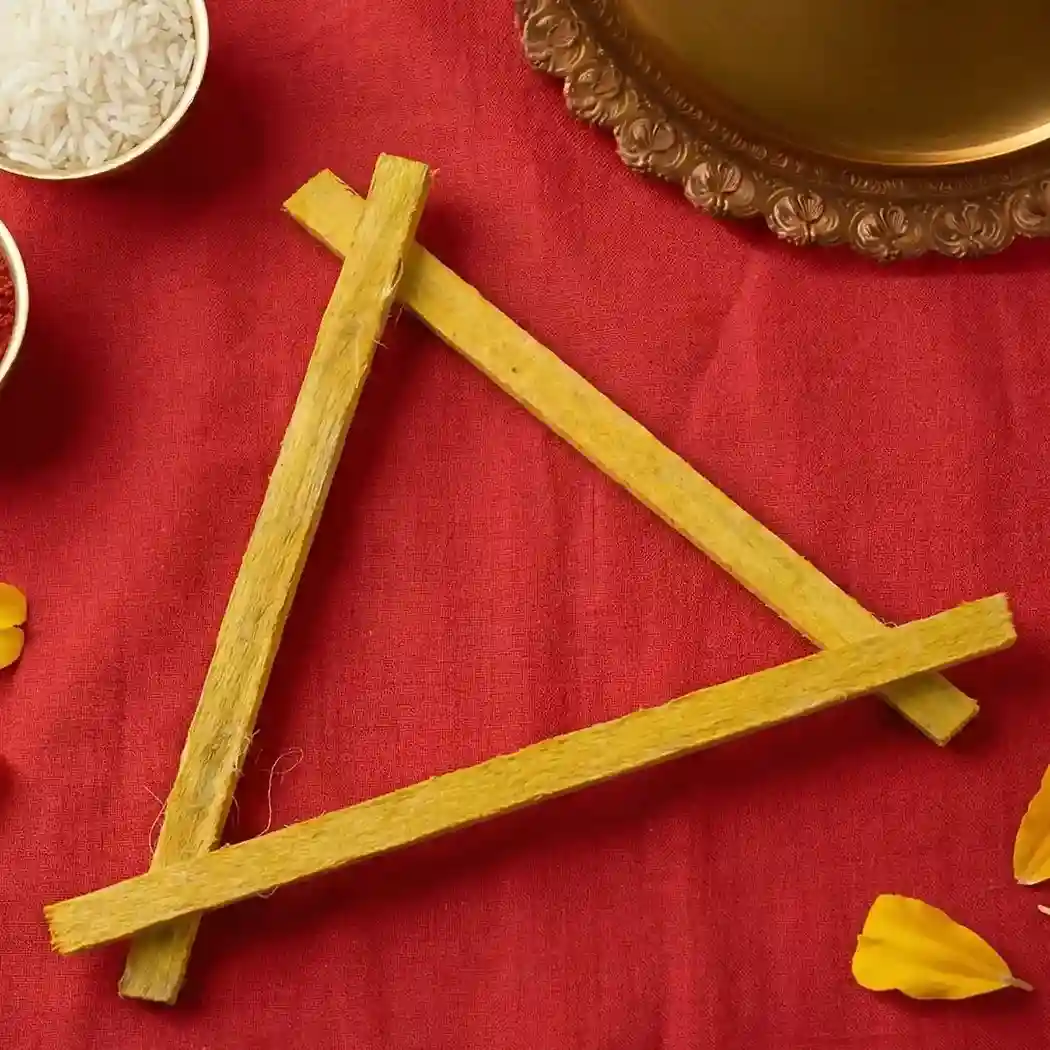
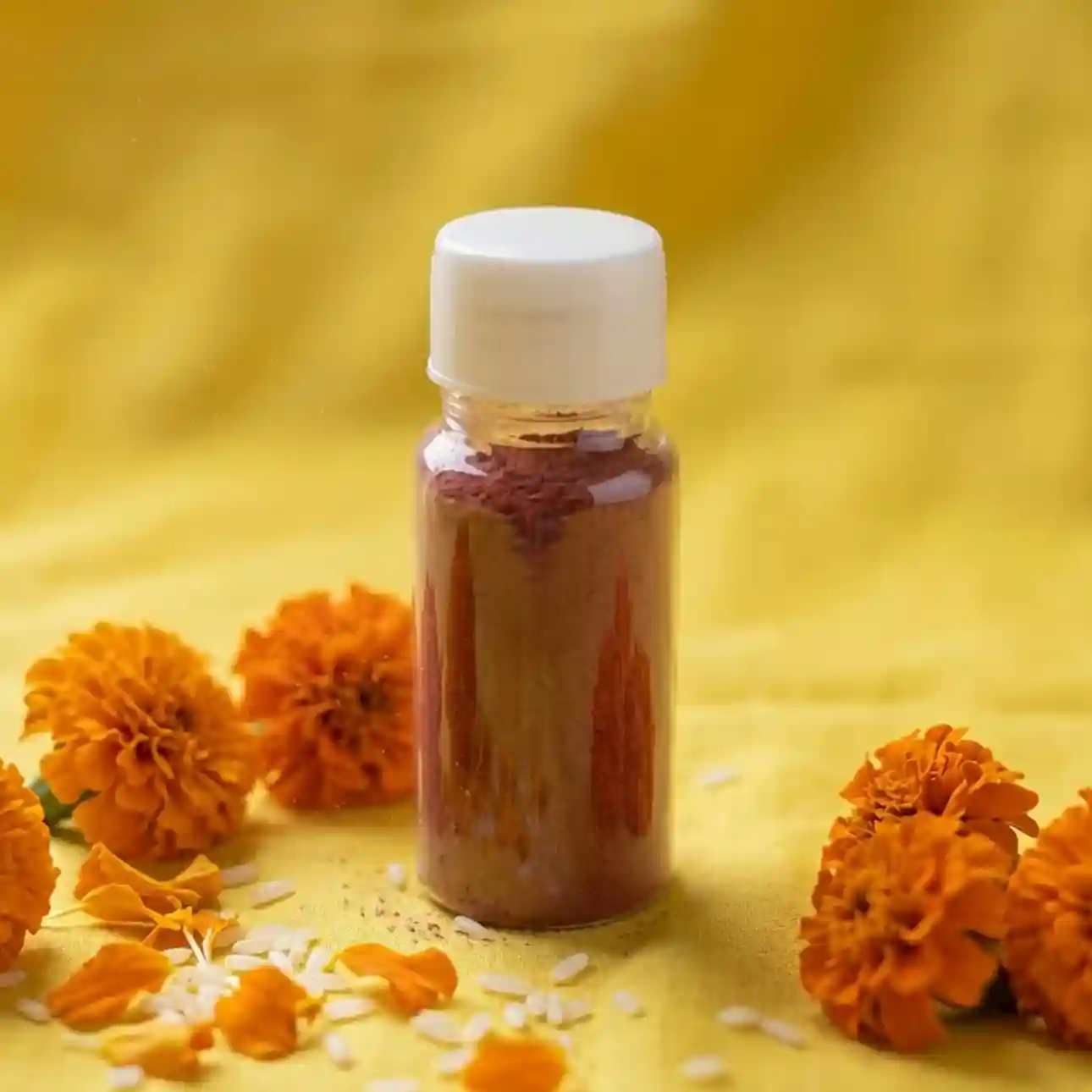
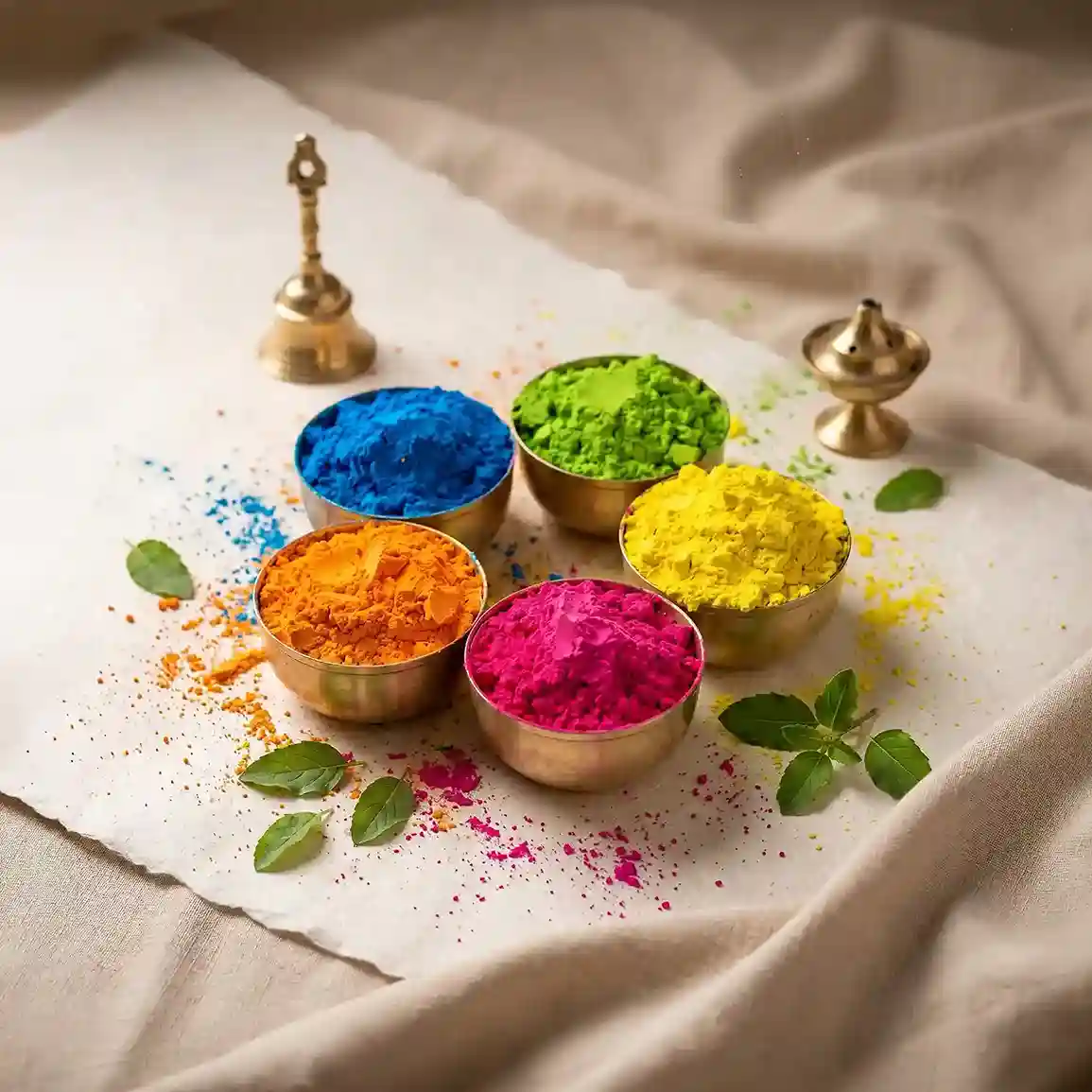
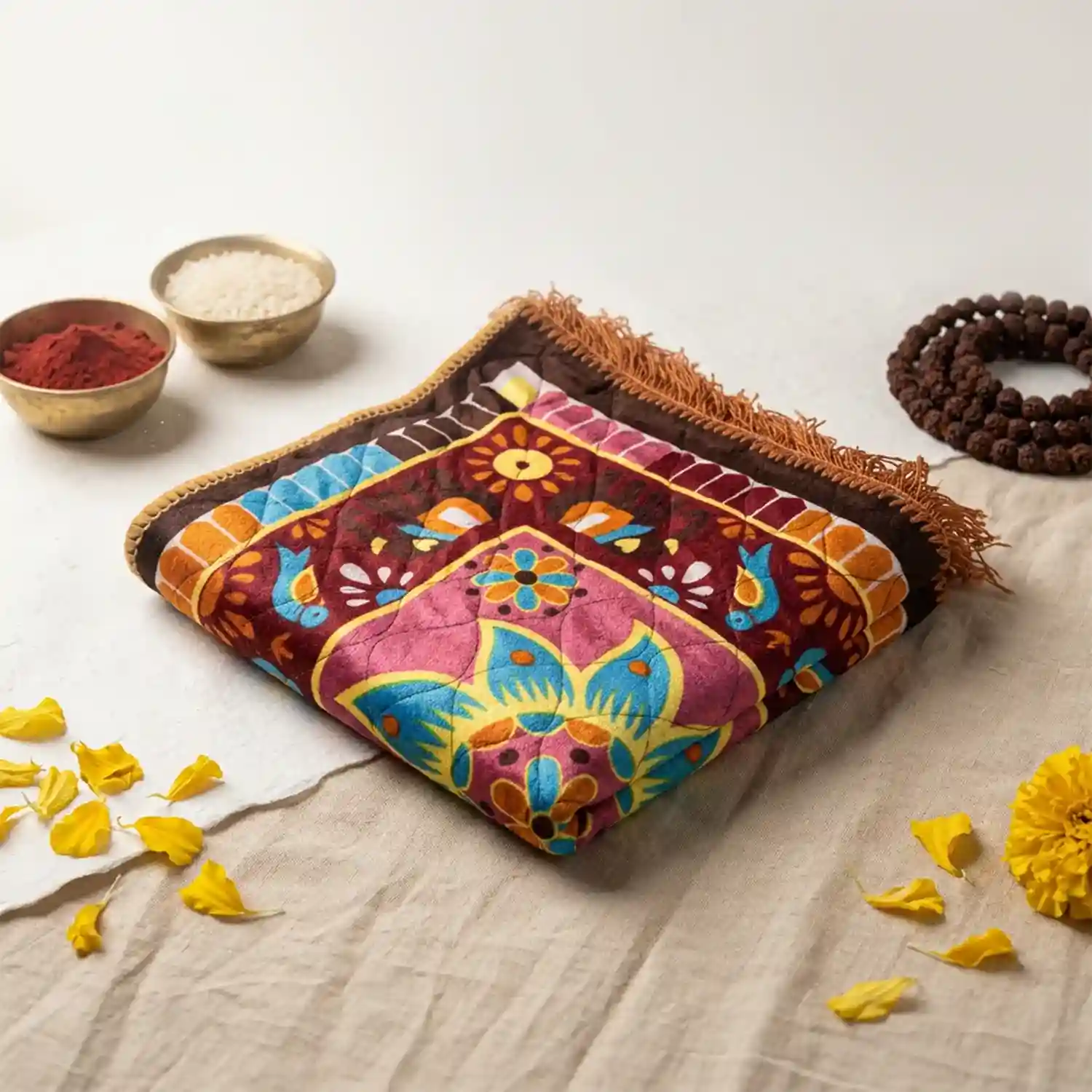
For Art Enthusiasts & Devotees: These are used to create the divine energetic seat for the Goddess! Before placing the sacred water pot (Ghat) or the sitting mat (Asan), the Purohit Darpan mandates that the priest or householder must draw a Trikon Mandal (a Triangle Mandala) or other highly specific geometric shapes on the ground. The five vibrant colored powders (Pancha Guri / Pancha Rang) are used to draw these beautiful, technical sacred patterns that anchor the Mother's energy into your home.
Q5: During the fire ritual, I often see priests using grass or thread to measure the altar. Is this a real ritual requirement?
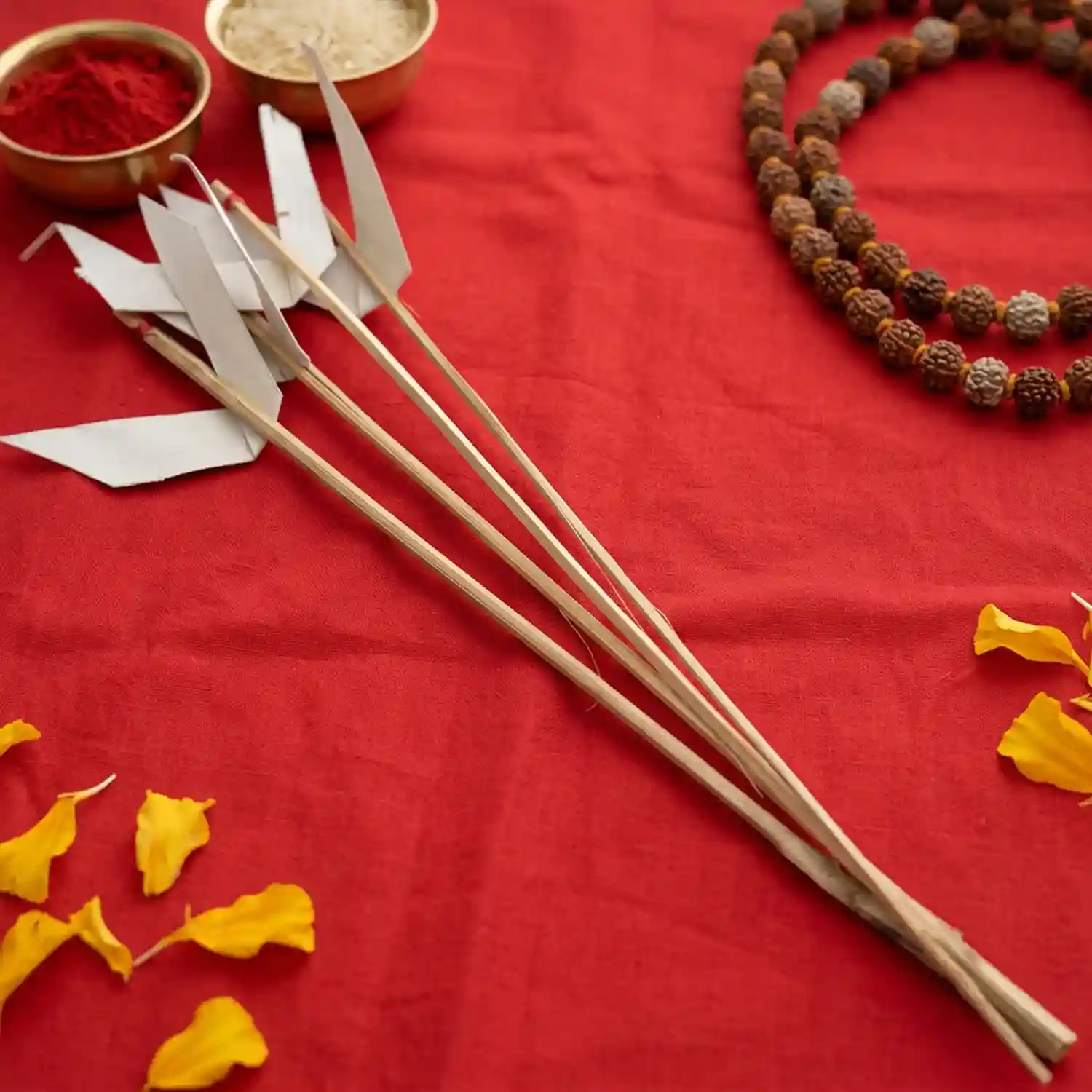
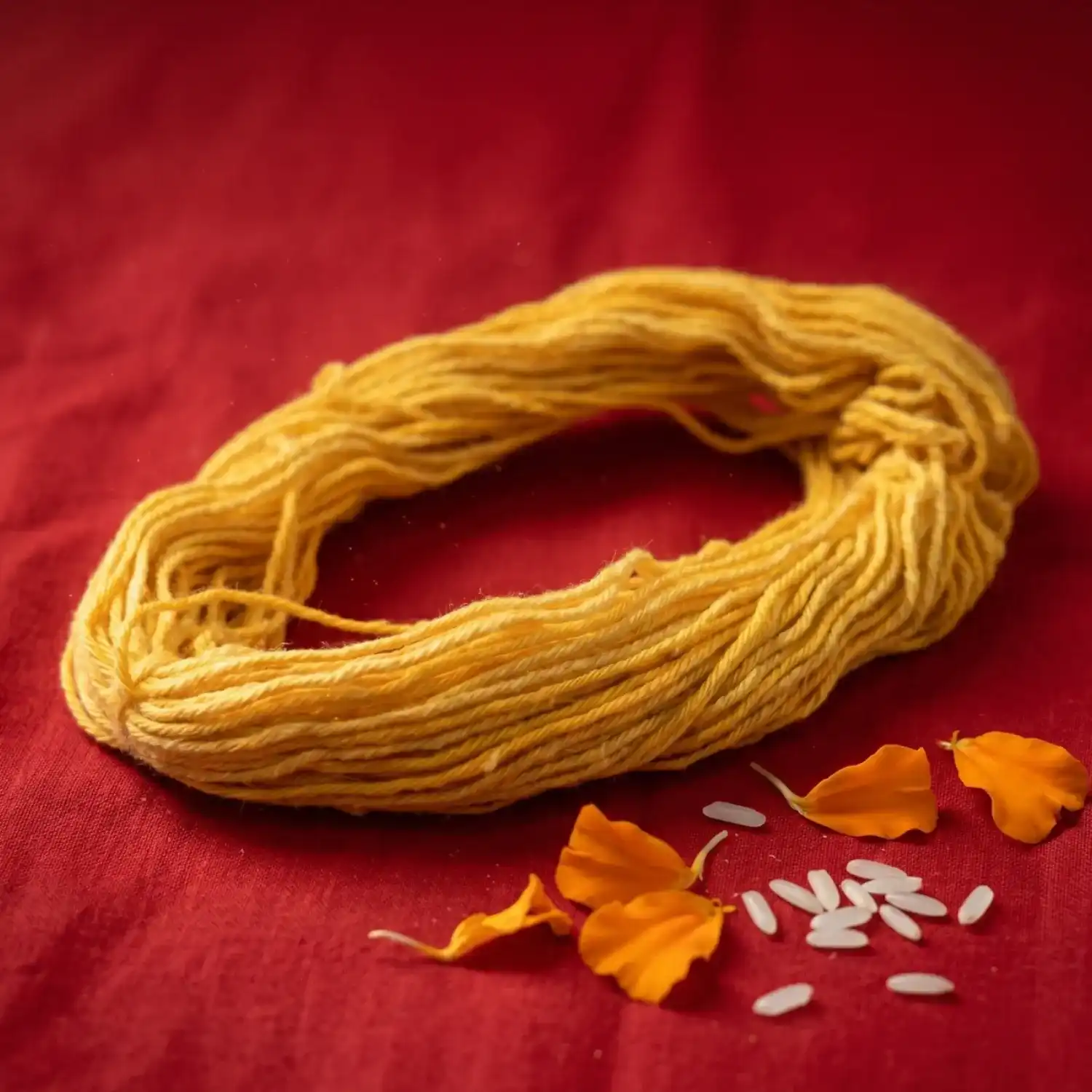
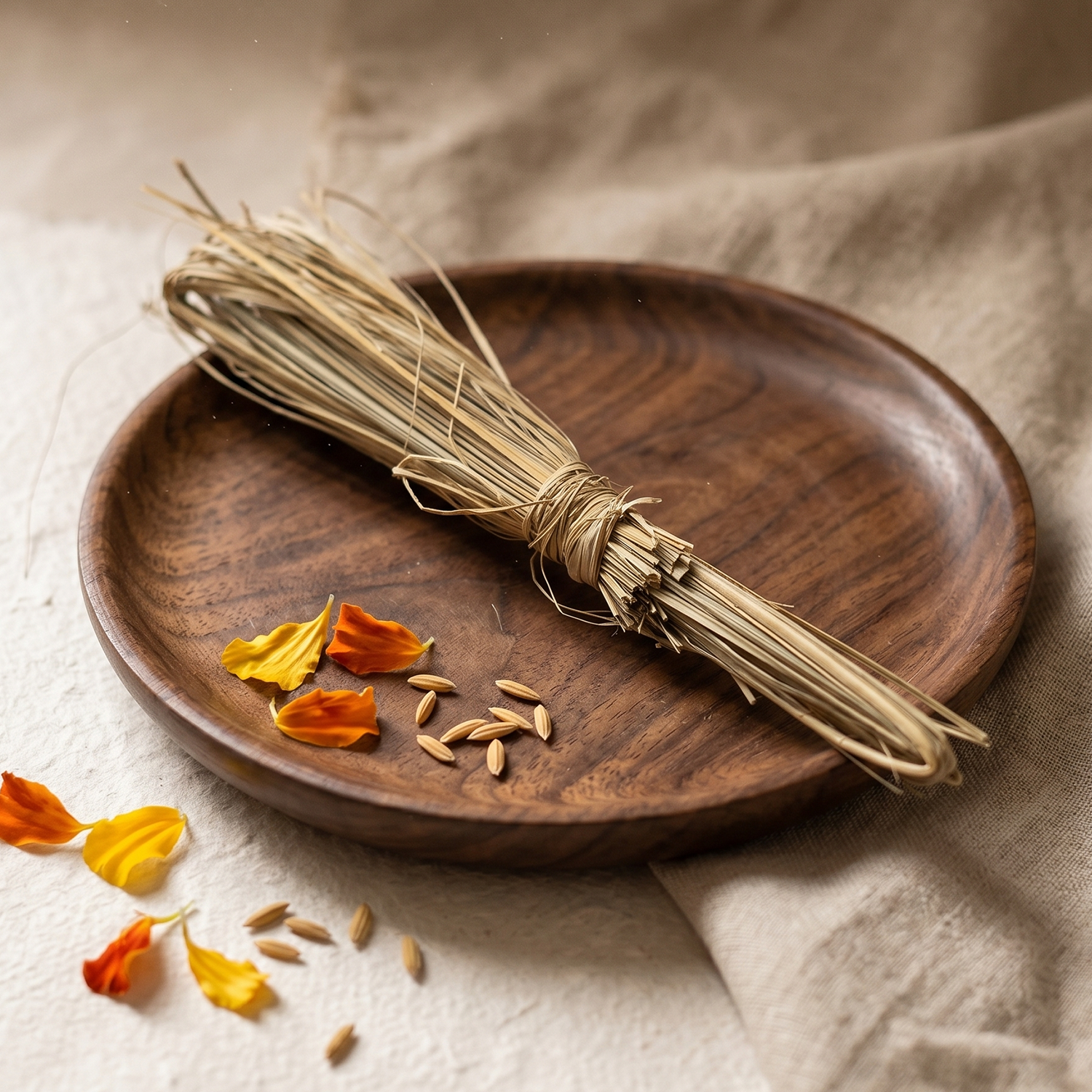
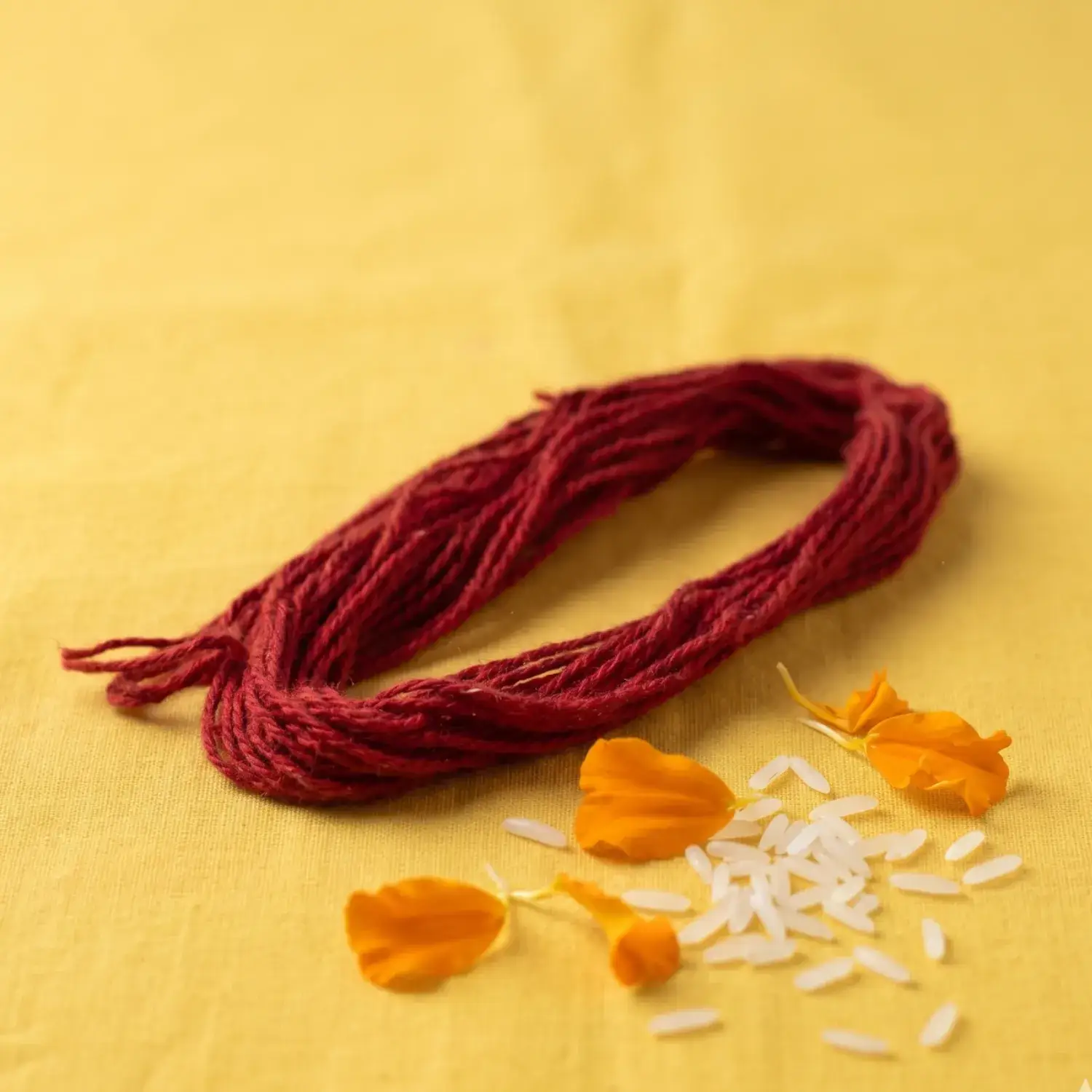
For Scholars & Experienced Practitioners: Absolutely! The creation of the fire altar (Havan Kund) is a precise mathematical science known as Parimana Jnana (knowledge of measurements). The Purohit Darpan dictates that the Vedi (altar) must be precisely measured—often to the exact span of a Pradesha (the distance between the tip of the thumb and the index finger) or exactly one cubit long. Priests use items like the Kusha Grass or the Moli Dhaga(ritual threads) to ensure the sacred geometry of the fire pit is absolutely flawless before invoking the Fire God!