




_2_11zon.webp)



_15_11zon.webp)
_4_11zon.webp)
Frequently Asked Questions
Q1: Why are sea-based items like Natural Cowrie Shells and Gomti Chakras included in a puja for financial wealth?
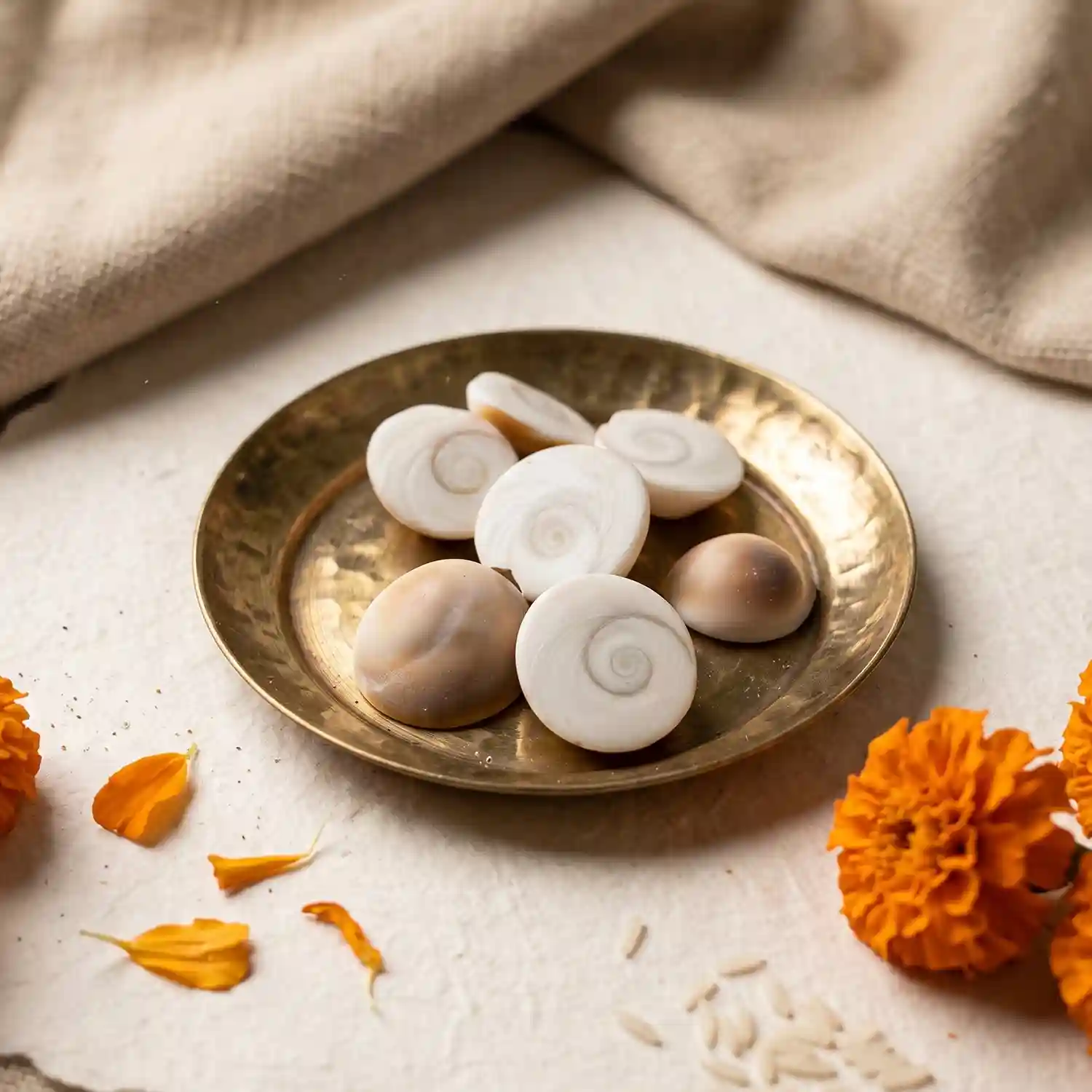
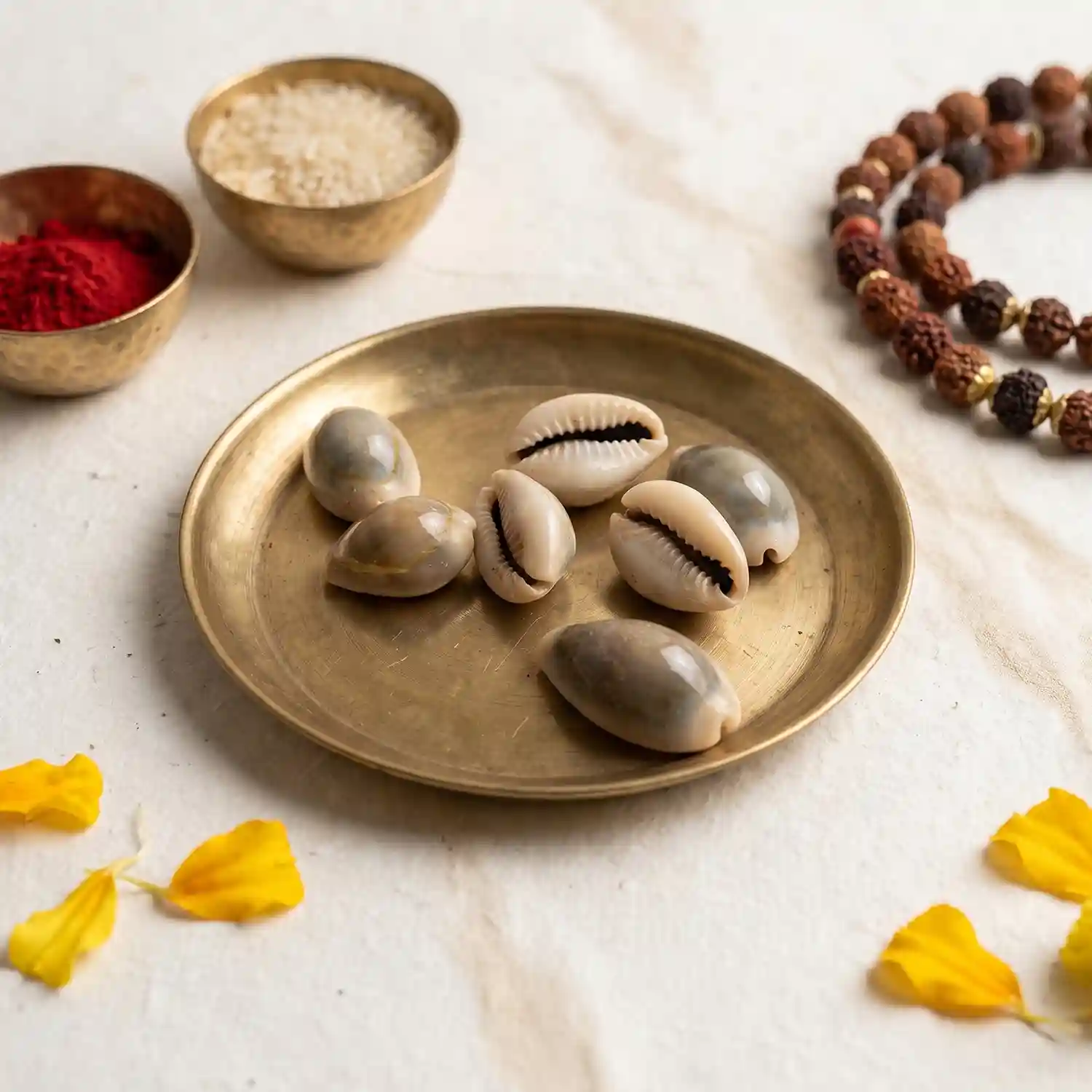
For Beginners & Families: Dhana Lakshmi is the specific manifestation of the Goddess who governs tangible, earthly wealth and cash. According to traditional folklore and mythology, the Goddess of Wealth originally emerged from the grand churning of the cosmic ocean (Samudra Manthan). Offering beautiful, natural oceanic items like Cowrie Shells and Gomti Chakras acts as a powerful, natural magnet for her energy because they resonate with her divine birthplace!
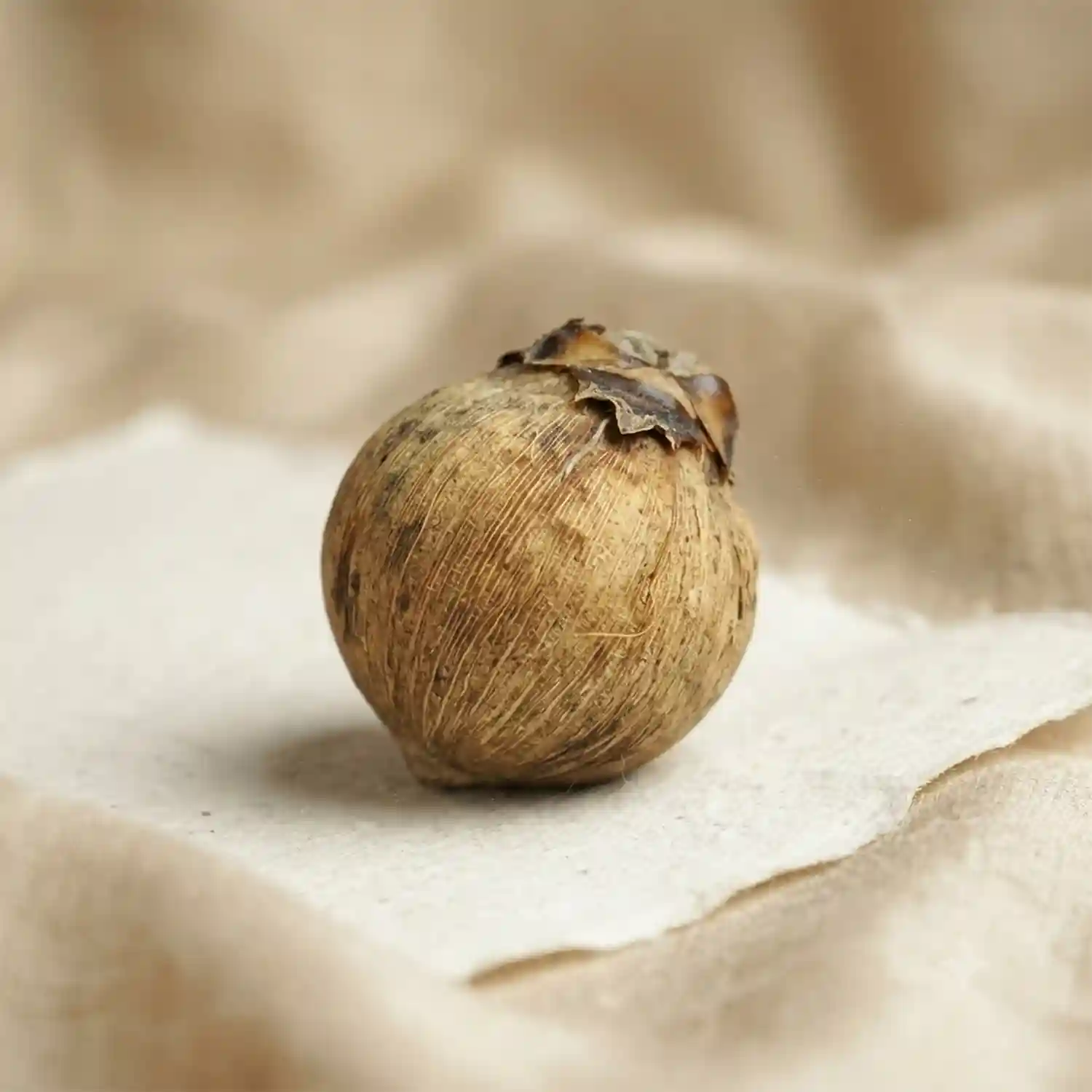
Q2: What is the "Laghu Nariyal" (miniature coconut), and what should we do with it after the 5-step puja is over?
For Home Ritualists: The Laghu Nariyal is a rare, miniature sacred coconut that is highly auspicious for attracting continuous financial stability. Once you complete your simple 5-step (Panchopachar) worship, you should not discard it! The most auspicious practice is to take the energized Laghu Nariyal, along with the Cowries and Gomti Chakras, and permanently place them inside your home's locker, safe, or business cash box to firmly anchor the wealth.
Q3: I see Akshat Rice and Paddy in the kit. Besides offering it to the Goddess, is there any other scriptural use for the food after the puja?
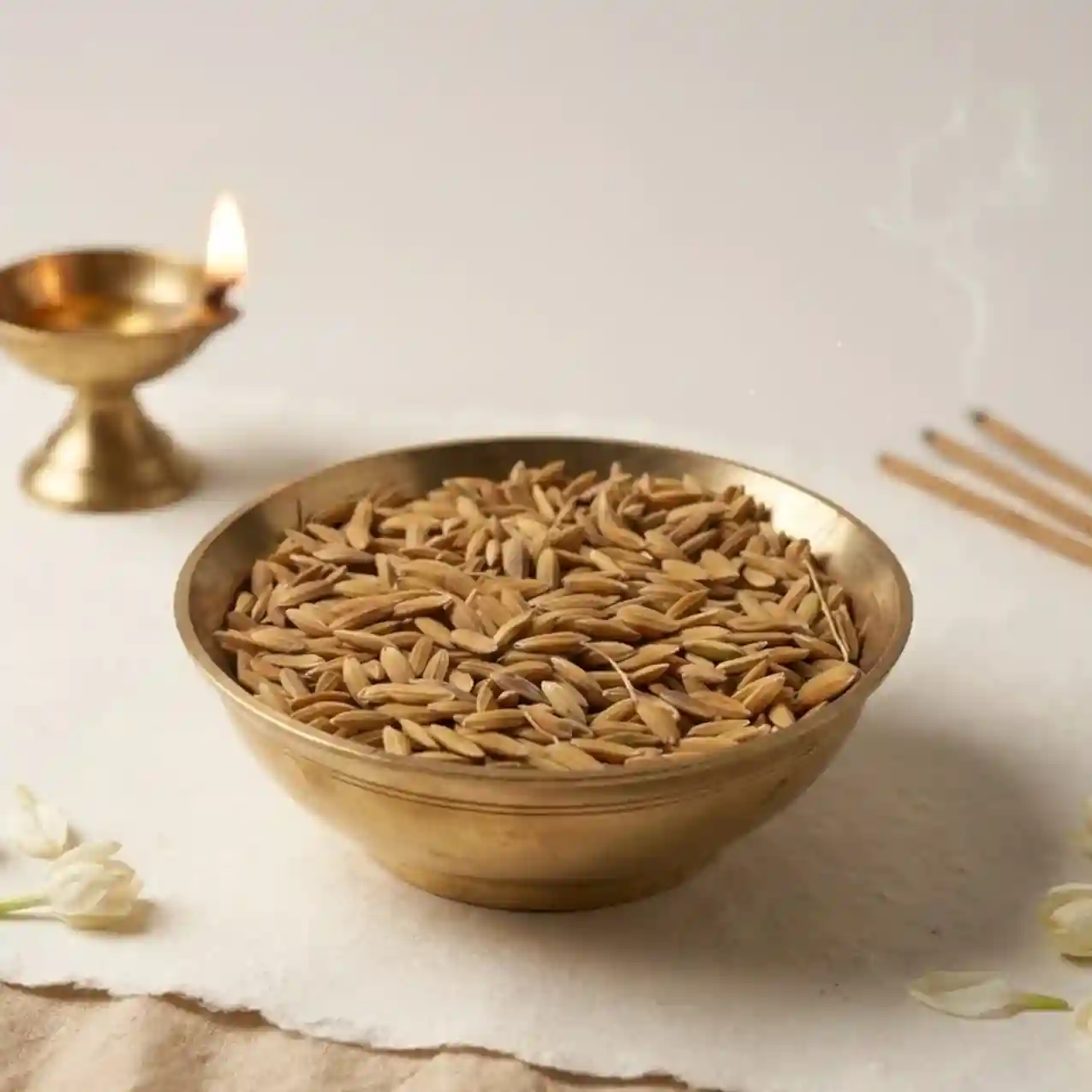
For Experienced Householders: Yes! According to classical texts like the Apastamba Sutras and the Vedic NityaKarma, a true householder's duty does not end at the altar. After the main offerings, one should perform the Balivaishvadeva Yajna, which involves distributing portions of the blessed food to all beings. The texts explicitly state that you must give a portion of food even to strangers, dogs, and the marginalized. Feeding others repays your cosmic debts and actively multiplies your family's prosperity!
Q4: Our family always offers a grand feast of sweets (Naivedya). Why does the priest insist we must explicitly offer the Supari, Clove, and Cardamom from the kit to conclude?
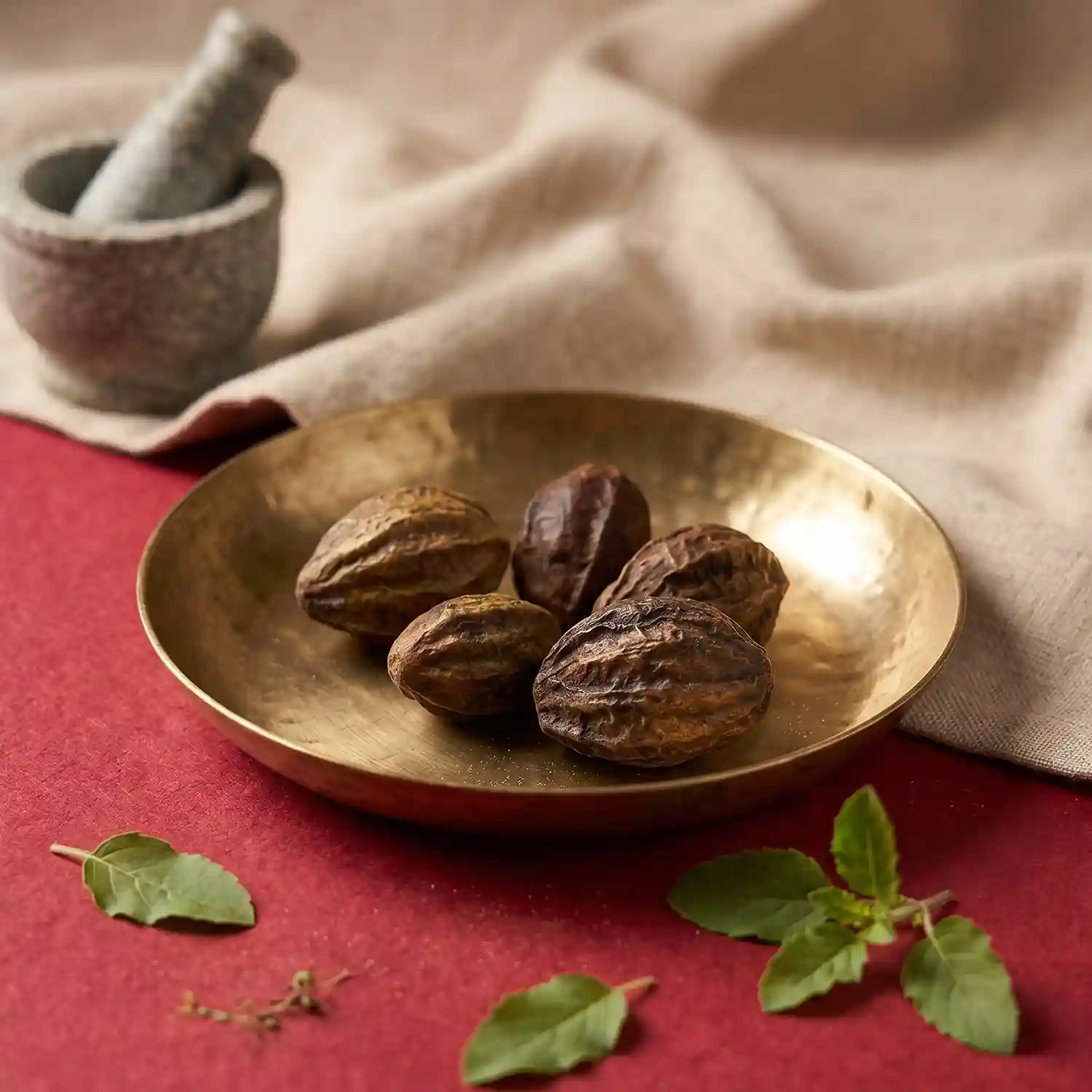
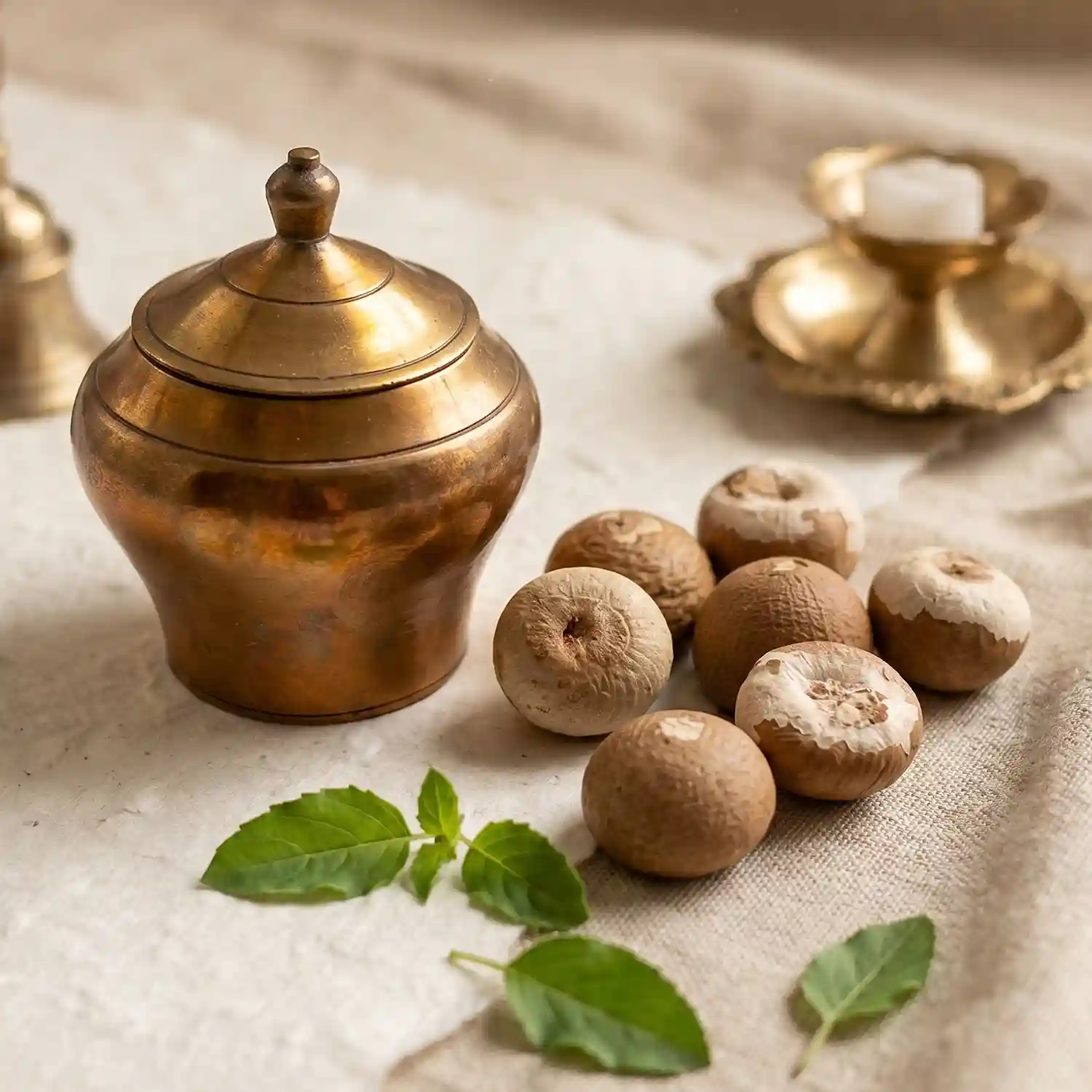
For Experienced Devotees & Priests: This is a strict matter of scriptural accuracy! In a royal 16-step (Shodashopachar) puja, offering the grand feast of sweets (Naivedya) is only the 14th step. The Purohit Darpan absolutely mandates that after the deity eats, her mouth must be cleansed and sweetened. This is achieved through the 16th and final step: Tambula. Without the specific spices included in your kit (Supari, Haritaki, Clove, Cardamom) to create the Tambula, a 16-step royal invocation is technically invalid!
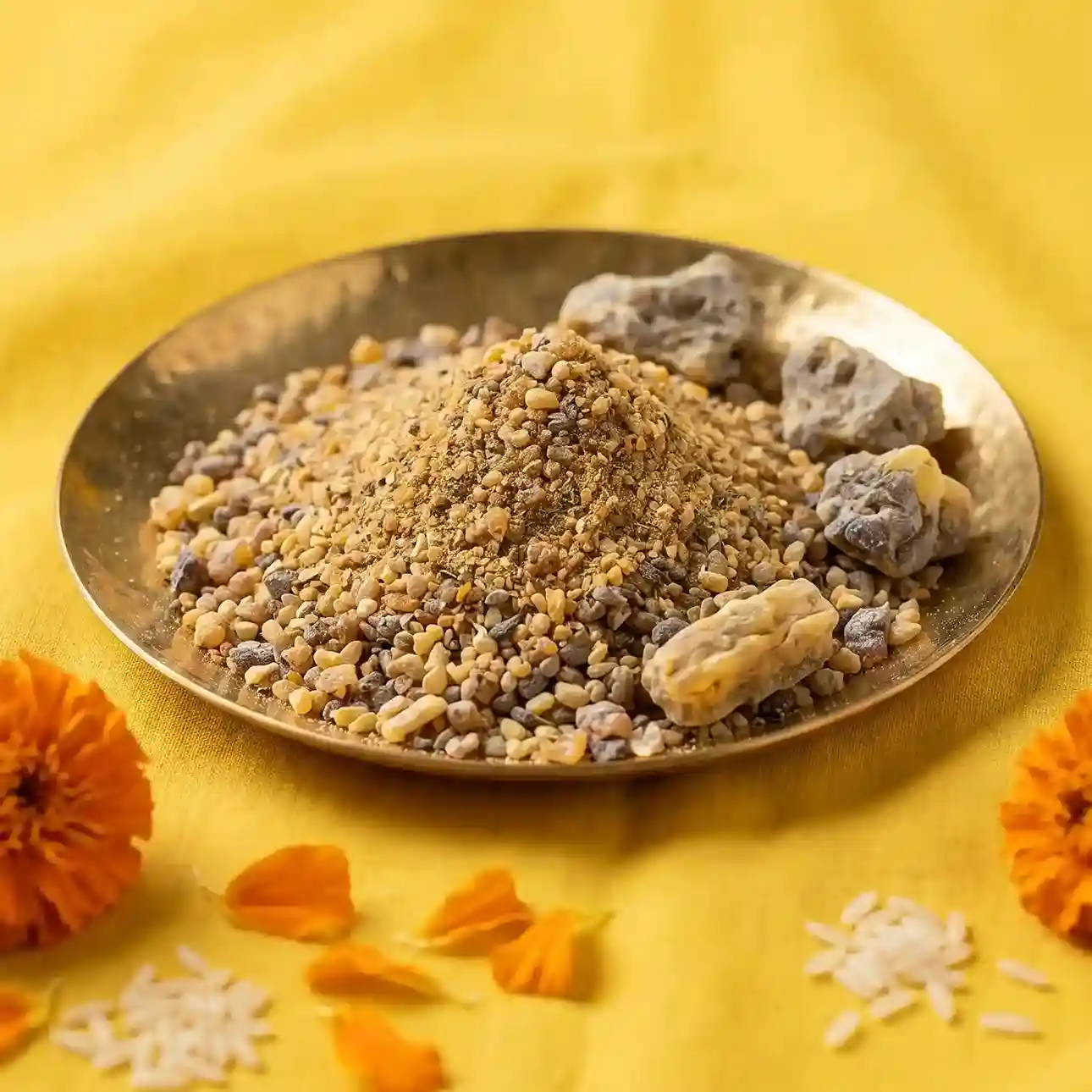
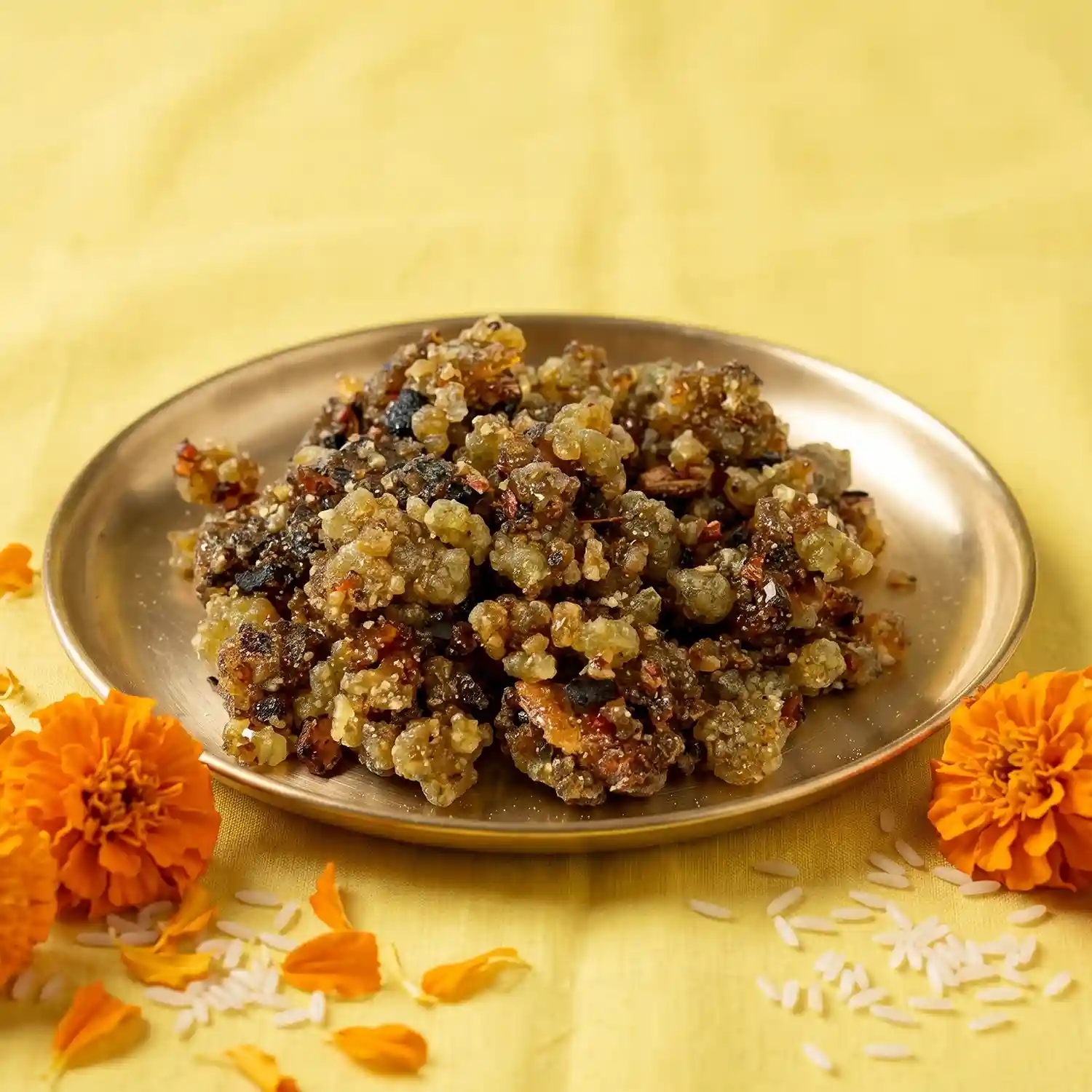
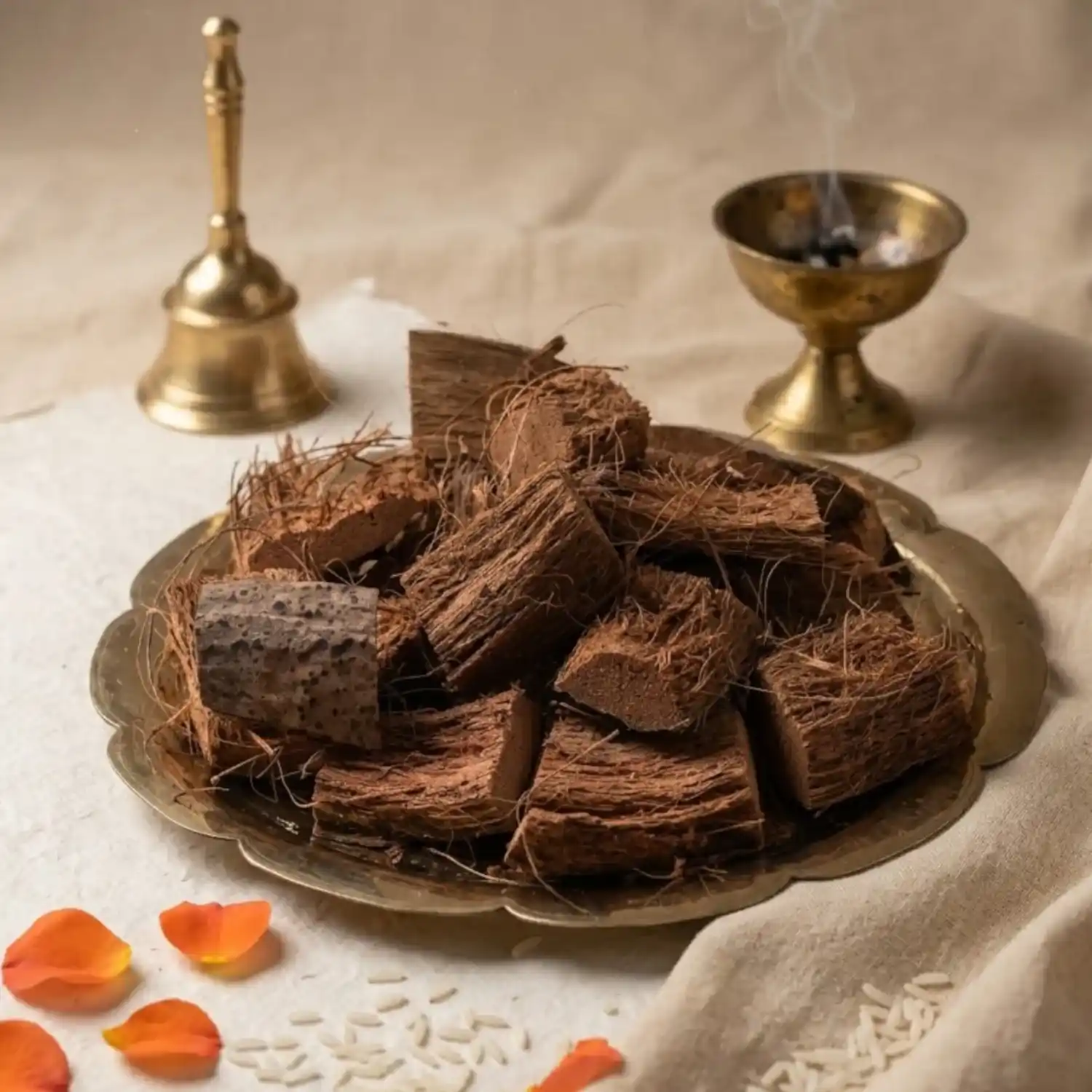
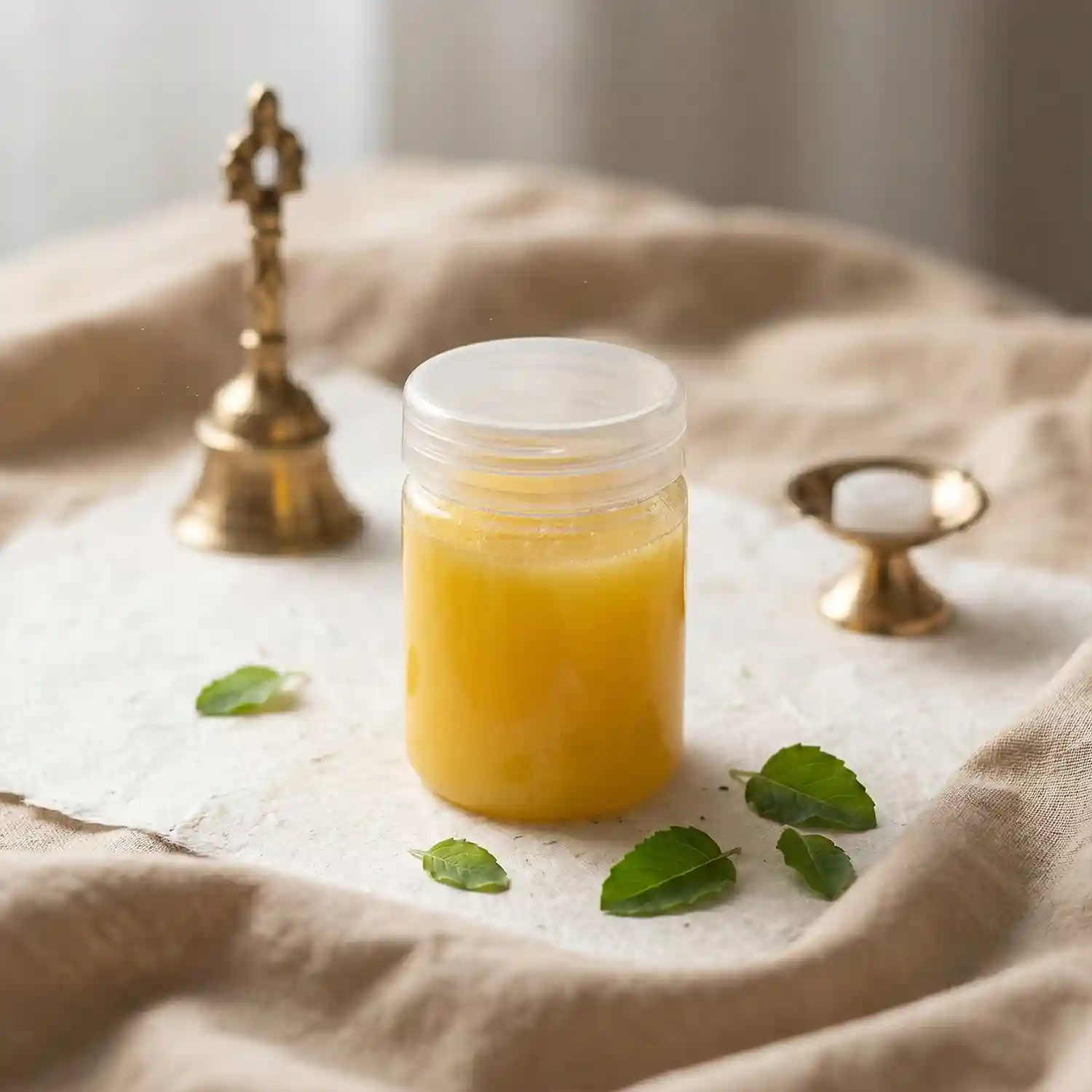
Q5: Why is lighting the raw resins (Dhuna and Guggal) over the coconut husk (Chhobra) so strongly emphasized alongside the regular Cow Ghee lamps?
For Scholars & Ritualists: While the Cow Ghee lamps (Deepa) invoke the Goddess's radiant, illuminating presence, the burning of raw resins like Dhuna and Guggal acts as a powerful Agnihotra (fire purification ritual). According to the Vedic NityaKarma, creating this sacred, purifying smoke actively destroys negative, "demonic" or "evil tendencies" (rakshasi pravrittiyon) in the environment. It acts as a spiritual fumigation, creating an unpolluted, highly positive atmosphere so that Dhana (wealth) can flow into your life without any energetic blockages!