
_9_11zon.webp)

_14_11zon.webp)





1_1_11zon.webp)
_7_11zon.webp)

_11zon.webp)


Frequently Asked Questions
- Q1: We are setting up the altar for the Copper Bagalamukhi Yantra. Is it okay to sweep the area with our household broom before placing the Yellow Asan?
- For Home Ritualists: Absolutely not! Traditional Vedic texts maintain incredibly strict rules regarding the purity of the sacred space. According to the Apastamba Sutras, when preparing the ground for the altar or the sacred fire (Sthaṇḍila), the worshipper must sweep and wipe the ground pure "with the hand, and not with the broom". A regular floor broom carries everyday household impurities and must never touch the divine boundary!
- Q2: We plan to do this puja late at night to ensure total privacy for our legal victory. Are there different rules for sitting during nighttime worship?
- For Experienced Devotees: Yes! While daylight worship generally requires the householder to face East, the Purohit Darpan provides a very specific rule for nighttime rituals. The text explicitly dictates that when performing divine worship at night (which is highly auspicious for fierce Tantric Goddesses), the devotee must perform the rites facing the North (Uttaramukh).
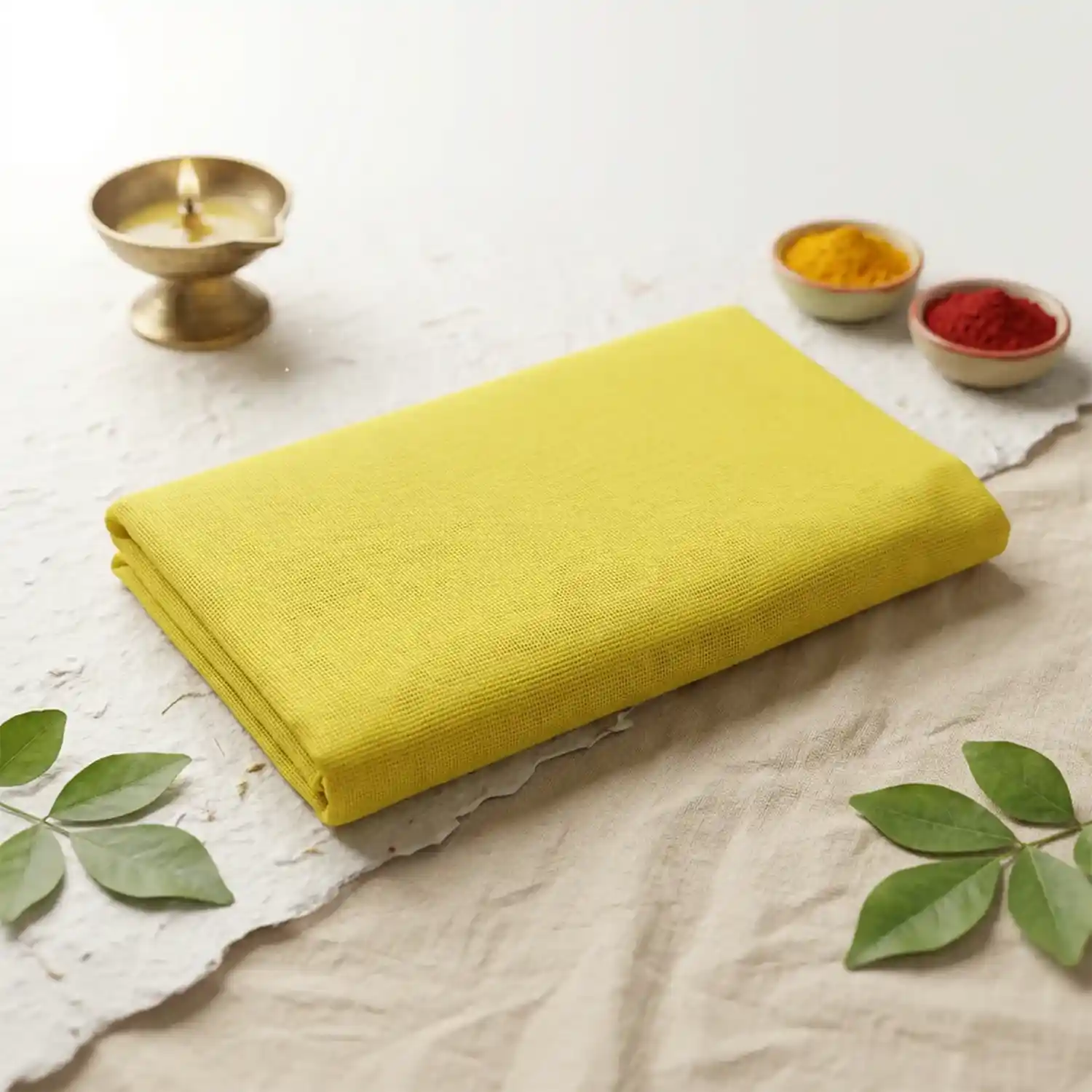
- Q3: The kit includes a specific "White Homa Cheli" (sacred clothing). Can I just wear my regular clean clothes to do the Havan?
- For Priests & Scholars: The classical rules of the sacred fire demand the highest standard of attire! The ancient Apastamba Sutras and Vedic NityaKarma strictly mandate that the person offering the oblations must wear a pure garment. The texts even specify that the cloth should ideally reach "from the navel to the knees" and that the sacred thread must be properly draped over the left shoulder. Your provided Homa Cheli ensures absolute scriptural compliance during the fire ritual!
- Q4: Can I use the leftover food we cooked for the family dinner as the Naivedya offering for Goddess Bagalamukhi?
- For Beginners & Home Cooks: The Vedic rules for the kitchen are incredibly strict regarding divine purity! According to the Apastamba Sutras, the person preparing the food "shall not speak, nor cough, nor sneeze, while facing the food". Furthermore, if the food is cooked outside of direct ritual supervision, it cannot be offered directly; the householder must first briefly place it near the sacred fire and ritually sprinkle it with holy water to make it "fit for the gods".
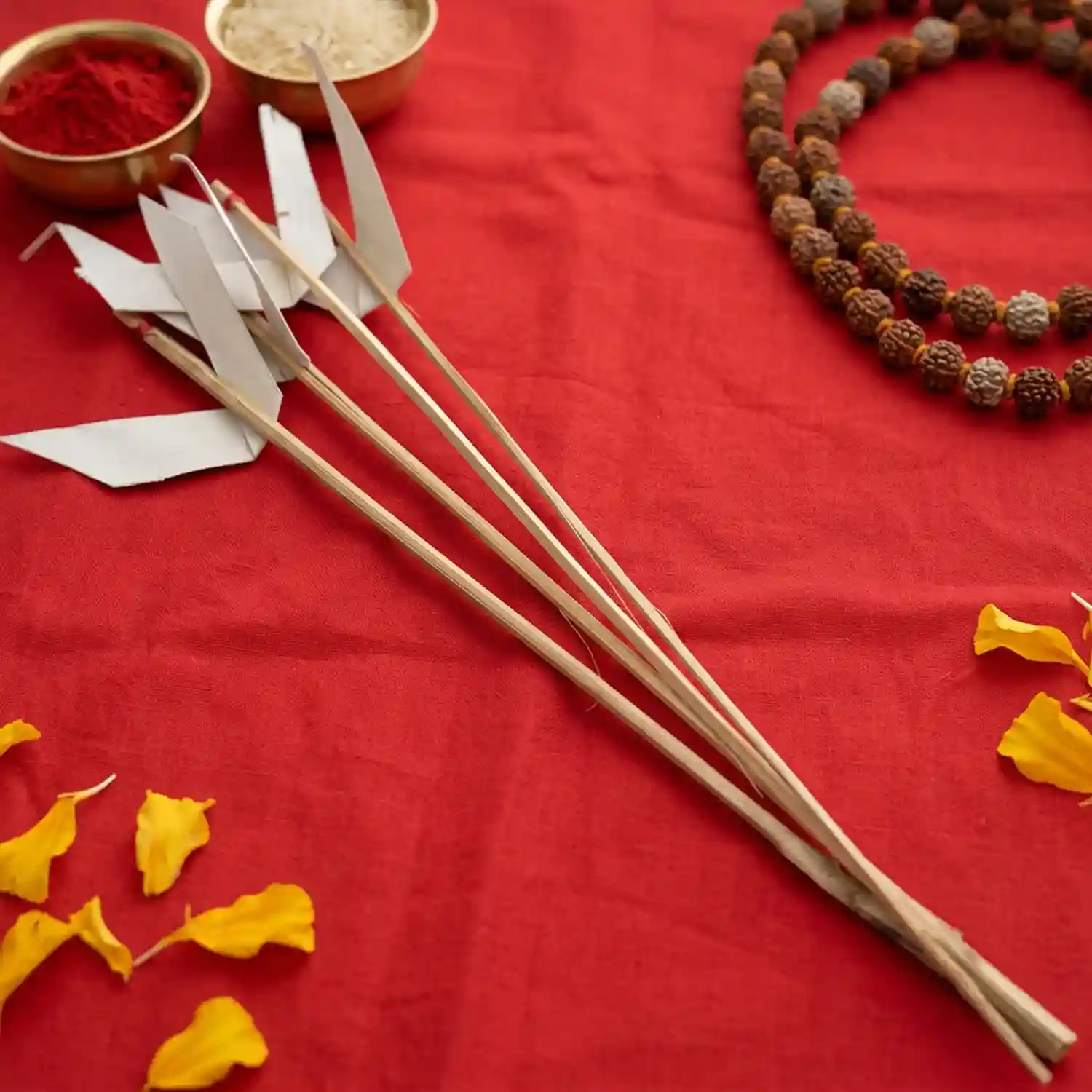
- Q5: During the Havan, how exactly should I hold the Kusha Grass to sprinkle the Ganga Jal around the fire pit?
- For Anyone Learning Rituals: Setting up the sacred boundary is a precise spiritual science! When sprinkling the water, the classical texts command that you must do so by "turning the palm of the hand downwards". Additionally, the Apastamba Sutras dictate that the water must not be stirred randomly or received into only one hand; it must be handled with profound respect to ensure the protective ring around your fire is flawless.