
.jpg)




_15_11zon.webp)
_2_11zon.webp)







Frequently Asked Questions
Q1: I do not have time to cook traditional sweets at home. Can I offer store-bought food or sweets to Lord Ganesh and Goddess Lakshmi?
For Beginners & Busy Households: Yes, but there is a classical Vedic purification step you must follow! According to the Apastamba Sutras, if food is prepared outside of your direct supervision, you should not offer it directly to the Gods. Instead, the householder must first briefly place the food near the sacred fire and ritually purify it by sprinkling it with holy water. By performing this simple act, the text declares that even unsupervised food becomes completely "fit for the gods"!
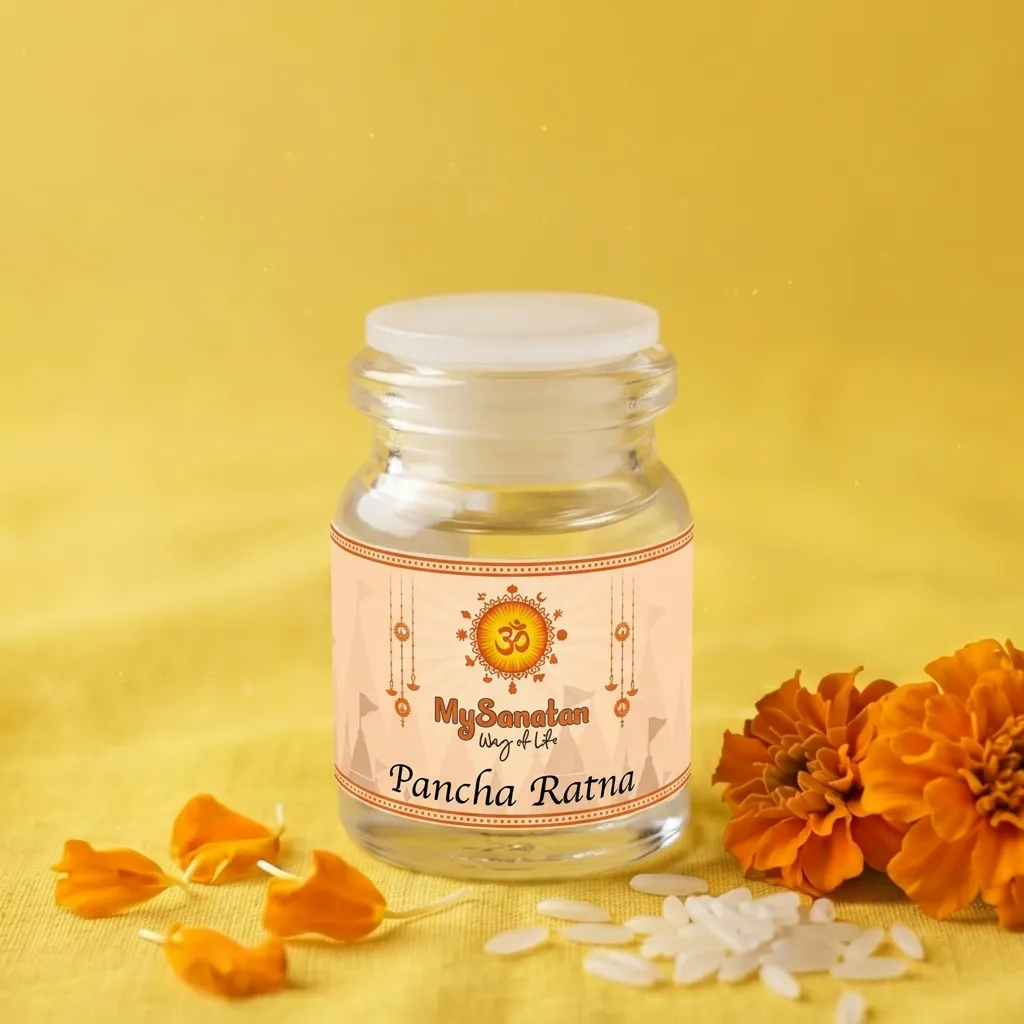
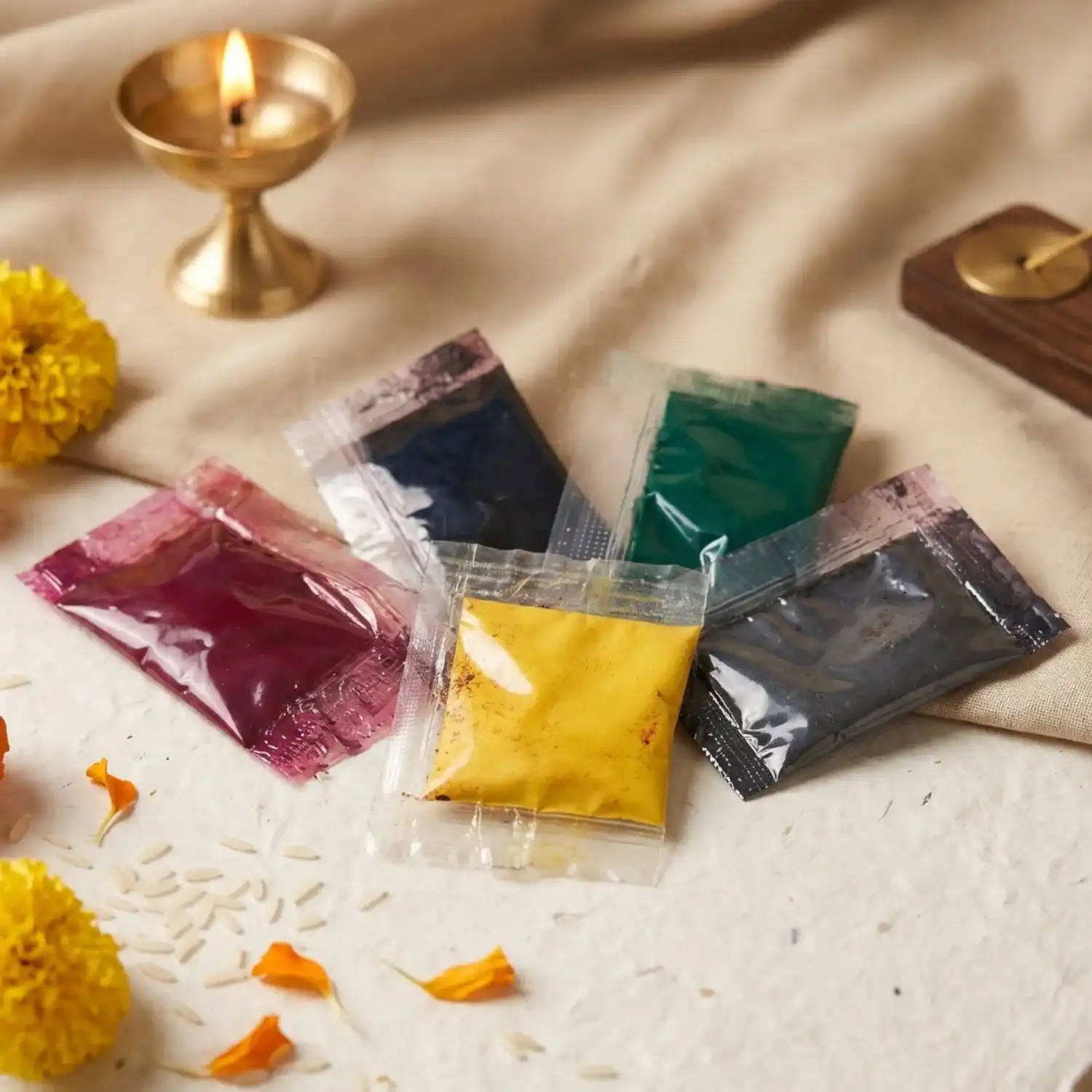
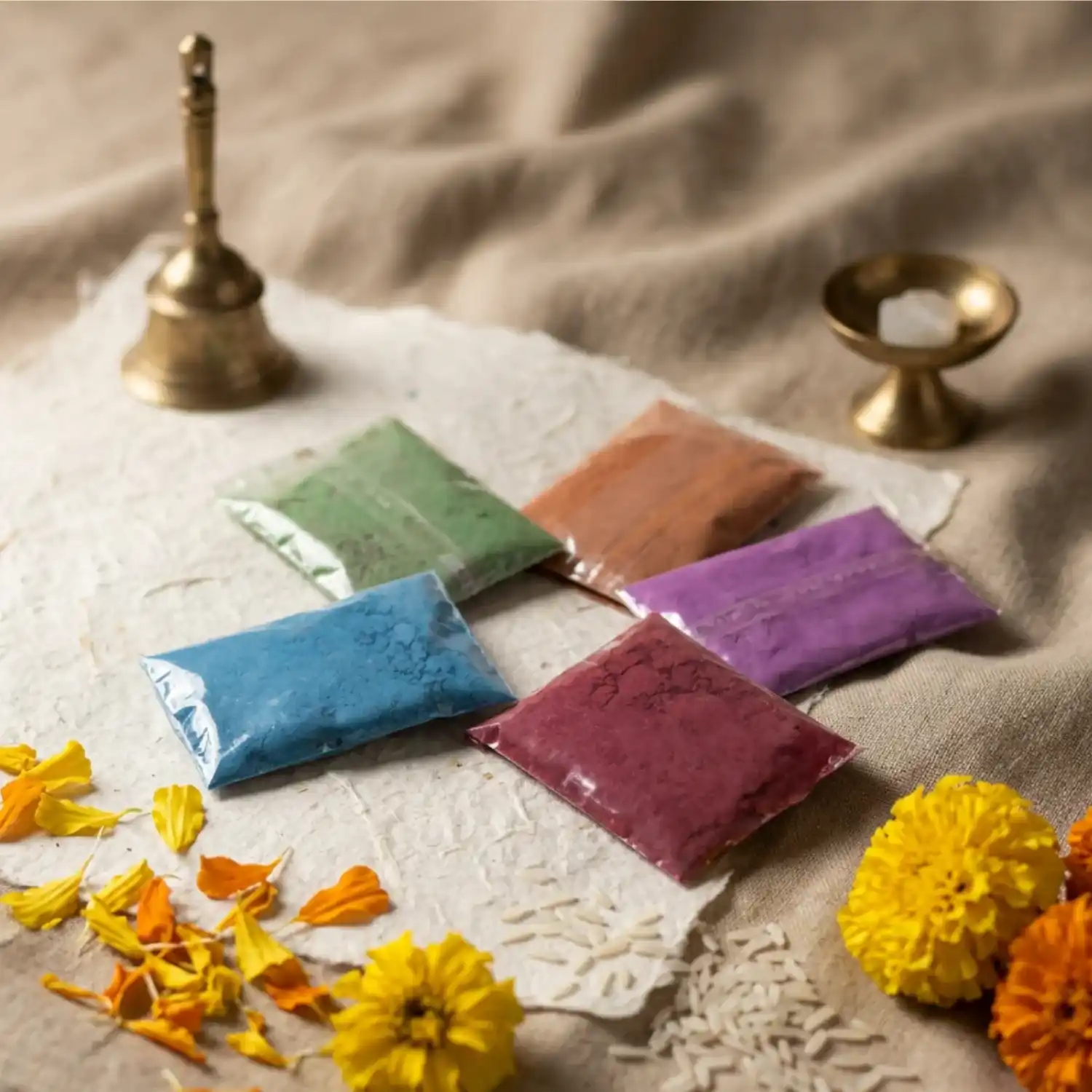
Q2: What is the purpose of the "Pancha Ratna" (Five Gems) and "Pancha Guri" (Five Sacred Powders) included in this kit?
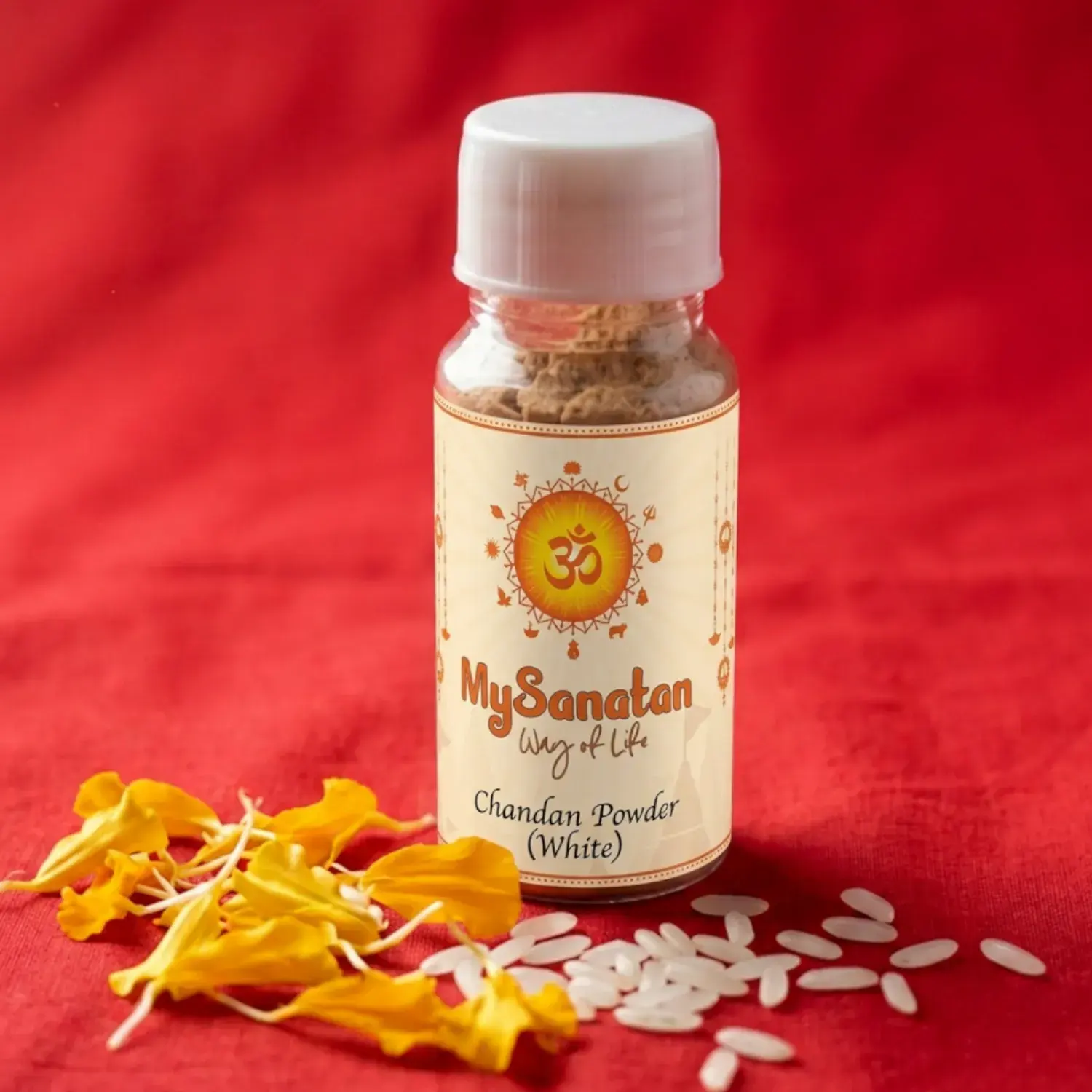
For Families & Cultural Enthusiasts: In classical royal worship, these "Pancha" (groups of five) items are absolutely essential for establishing the divine presence! According to the Purohit Darpan, the Pancha Ratna are meant to be dropped directly into the sacred water pot (Ghat or Kumbha) to symbolize the infinite wealth of the earth being offered to the deity. Meanwhile, the Pancha Guri (five colored powders) are used to draw beautiful, sacred geometric mandalas on the altar to serve as a perfectly pure, vibrant seat for Goddess Lakshmi to rest upon.
Q3: Before lighting the Havan (sacred fire) for Akshay Tritiya, should I sweep the altar clean with my regular household broom?
For Home Ritualists: Absolutely not! Traditional Vedic texts maintain incredibly strict rules regarding the purity of the fire altar. The Apastamba Sutras explicitly command that when preparing the sacred fire pit (Sthaṇḍila), the worshipper must wipe the ground clean "with the hand, and not with the broom". A regular floor broom carries everyday household impurities and must never be used to sweep the sacred space where Agni (the Fire God) will be invoked.
Q4: The kit includes a bundle of Kusha (Darbha) Grass. How exactly should my priest or I arrange it around the sacred fire?
For Experienced Devotees: Setting up the sacred boundary is a precise spiritual science! According to the Apastamba Sutras, once the fire is kindled, the worshipper must strew the Darbha grass completely around the altar. The grass must be specifically placed so that its tips point eastward. Furthermore, the text dictates that you must lay the grass moving clockwise (from left to right), and the starting and ending points must always be exactly on the east or north side of the fire.
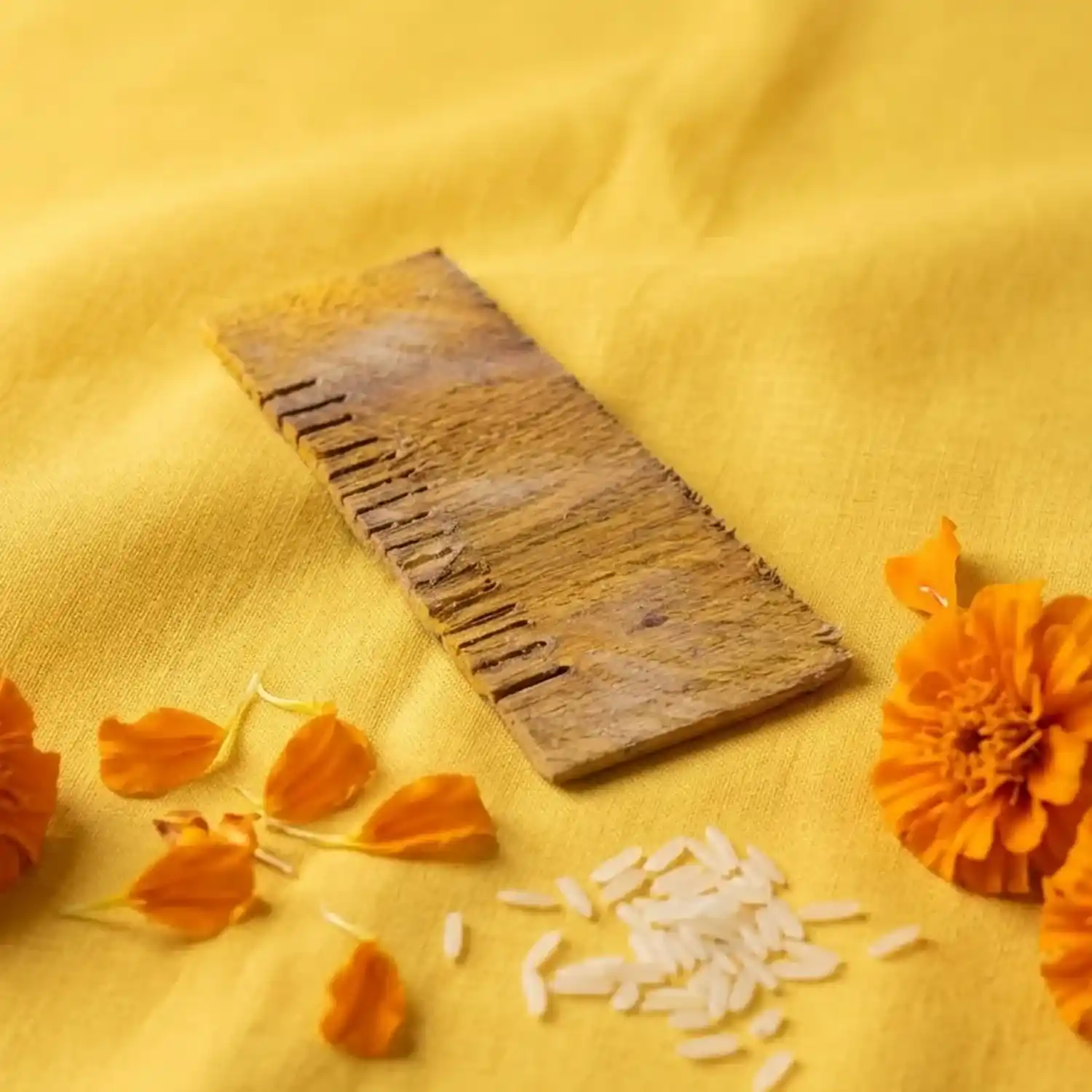
Q5: Why is there such a strict emphasis on using the specific "Bel Kath" (Bael Wood) provided in the kit for the Havan?
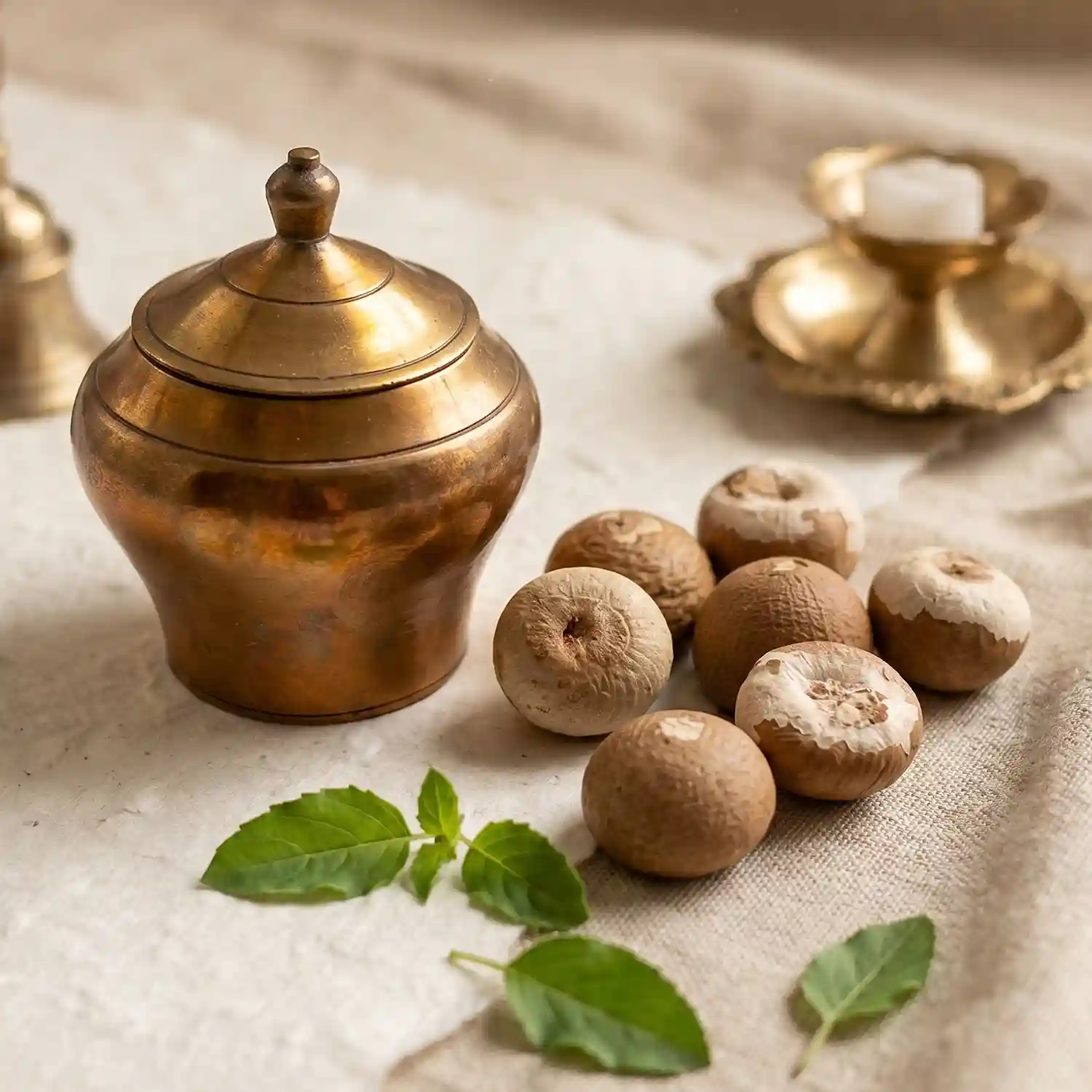
For Priests & Scholars: The physical fuel (Samidha) you use directly dictates the purity of the divine flame! According to the Vedic NityaKarma, you cannot use random, scavenged, or impure wood for a sacred Agnihotra. You must strictly use highly auspicious, scripturally approved woods such as Bel (Bael), Palash, Shami, or Mango. The manual emphatically warns that the wood must be properly dried and completely free from dirt, insects, and worldly impurities to ensure a flawless, magnificent oblation reaches Lord Ganesh and Goddess Lakshmi!