



_11zon.webp)

.webp)
_11zon.webp)



.webp)
_7_11zon.webp)

_11zon.webp)
_11zon.webp)
Frequently Asked Questions
- Q1. Why is Lord Kartikeya uniquely worshipped in a large Community Pandal or public festival setup?
- Lord Kartikeya (Skanda) is the divine Commander-in-Chief of the celestial army, representing ultimate protection, leadership, and victory. When a neighborhood comes together in a large public pandal, it pools its collective energies and vulnerabilities. Worshipping Him ensures that the entire locality is granted a strong defensive shield against external friction, while instilling vibrant energy, courage, and discipline into the younger generation.
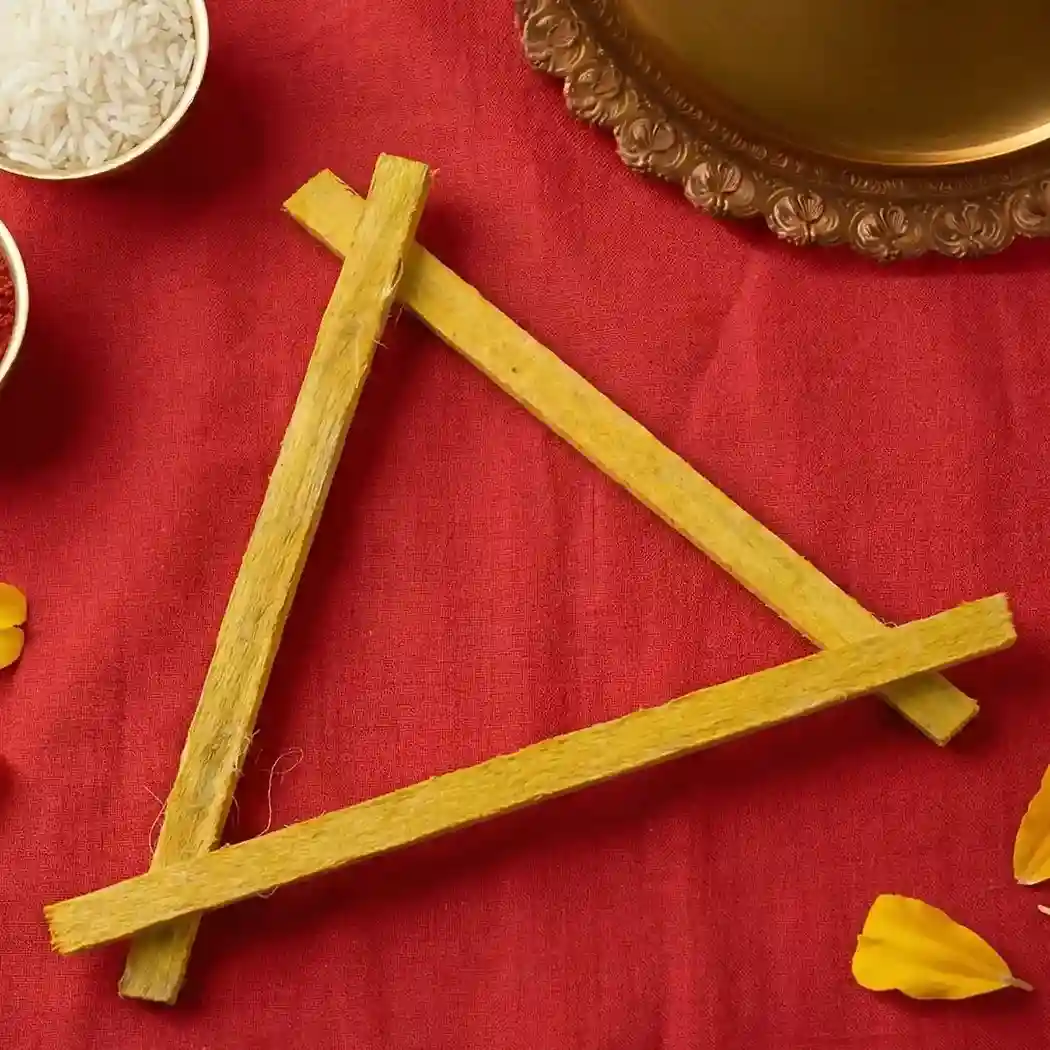
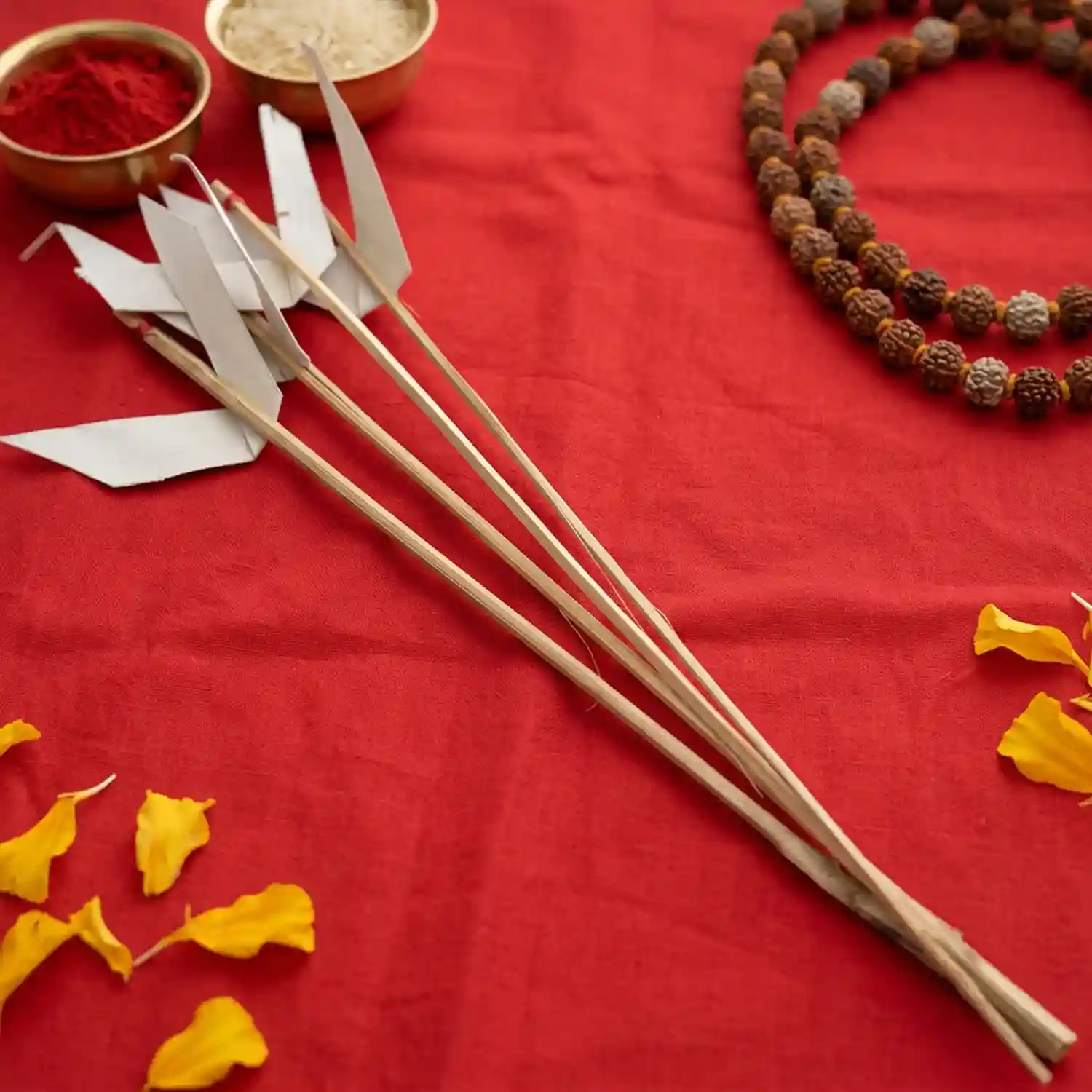
- Q2. What is the significance of the unique wooden triangle (Tekaata) and bamboo sticks (Teer Kathi) on the stage?
- In large public gatherings, many different external energies enter the venue. The Tekaata (triangle wooden frame) and Teer Kathi (bamboo boundary sticks) are traditional spiritual tools used during Step 2 (The Divine Ghat Installation). The priest utilizes them alongside Yellow Mustard Seeds to construct a temporary spiritual boundary wall around the main Puja Place, ensuring the positive energy generated during the festival stays concentrated inside the pandal.
- Q3. Why are there two different types of decorative hanging circles (Chandmala) in this kit?
- The kit includes a small Chandmala for Ghat and a large Hanging Chandmala. The smaller one is wrapped explicitly around the main sacred pot (Ghat) to honor its installation, while the larger one is hung directly above or beside Lord Kartikeya's idol. These symbolize offering the highest standard of traditional hospitality and respect to the divine commander.
- Q4. What should the pandal committee do during the final smoky resin ritual?
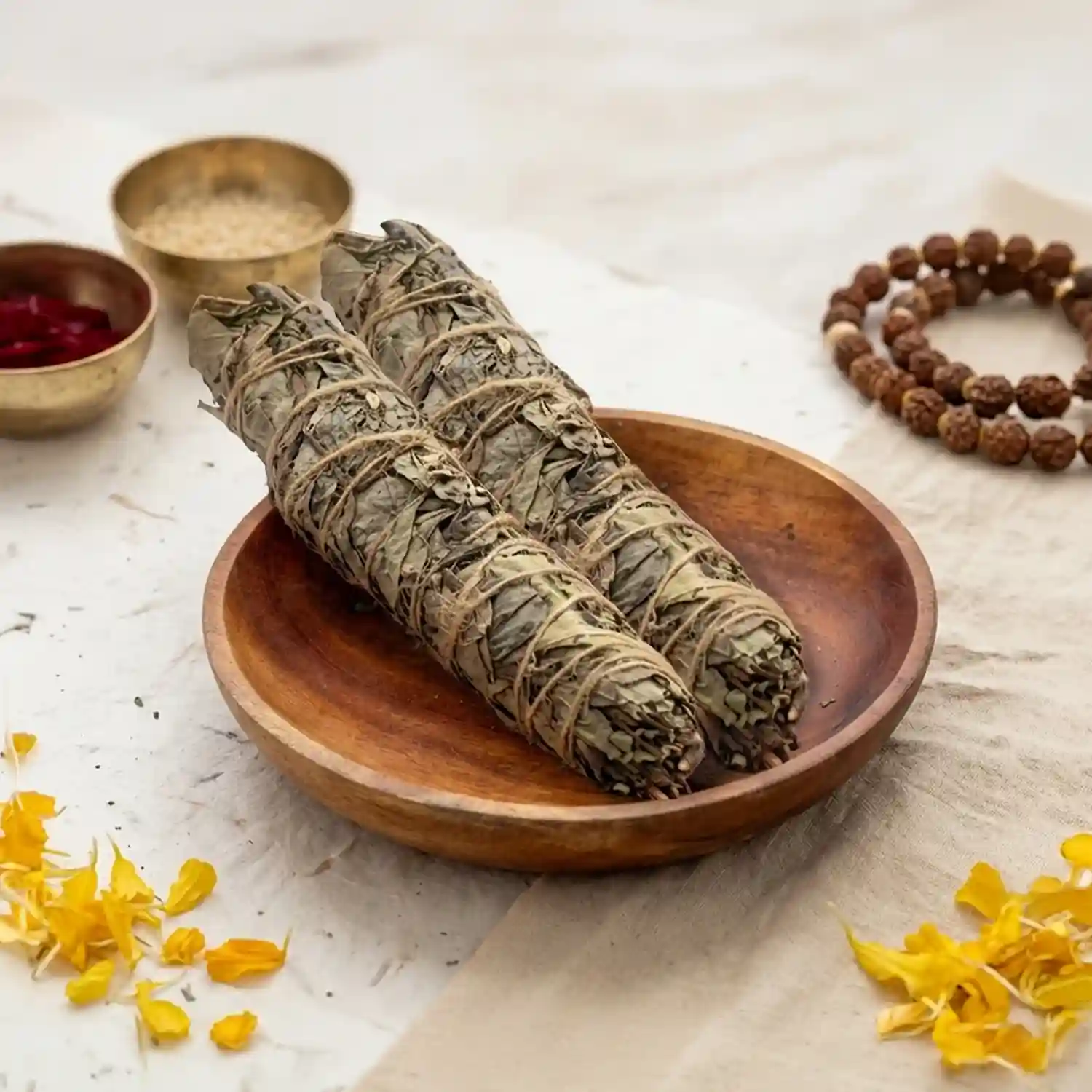
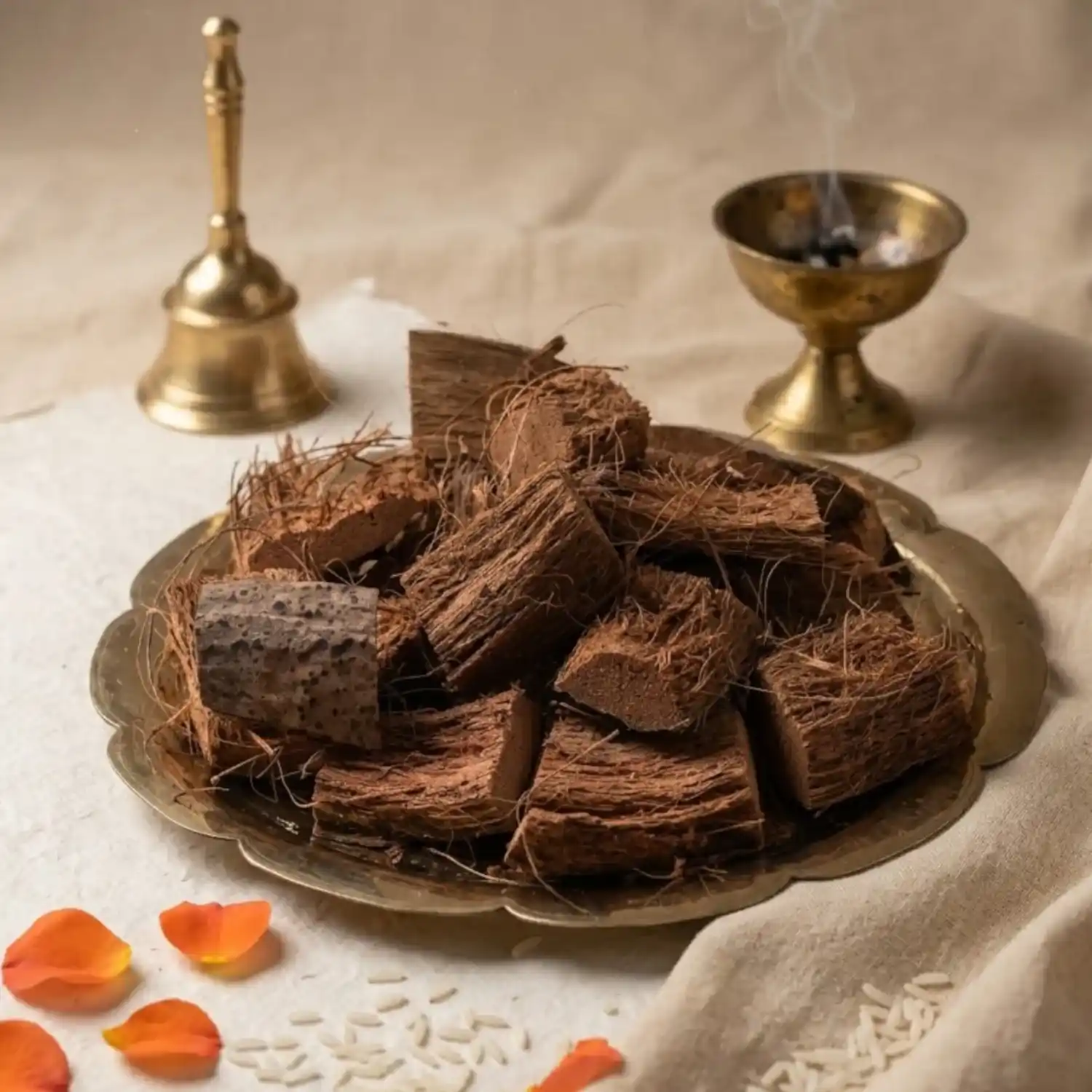
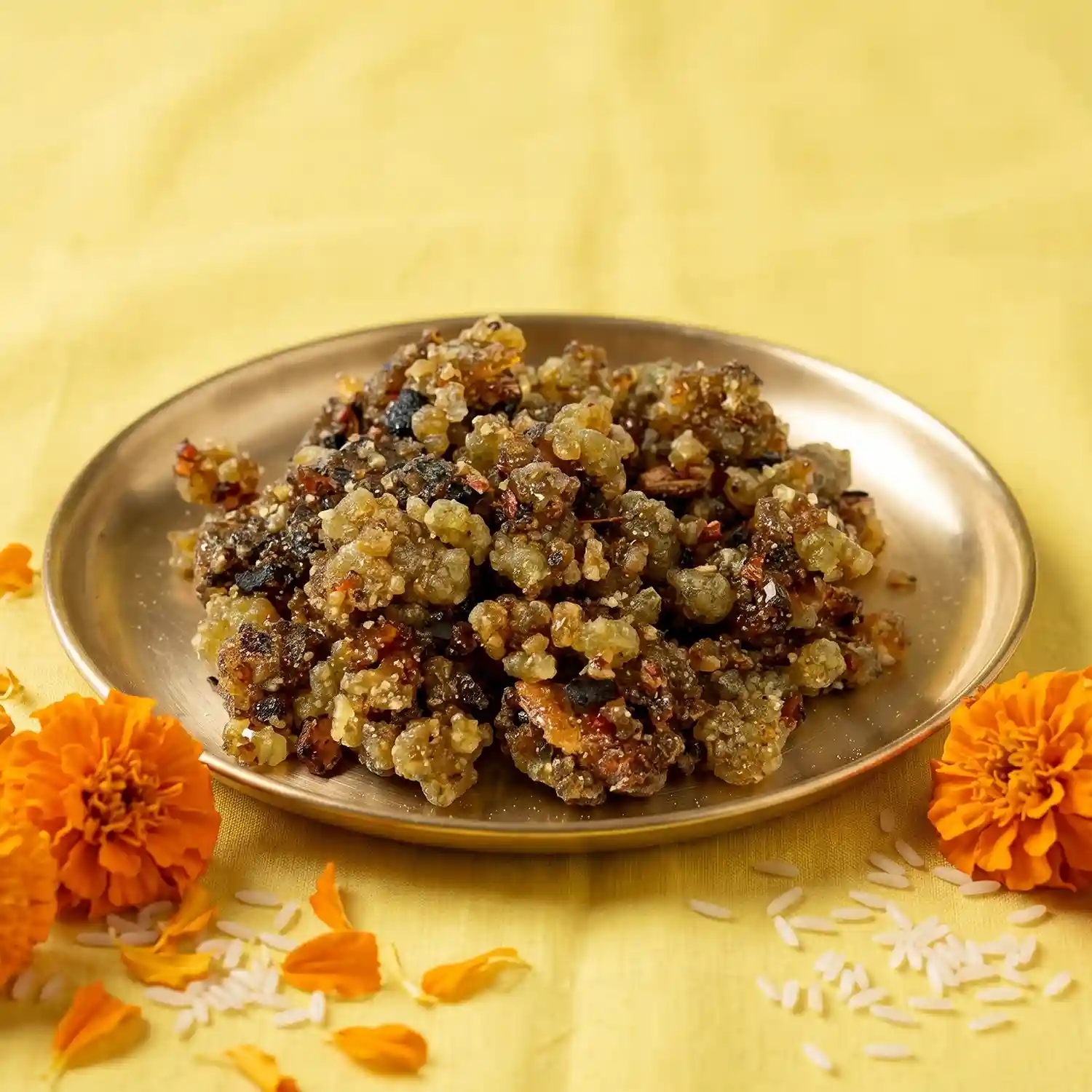
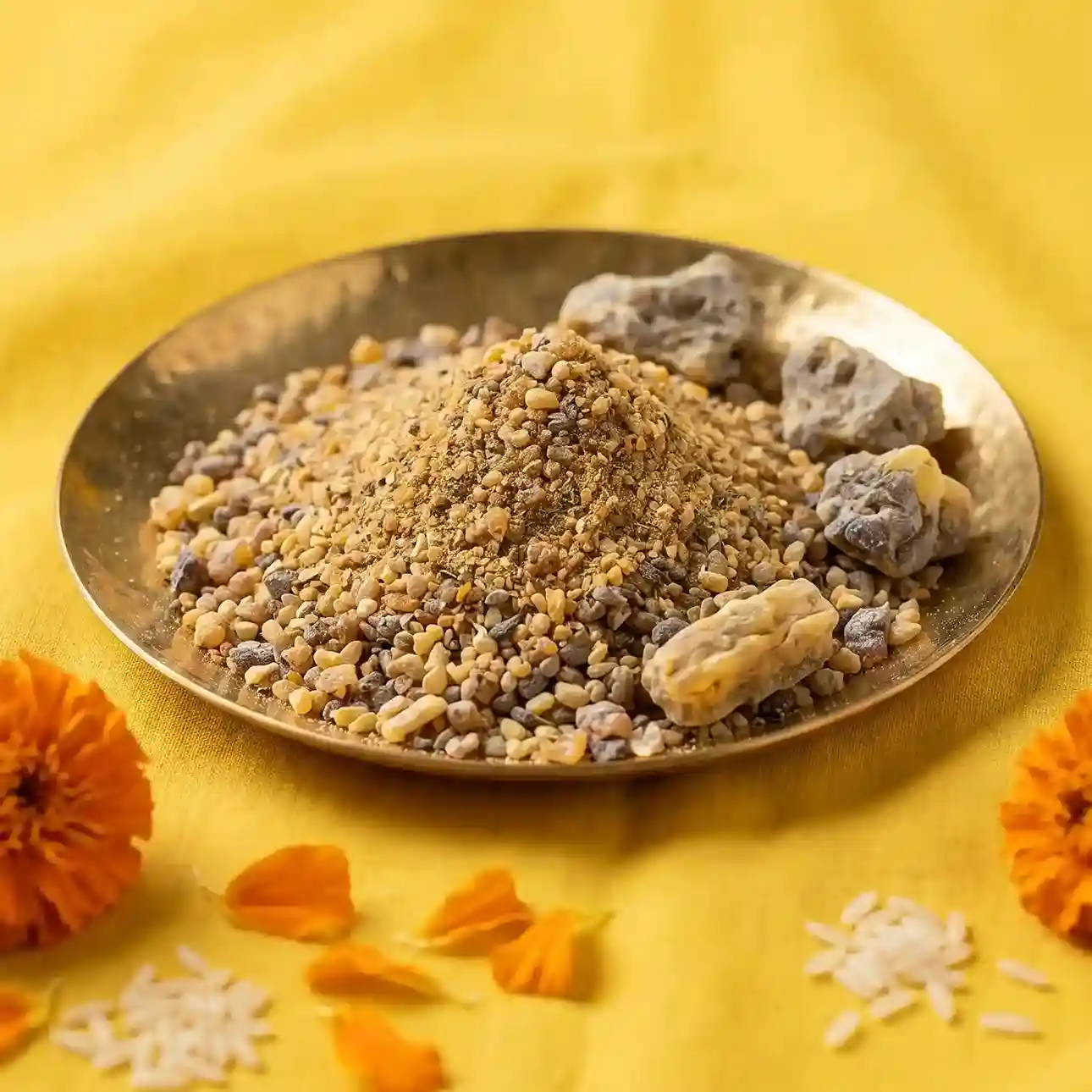
- The final step utilizes a heavy-duty combination of Chhobra (coconut husk), natural Guggal, and Dhuna Powder. When lit, they create a thick, deeply fragrant, and purifying smoke. Organizers should ensure that this protective smoke is fanned out across the entire pandal crowd and surrounding properties to clear the area of stagnant vibes, stress, and negative intentions.
- Q5. How do we properly handle the main ritual lamp during this public festival?
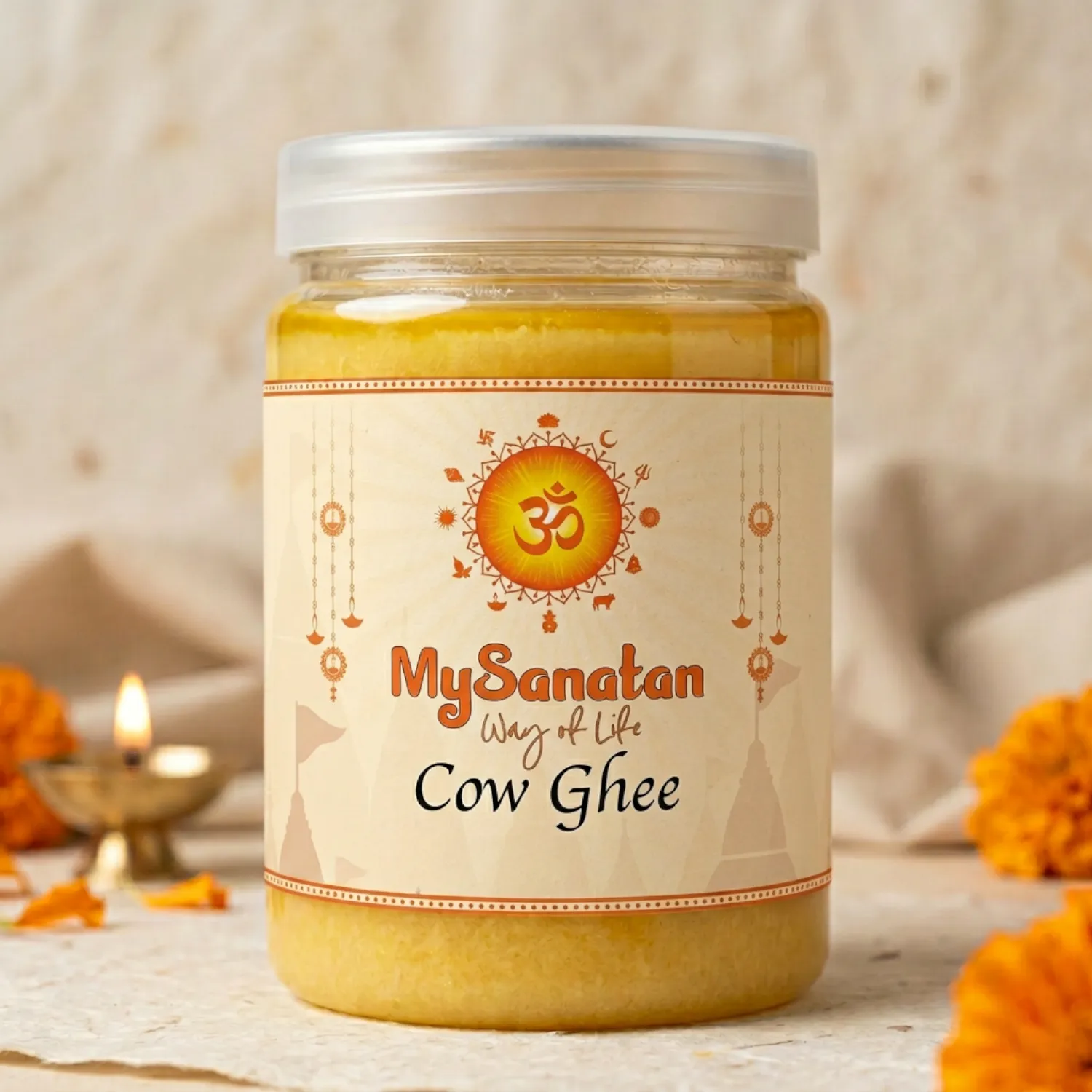
- The kit provides premium Cow Ghee and long cotton wicks for the central lamp. Organizers must make sure this primary lamp is placed strictly on the right-hand side of the deity's idol (from the viewer's left). It should be kept burning continuously throughout the main steps of the ritual to keep the protective energy active.
- Q6. How does the kit facilitate the complex dynamic of Bhuta-shuddhi within a highly populated public venue?
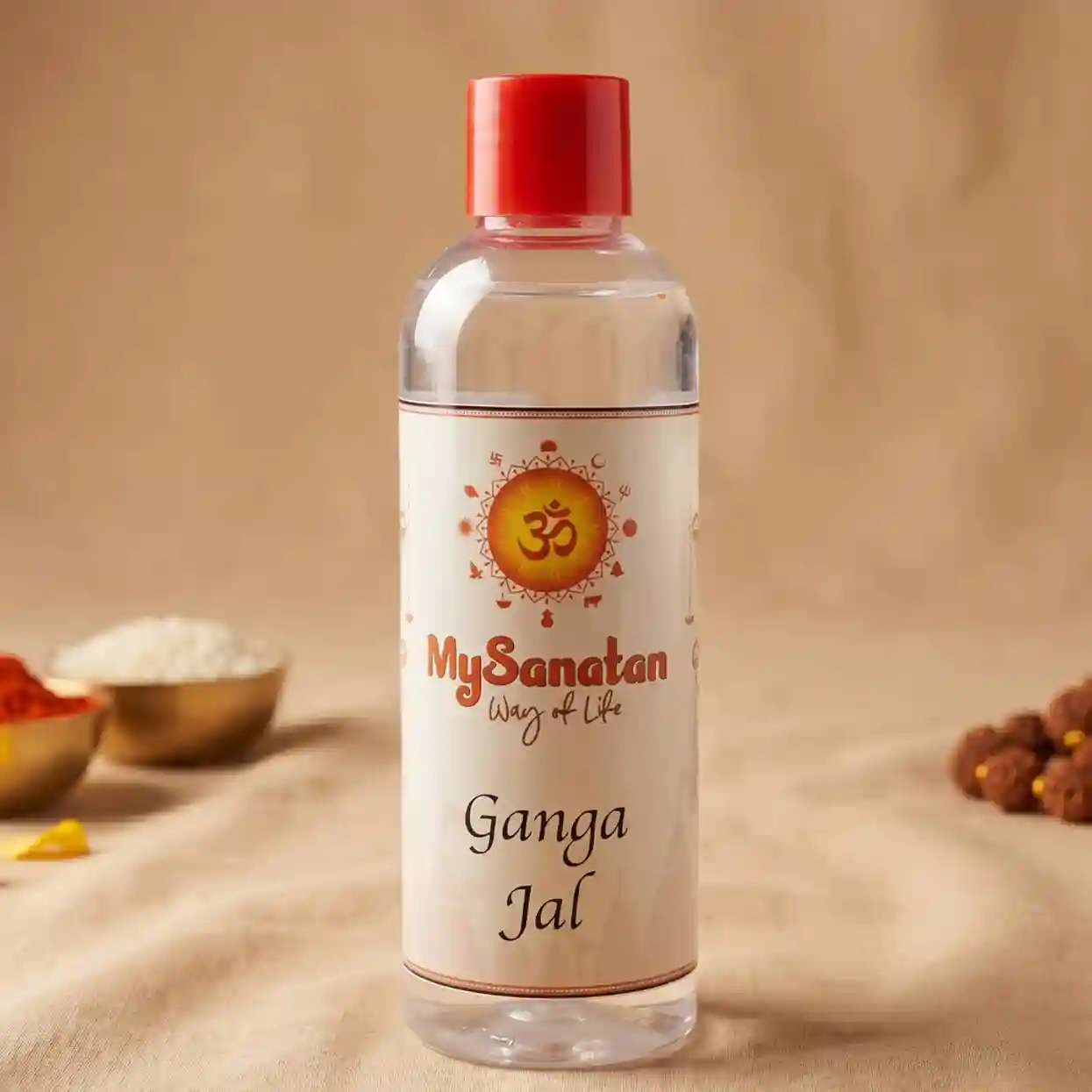
- Public pandals carry heavy environmental friction due to large, diverse crowds. To counter this, the kit includes a 200 ml pack of authentic Ganga Jal paired with Aguru and Yellow Mustard Seeds (Peeli Sarson). This allows the Pandit to execute an advanced Bhuta-shuddhi and space-clearing ritual (Step 1), purging the entire commercial or public property of negative elements and creating a clean baseline for the deity's presence.
- Q7. What precise liturgical role do the Pancha Guri and Pancha Rang play in the 16-step sequence?
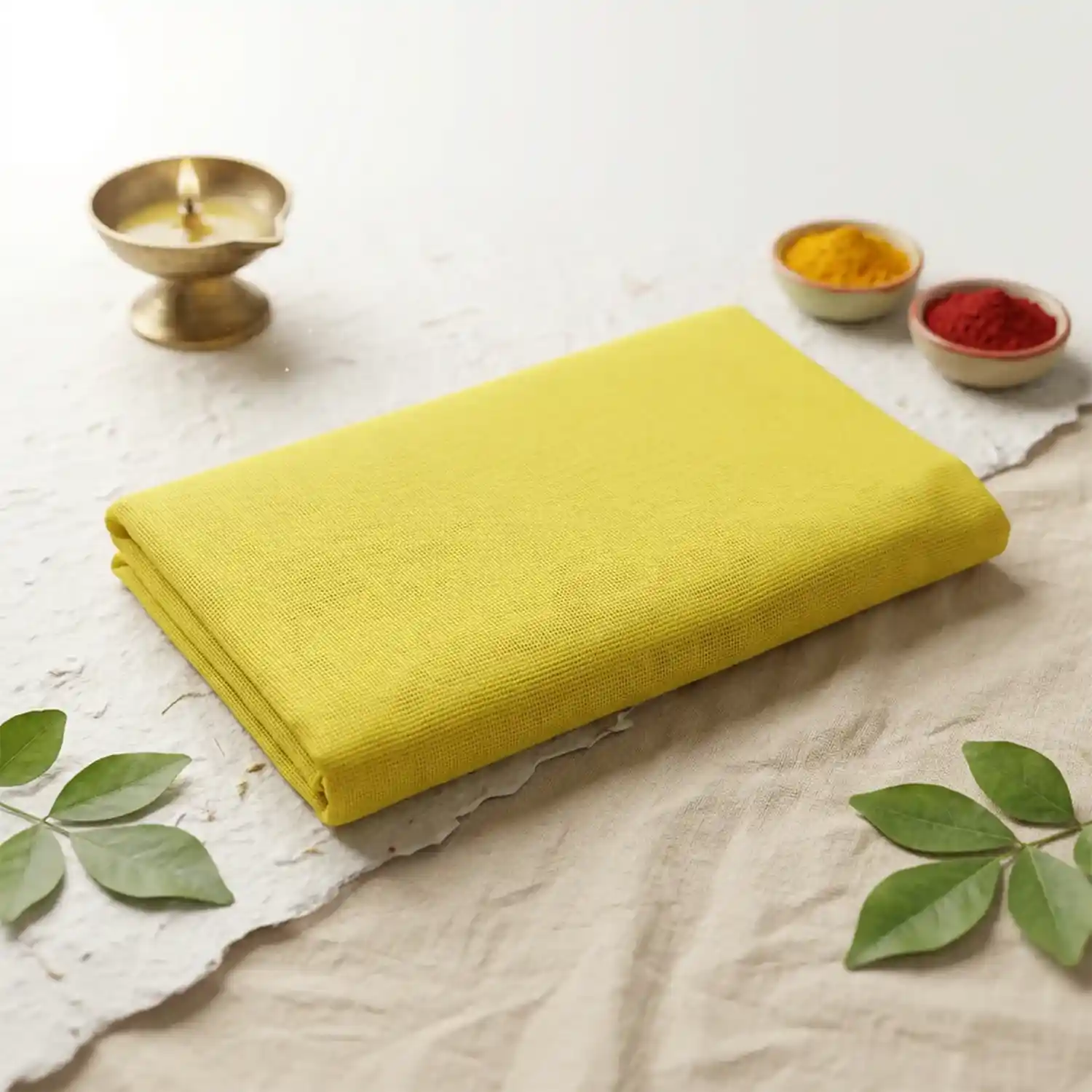
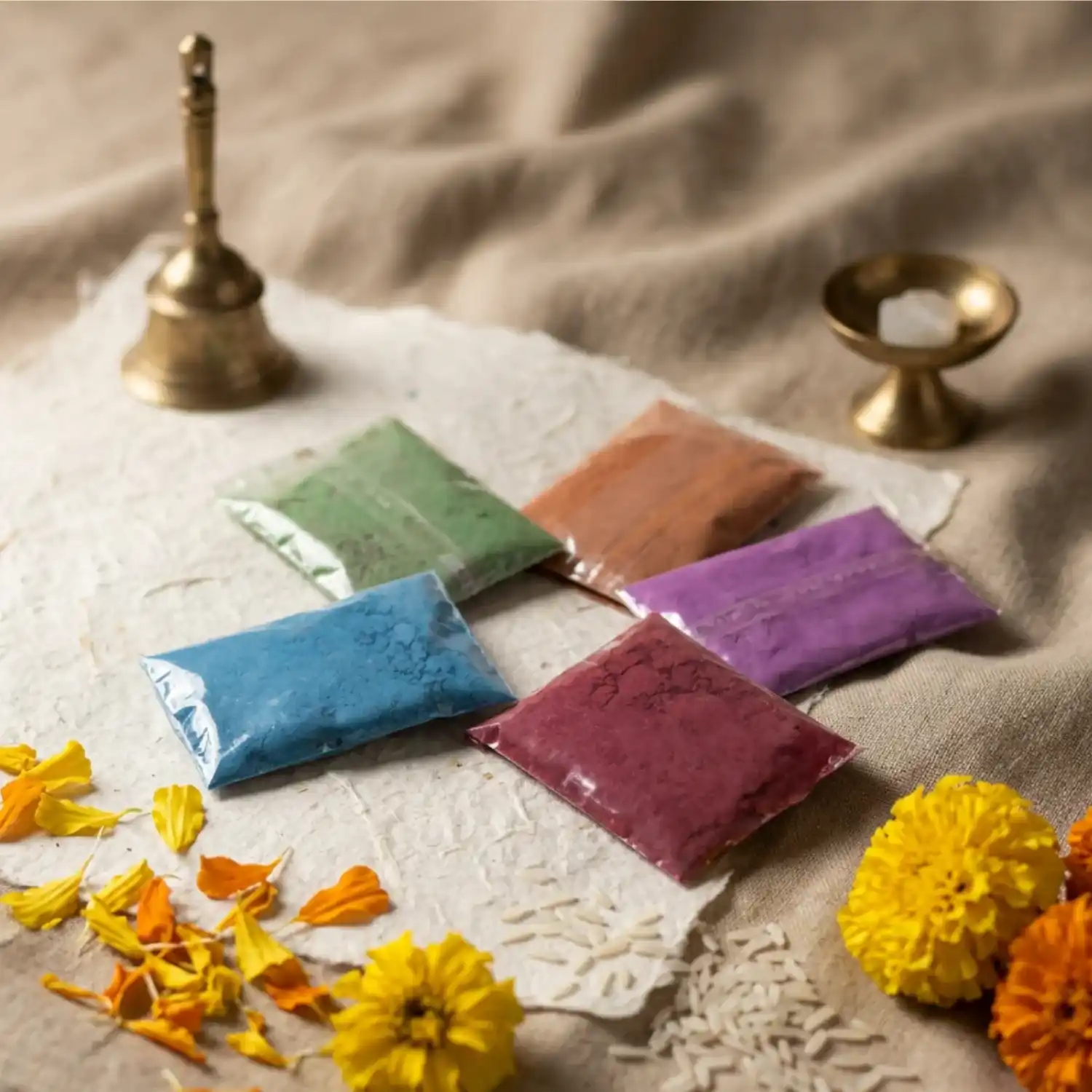
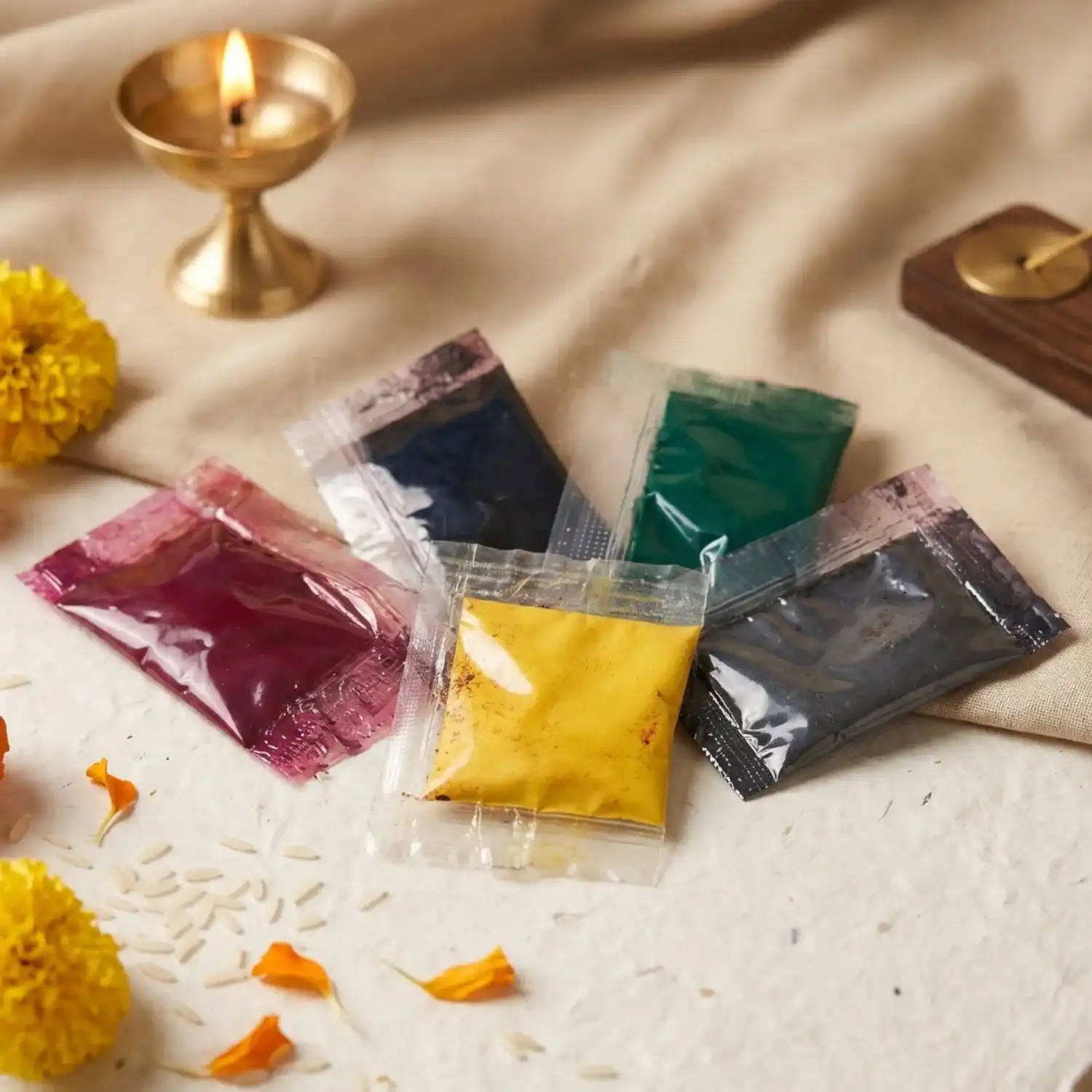
- To properly invoke a warrior deity, generic Puja Place arrangements are insufficient. The kit provides complete sets of Pancha Guri (Five Sacred Powders) and Pancha Rang (Five Colours). This enables the priest to map out scripturally accurate defense mandalas on the floor before invoking the deity onto the Yellow Puja Cloth and Red Cheli Cloth, thereby satisfying the advanced mathematical protocols of the Purohit Darpan.
- Q8. Why are Black Sesame Seeds (Kaale Til) and Barley (Jau) specifically included for the Pandal Havan?
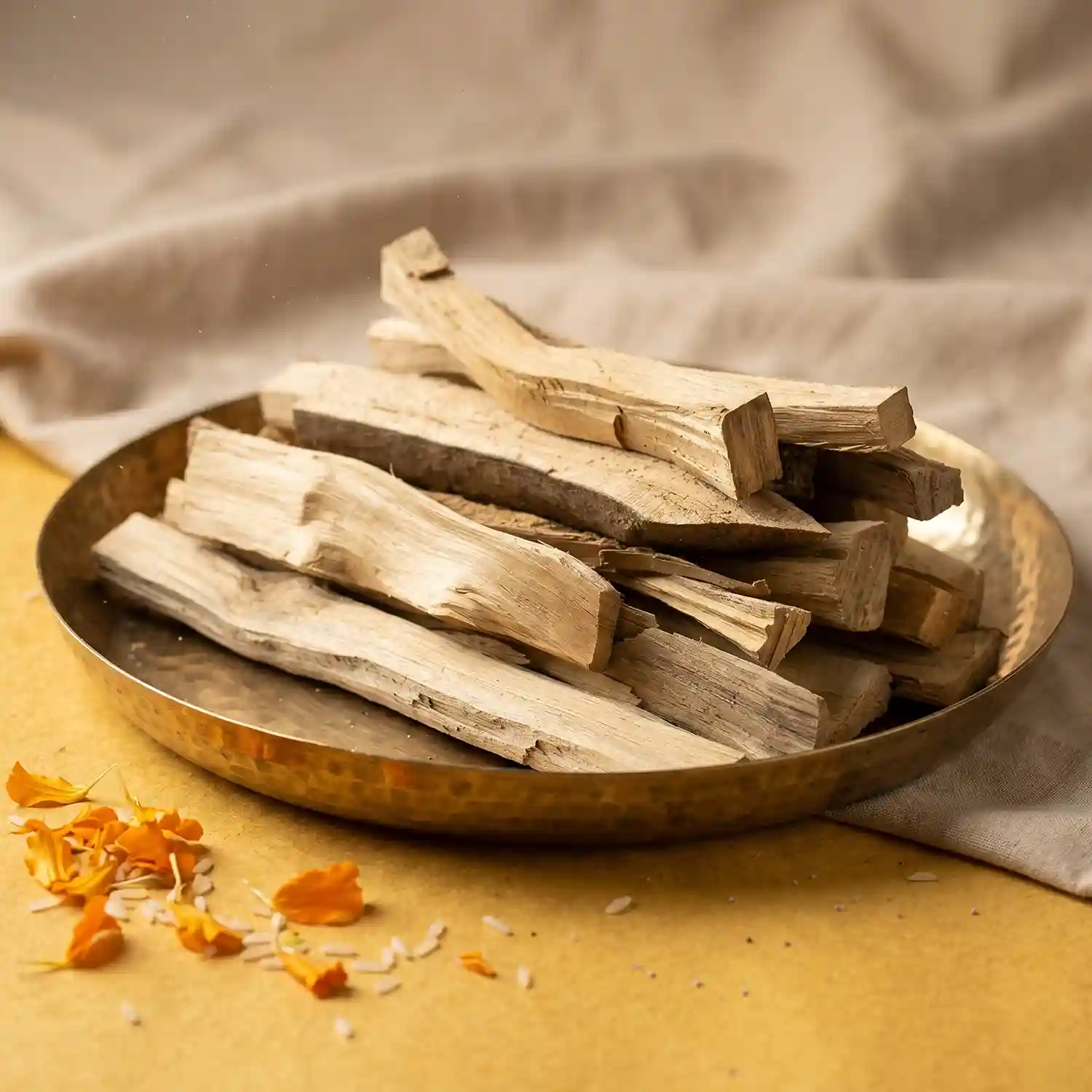
- Unlike gentle household fire offerings, the Kartikeya Kushandika Havan focuses on martial protection and conquering adversity. The inclusion of Kaale Til (Black Sesame) and Jau (Barley) alongside Havan Samagri, Cow Ghee, and a full 1 kg of Bel Kath fulfills a precise scriptural combination required to neutralize negative energy grids and clear major roadblocks for the community's future operations.
- Q9. How is the transition from the Madhuparka offering to the closing Tambula balanced?
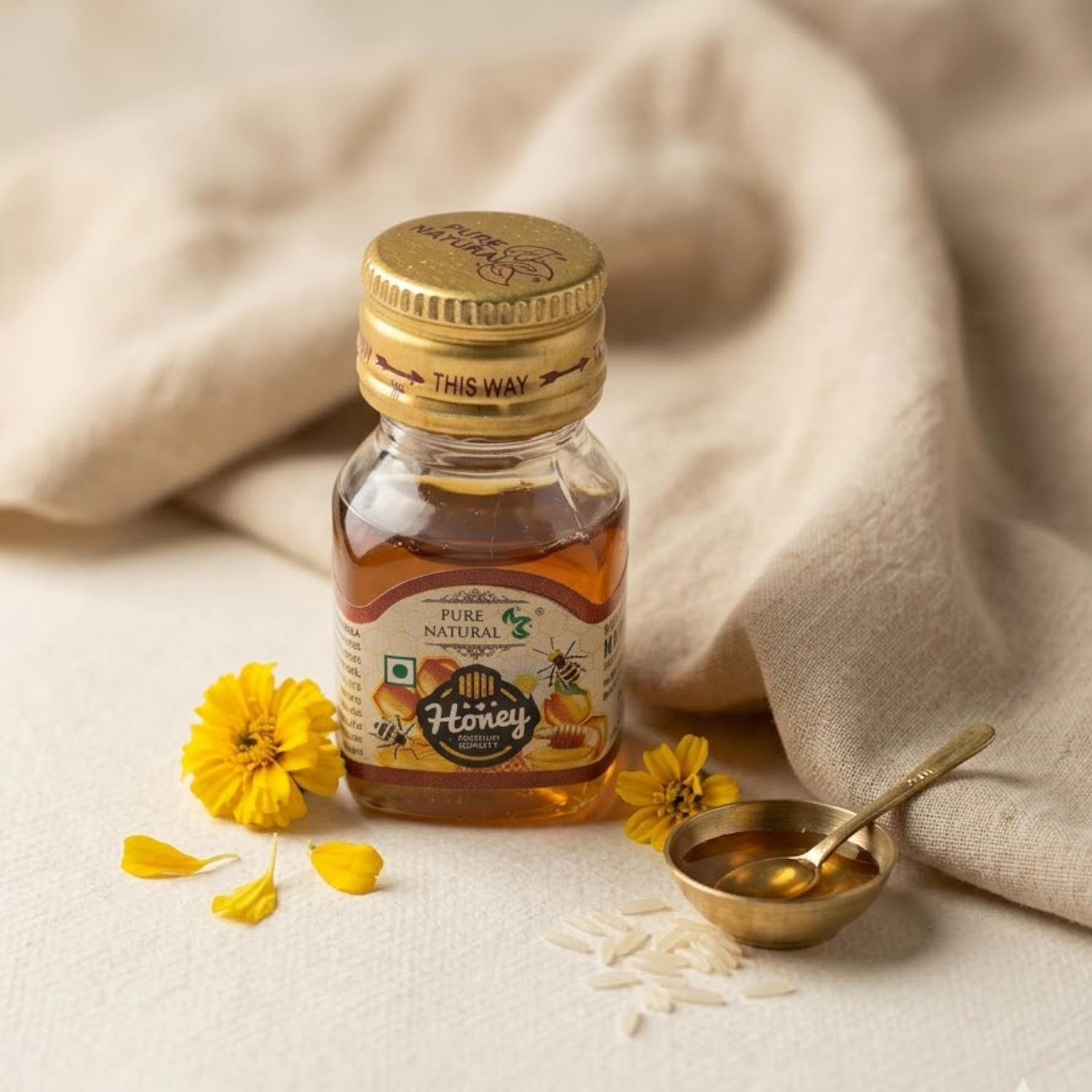
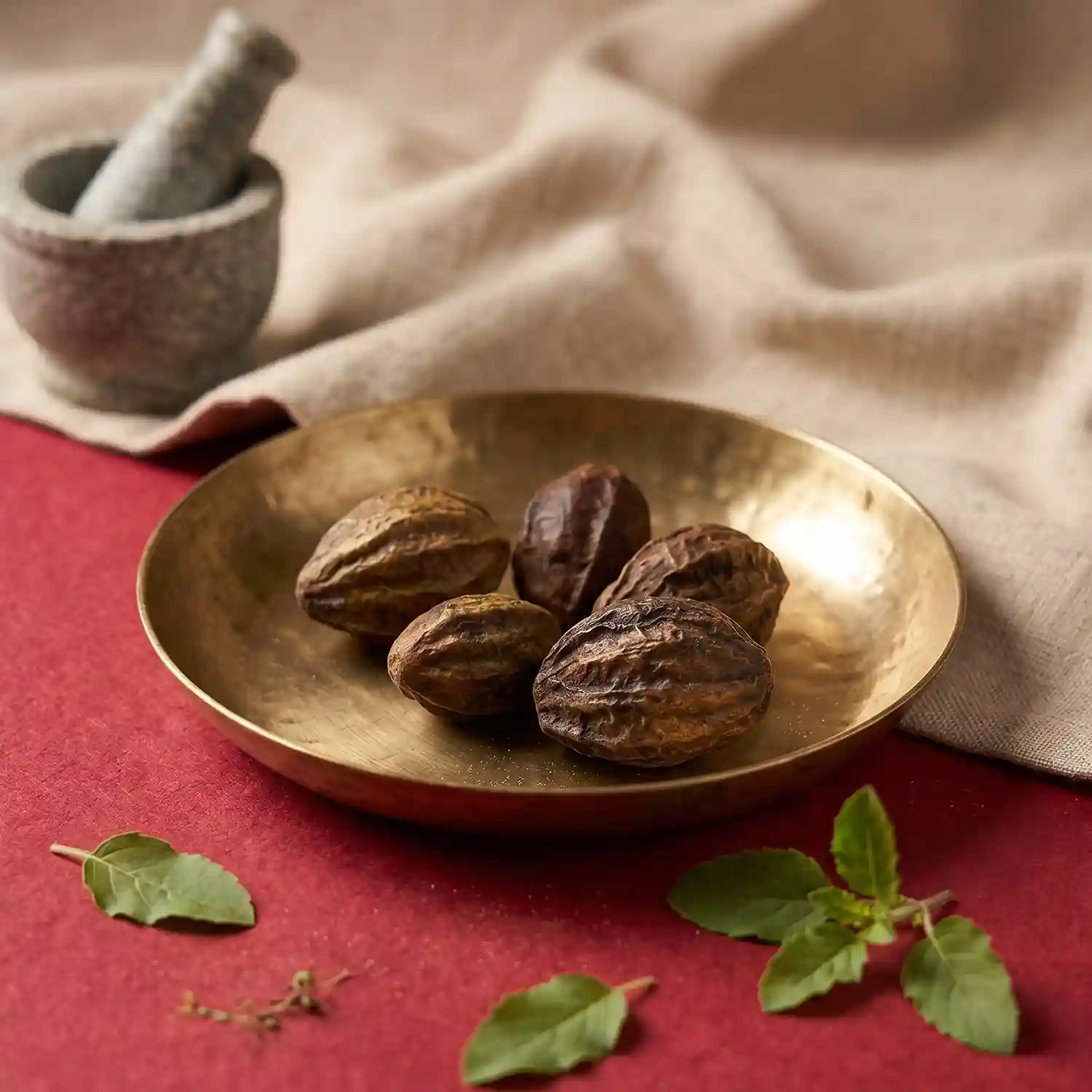
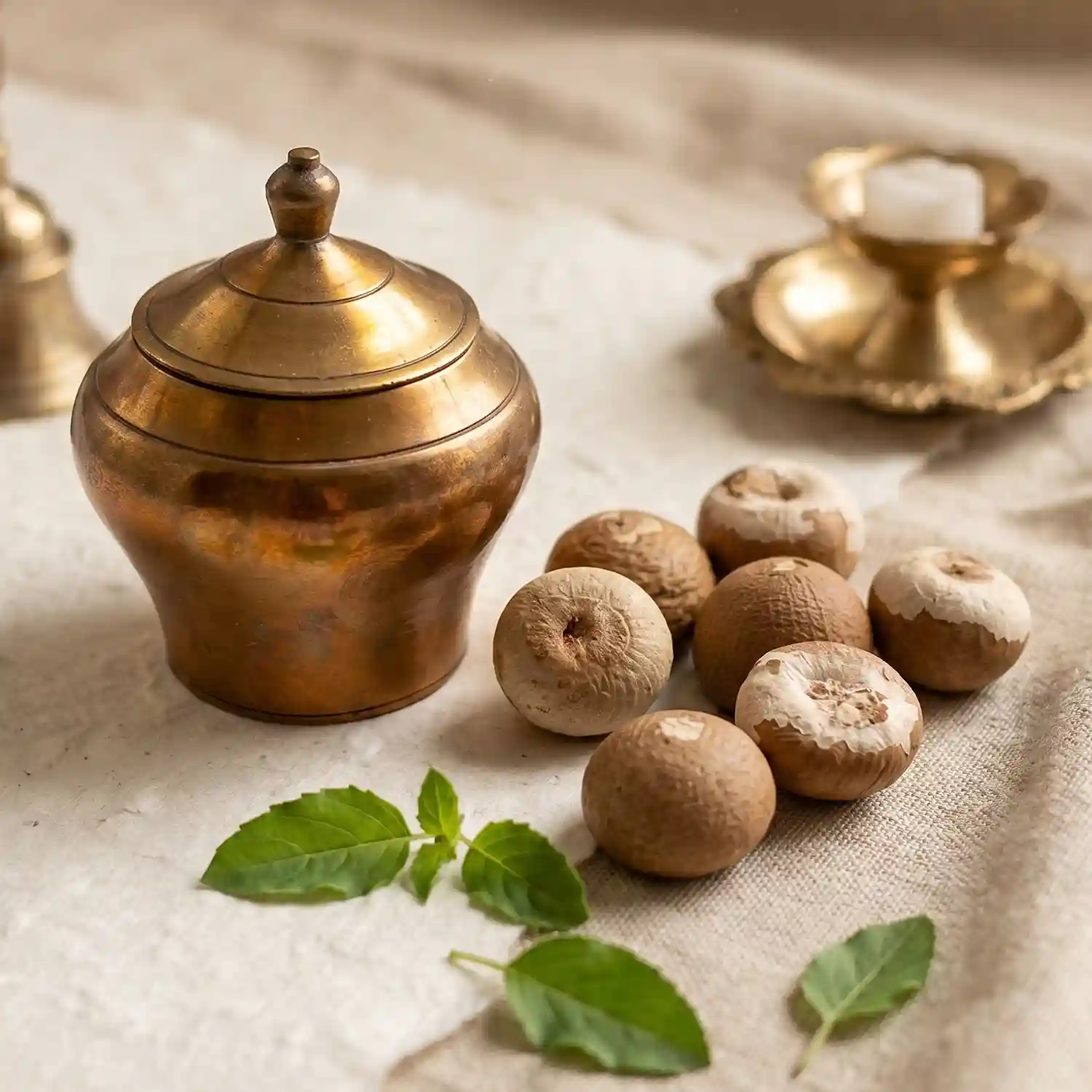
- The kit provides a large Madhu Parker Bati to present the highly sweet Madhuparka (honey offering). Immediately following this, to mathematically balance the elemental energies before closing with the Chawar Aarti, a complete Tambula containing Supari, Clove, Green Cardamom, and Haritaki is offered. This precise arrangement fulfills the strict Vedic sequence of hosting a royal commander, ensuring long-term protection over the community's financial and physical assets.